

Bilawal's Gilgit-Baltistan and Kashmir proposals hit constitutional wall
PPP chief's push for interim GB and Kashmir parliamentary representation faces Article 1 objections, rival criticism, and concerns over India's 2019 Ladakh precedent.

Ali Hamza
Correspondent
Ali; a journalist with 3 years of experience, working in Newspaper. Worked in Field, covered Big Legal Constitutional and Political Events in Pakistan since 2022. Graduate of DePaul University, Chicago.
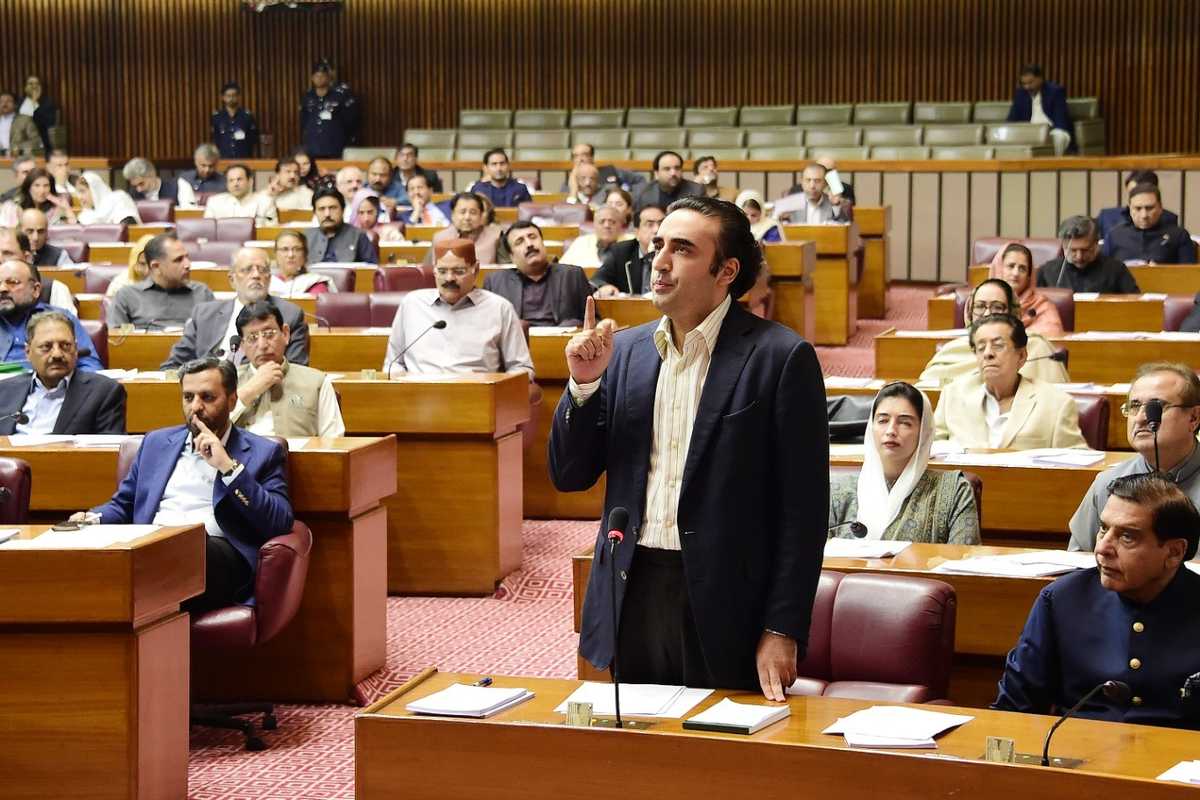
PPP Chairman Bilawal Bhutto Zardari proposed interim parliamentary seats for Gilgit-Baltistan and a population-based refugee quota for Pakistani-administered Kashmir in the National Assembly this week. Officials, a rival lawmaker and analysts say both proposals are constitutionally difficult to execute, even where the underlying intent draws sympathy. With Kashmir elections due on 27 July, several observers linked the timing to PPP's effort to court JAAC-aligned voters.
What did Bilawal propose for Gilgit-Baltistan and Kashmir?
Bilawal proposed temporary GB representation in parliament without altering Pakistan's international position on the region, pending an eventual plebiscite. For Pakistani-administered Kashmir, he proposed reserved seats allocated by population ratio, similar to existing quotas for women, overseas Kashmiris and minorities, with refugees travelling to Kashmir to vote during elections. He said a mechanism to achieve this already exists.
Why do critics say the GB proposal is unconstitutional?
A federal PML-N minister, speaking anonymously, told Nukta that symbolic GB representation would not resolve the core legal problem: Article 1 of Pakistan's constitution does not list GB or Kashmir as part of the federation. Any change would require a constitutional amendment, the minister said, even while calling Bilawal's idea sound in principle. The minister's objection was directed at both proposals equally.
Ahmad Raza Qadri, a PML-N member of the legislative assembly in Pakistani-administered Kashmir, raised a separate but related point. Article 257 of the constitution reserves the question of Kashmir's relationship with Pakistan for the people of the entire former princely state through a plebiscite, not for Islamabad to resolve by absorbing the region into the National Assembly. Qadri also questioned the practicality of refugees in Sialkot, Shakargarh, Narowal, Gujrat and Hafizabad travelling to cast their votes.
Should GB even be part of the Kashmir dispute?
International law expert Ayesha Malik told Nukta that GB should never have been linked to the Kashmir dispute in the first place. She said the people of GB and Kashmir are "light years apart" geographically, ethnically, linguistically and religiously. "It has been a mistake to not clarify that they are separate territories and not part of the same 'dispute', and should be merged into Pakistan in whatever way the people choose," she said.
Could Bilawal's proposals set a precedent for India on Ladakh?
Experts told Nukta that any move toward integrating GB could give India grounds to cite it as precedent for its own 2019 reorganization of Ladakh into a union territory with Lok Sabha seats. Qadri went further, arguing that Bilawal's framing effectively accepted India's 5 August 2019 actions and amounted to a "you keep yours, we keep ours" settlement. That position cuts directly against Pakistan's official stance that Kashmir's status remains unresolved pending a UN-mandated plebiscite.
Do the numbers support GB's case for National Assembly seats?
Qadri put GB's population at between 2.0 million and 2.2 million, against the 700,000 to 1 million typically required for a single NA constituency. That would yield two or three seats at most, which he said would do little to address the region's grievances while still requiring a constitutional amendment. He also asked how a region of 2 million people would be weighed fairly against Punjab's population of more than 130 million, and called the proposals "stupid," made primarily to win votes from the JAAC, which has led protests in GB.
What do analysts say about the structural barriers to GB representation?
Political analyst Majid Nizami said the GB proposal is premature because the region's own two-tier governance structure, with the GB Council sitting above the GB Assembly, remains loosely defined and carries no constitutional weight comparable to parliament or senate. Decades of neglect have left unresolved whether GB should be empowered along the lines of Pakistani-administered Kashmir, Nizami said, and any push for NA seats is unlikely to succeed without settling that question first.
On the refugee quota, however, Nizami broke from Qadri's broader rejection. He said Bilawal's underlying point was valid: the region's assembly already reserves 12 seats for refugees, split between those from Jammu and Kashmir, but the distribution of votes, voter numbers and constituency boundaries across Pakistan needs greater transparency. Current discrepancies in those numbers are significant, he said.
Senior journalist Sohail Warraich offered the most positive assessment, calling both proposals sound and legally achievable. That put him at odds with the PML-N minister, Qadri and the unnamed constitutional experts on the central question of feasibility.




Comments
See what people are discussing