

US-Iran talks delayed due to Muharram, Pakistan's Ishaq Dar says
Dar says talks faced no hurdle, just delayed by Muharram, with the next negotiation phase due within 60 days
Aamir Abbasi
Editor, Islamabad
Aamir; a journalist with 15 years of experience, working in Newspaper, TV and Digital Media. Worked in Field, covered Big Legal Constitutional and Political Events in Pakistan since 2009 with Pakistan’s Top Media Organizations. Graduate of Quaid I Azam University Islamabad.
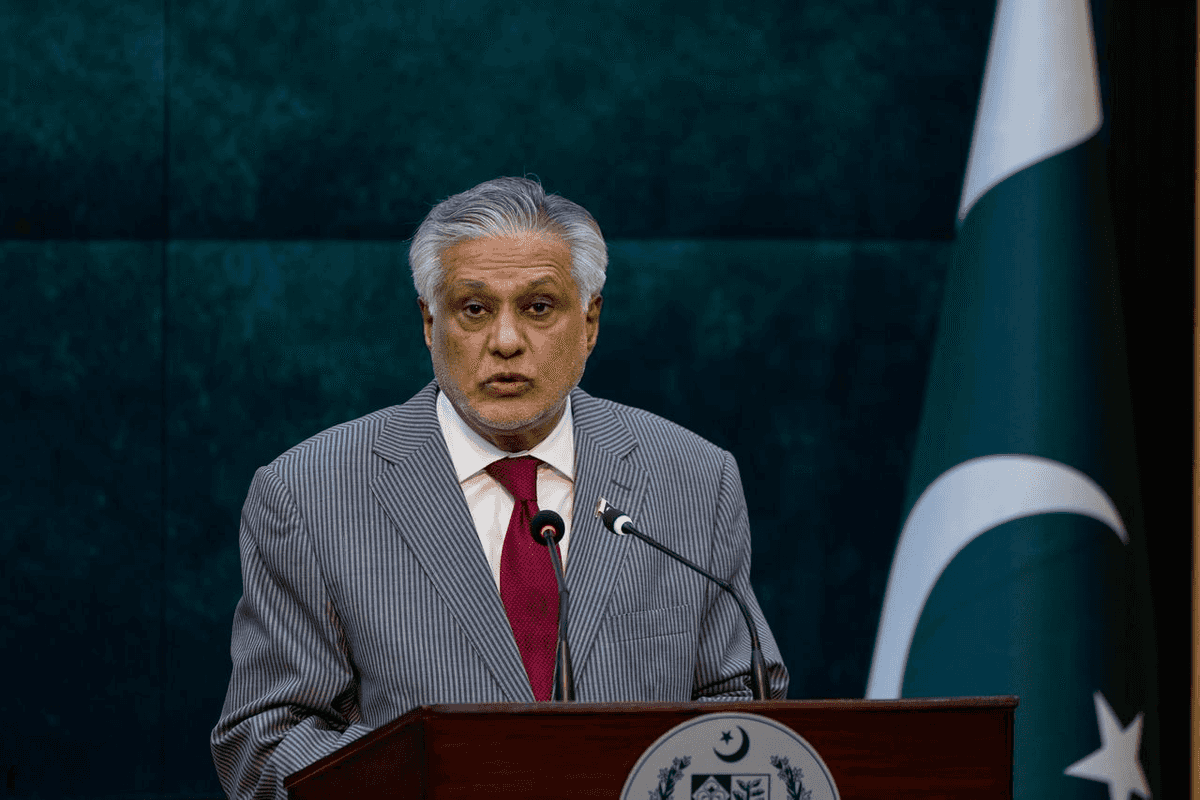
Pakistan's Deputy Prime Minister and Foreign Minister Ishaq Dar said Friday that the second round of US-Iran talks was delayed due to Muharram, not any breakdown in dialogue.
He told journalists informally that both sides remained committed to moving the process forward within the agreed timeline.
Why were the US-Iran talks delayed?
The talks were delayed because Iranian officials were observing Muharram, not because of any setback in negotiations. Dar said burial ceremonies for the late Ayatollah Ali Khamenei, scheduled for the first week of July, also factored into the revised timeline. He stressed that the next phase of talks must still be completed within 60 days.
What did Ishaq Dar say about the negotiations?
Dar said the negotiations had not faced any kind of hurdle, and that the delay was procedural rather than political. Pakistani officials stationed in Switzerland after the US-Iran agreement was signed have since been recalled, since their presence was no longer required once the Iranian president signed the accord. Dar also said Pakistan was moving toward reducing petroleum product prices.
Why were the Switzerland talks postponed?
Talks involving U.S., Iranian, Qatari and Pakistani representatives in Switzerland were postponed before they could begin. Preparations had been made to host delegations at the Burgenstock resort near Lake Lucerne for discussions on implementing the agreement between U.S. President Donald Trump and Iranian President Masoud Pezeshkian. Switzerland's foreign ministry said it remained ready to facilitate the talks but did not announce a new date.
The White House confirmed Thursday that Vice President JD Vance's trip had been canceled. A spokesperson said the logistics of the negotiations had never been simple or predictable, adding that Washington looked forward to starting technical talks soon. The agreement signed this week launched a 60-day window for negotiations on broader issues, including Iran's nuclear program.
What is the status of the wider US-Iran agreement?
Iranian negotiator Mohammad Bagher Ghalibaf warned that Tehran would respond decisively to any breach of the agreement or excessive demands. Iran's Supreme Leader Ayatollah Mojtaba Khamenei said he approved the deal despite reservations, citing commitments made by Iranian officials to protect the country's rights. American forces have lifted their naval blockade of Iranian ports, though U.S. warships remain in the region.
Under the agreement, Washington committed to immediately waiving oil sanctions on Iran. The deal also envisions a $300 billion reconstruction fund backed by regional countries once a final agreement is reached on Tehran's nuclear program. Activity in the Strait of Hormuz has remained subdued, with Iran introducing new procedures for ships seeking passage through the waterway.
How does the Lebanon conflict factor in?
Fighting flared again in Lebanon despite efforts linked to the broader accord. Israel's military announced new strikes against Hezbollah targets, and Lebanese health authorities reported 18 deaths. Israel said four of its soldiers were killed in southern Lebanon during the same period.
Trump defended his decision to end the conflict, telling Axios that extending military operations would have been counterproductive. He said continued fighting could have prevented the reopening of the Strait of Hormuz.




Comments
See what people are discussing