

BMG says Pakistan budget lacks strategy for exports, industrial growth
BMG Chairman Zubair Motiwala says the 2026-27 budget offers no clear roadmap for export growth, fails exporters on tax reform and ignores high energy costs
Haris Zamir
Business Editor
Experience of almost 33 years where started the journey of financial journalism from Business Recorder in 1992. From 2006 onwards attached with Television Media worked at Sun Tv, Dawn Tv, Geo Tv and Dunya Tv. During the period also worked as a stringer for Bloomberg for seven years and Dow Jones for five years. Also wrote articles for several highly acclaimed periodicals like the Newsline, Pakistan Gulf Economist and Money Matters (The News publications)
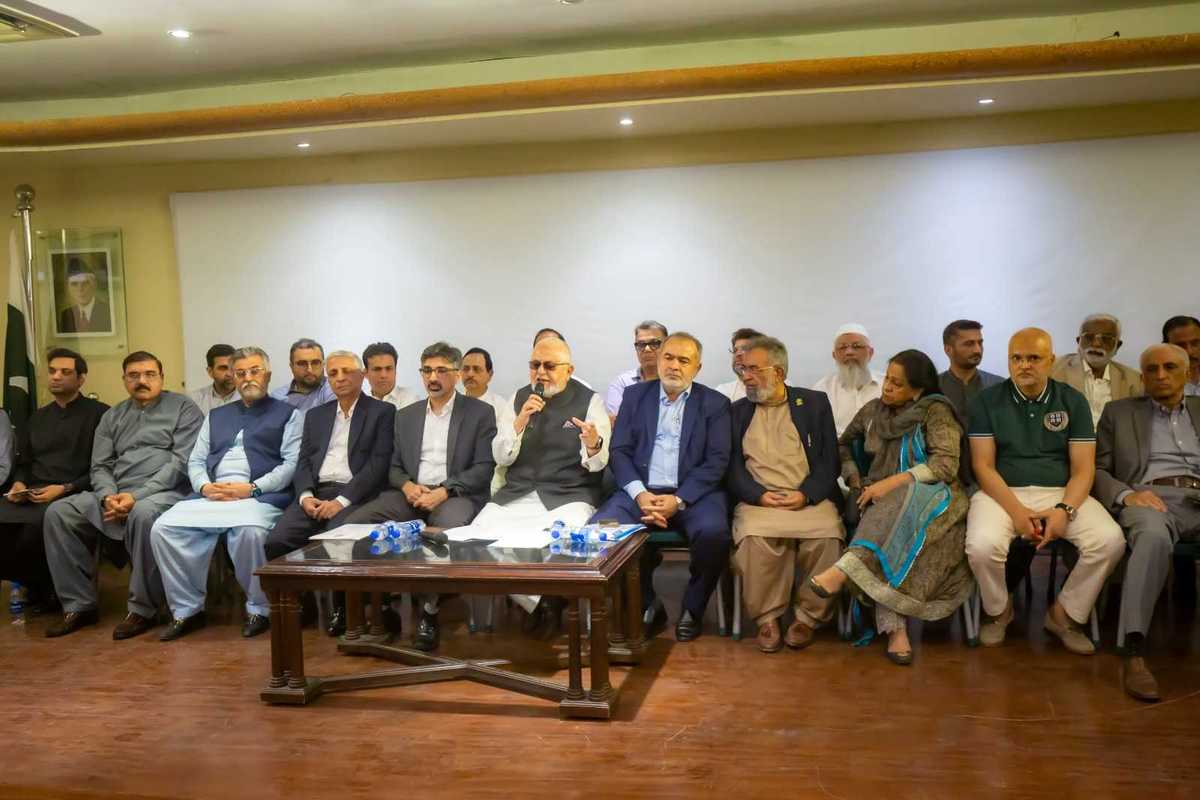
Chairman Zubair Motiwala, speaking after Finance Minister Muhammad Aurangzeb presented the budget on Friday, said the budget contained some positive measures but fell short of the expectations set by the government's own Economic Survey.
Courtesy: Karachi Chamber Commerce & Industry
Pakistan's Businessmen Group (BMG) has criticized the federal budget for fiscal year 2026-27 as offering no clear strategy for export growth or industrial revival.
Chairman Zubair Motiwala, speaking after Finance Minister Muhammad Aurangzeb presented the budget on Friday, said the budget contained some positive measures but fell short of the expectations set by the government's own Economic Survey.
What did BMG say about Pakistan's budget 2026-27?
BMG Chairman Zubair Motiwala described the budget as "neither good nor bad," saying it lacked a clear strategy for export growth, industrial revival and broader economic expansion.
He said the Economic Survey had raised expectations that fiscal space would be used to support exporters and industry in a meaningful way, but the budget did not deliver on those expectations.
Why is BMG disappointed with the Final Tax Regime changes?
Motiwala expressed disappointment over the government's handling of the Final Tax Regime (FTR). The business community had sought restoration of a simple fixed tax regime for exporters, aimed at reducing documentation requirements and limiting interaction with tax authorities. Instead, the government reduced the withholding tax rate from 2% to 1.5% and converted it into a minimum tax, keeping exporters within the normal taxation system.
"This defeats the very objective of FTR. Exporters do not want additional complications and frequent dealings with tax authorities. We wanted certainty and ease of doing business, but unfortunately that objective has not been achieved," Motiwala said.
What did BMG welcome in the budget?
Motiwala welcomed the reduction in Super Tax rates and the complete abolition of Super Tax for companies earning profits of up to PKR 500 million. He called it a positive step and partial acceptance of a longstanding demand from the business community.
He added, however, that Super Tax remains an extraordinary levy and should ultimately be abolished altogether. Pakistan already carries one of the highest corporate tax burdens in the region, and its continuation discourages industrial expansion and new investment, he said.
How does energy cost affect Pakistan's export competitiveness?
The budget also failed to address high electricity and gas costs, which Motiwala described as one of industry's most pressing concerns. He said the government presented no concrete roadmap to lower energy tariffs or resolve the circular debt burden, which is being passed on to productive sectors.
Industries across Pakistan are operating below capacity as a result, he said. Without competitive operating conditions, export-led growth remains out of reach.
Can Pakistan hit its revenue target without supporting industry?
Motiwala questioned how the government intended to achieve a revenue target of PKR 15 trillion and generate an additional PKR 1.5 trillion without creating an enabling environment for businesses and industries.
"Pakistan needs dollars and dollars can only come through exports. Exports will increase only when industries operate competitively. Without industrial growth, there can be no sustainable increase in revenues, no fresh investments and no meaningful economic progress," he said.
The press conference was also attended by BMG Vice Chairmen Jawed Bilwani and Mian Abrar, Acting President Muhammad Raza, Vice President Muhammad Arif Lakhani, former President Junaid Esmail Makda, Muhammad Idrees, Iftikhar Ahmed Sheikh, Chairman Federal Taxation Subcommittee Abu Bakar Shamsi and members of the Karachi Chamber of Commerce and Industry's executive committee.




Comments
See what people are discussing