

Why Imtiaz Ali’s ‘Main Vaapas Aaunga’ is the Emotional Reset We Didn’t Know We Needed
Blending modern dating dilemmas with the timeless heartbreak of the Partition, this cinematic masterpiece asks: Can we ever truly move on from the places and people, we leave behind?

Sibte Hassan
Correspondent, Karachi Pakistan
Syed Sibte Hassan Rizvi is a seasoned multimedia journalist with over 12 years of experience. He has worked as a news correspondent, covering various beats for Pakistan's leading news channels.
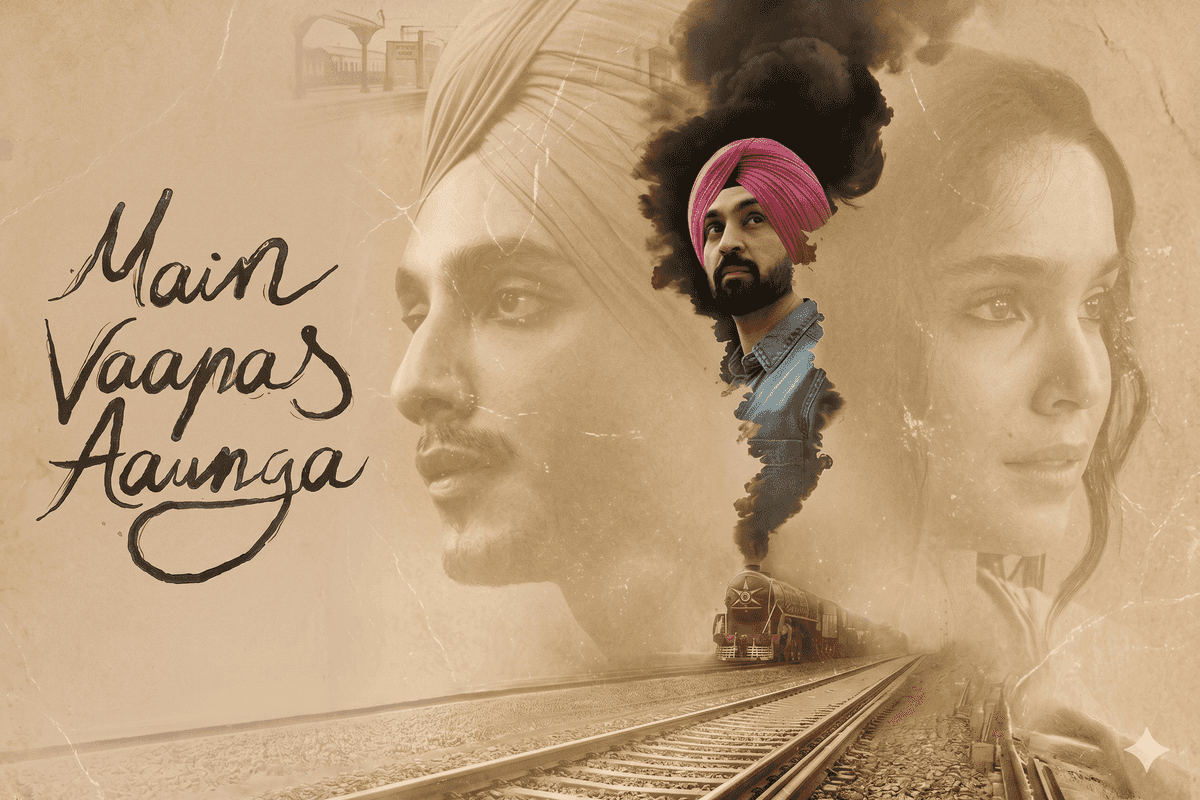
Main Vaapas Aaunga Poster
Google Gemini
A brilliant contrast between today’s fleeting, complicated romances and the enduring, life-long loyalty of a bygone era.
A masterclass in storytelling where a simple smartphone screen achieves the impossible, reconnecting a shattered heart to its ancestral roots.
A soul-stirring finale track that serves as a powerful, tear-jerking anthem against the devastating human cost of borders and wars.
When you walk into an Imtiaz Ali film, you usually expect a certain aesthetic: soul-searching train journeys, wind-in-the-hair road trips, and a protagonist discovering themselves through the lens of a passionate romance. But with his latest offering, Main Vaapas Aaunga, the auteur flips the script. Instead of just taking us across geographies, he takes us across generations, delivering a film that is less about finding love and more about the grief of leaving it behind.
While the film initially grounds us in the messy, ambiguous landscape of modern relationships, navigated with relatable existential angst by Diljit Dosanjh, its true heartbeat is found in the past. Through sweeping, nostalgic flashbacks, we are introduced to a pure, old-world love story, played with breathtaking innocence and grace by Sharvari Wagh and Vedang Raina. Their radiant chemistry captures the essence of a timeless romance, perfectly embodying the deep, cross-cultural bond that was tragically shattered by the brutal drawing of borders.
But the true soul of Main Vaapas Aaunga belongs to the legendary Naseeruddin Shah. Playing an elder whose physical body is in the present but whose spirit is trapped in the summer of 1947, Shah delivers a masterclass in quiet grief. Through him, Imtiaz contrasts Diljit’s disposable modern romances with a love so pure and resilient that it survived decades of separation. Shah’s character didn’t just lose his home during the Partition; he lost a love he promised he would return to. The juxtaposition of these two eras asks a poignant question: Have we forgotten how to love deeply, or are we just scared of the pain it brings?
The film's crowning jewel, however, isn't a dramatic reunion at a border crossing. It is an intimately modern, tear-inducing climax. In an era where technology is often blamed for driving us apart, Imtiaz uses it to bridge a 70-year divide. In a scene that will undoubtedly go down in cinematic history, Diljit’s character uses his phone to show Naseeruddin Shah the present-day streets of Sargodha. Watching Shah’s weathered eyes light up and then shatter as he digitally walks down the very lanes he was forced to abandon is a moment of pure, devastating catharsis. It is a testament to the fact that while lines are drawn on maps, they can never be drawn across memories.
Just as you are trying to recover from the Sargodha sequence, the screen fades into the climax, anchored by a soul-stirring song sung by Diljit himself. It is a raw, heartbreaking melody that strips away the politics of war and focuses entirely on its human collateral. It is an anthem that discourages conflict, reminding us that bombs and borders don't just win or lose territories, they destroy courtyards, silence laughter, and turn everyday people into refugees longing for a home that no longer exists.
The music by A.R. Rahman makes the whole movie even more emotional. Instead of loud beats, he uses soft strings and flutes to create a real feeling of sadness and longing. The best part of the album is the song Tere Paas Main, sung beautifully by Deepali Sahay. Her voice captures the exact pain of staying apart from your loved ones, and the song really stays with you long after the scene is over. Along with this, Diljit Dosanjh sings the emotional climax track himself. It is a heart-touching song that ignores the politics of war and just focuses on the normal people who suffer because of it. Together, these songs send a very strong message for peace. They remind us that borders do not just divide land. They destroy homes, turn everyday people into refugees, and ruin happy lives forever.
Main Vaapas Aaunga is not just a weekend watch; it is an experience that stays with you. It forces you to look at your grandparents differently, to hold your loved ones a little closer, and to realize that sometimes, the greatest privilege we have is simply not being forced to leave our homes.
Bring your tissues, because Imtiaz Ali just broke our hearts, only to put them back together with a little more empathy.




Comments
See what people are discussing