

Capacity payments remain 61% of Pakistan’s power purchase cost
Payments to generators fell 4.9% to PKR 1.81 trillion in FY2024-25, but fixed charges continued to outweigh energy payments amid low plant utilization

Haris Zamir
Business Editor
Experience of almost 33 years where started the journey of financial journalism from Business Recorder in 1992. From 2006 onwards attached with Television Media worked at Sun Tv, Dawn Tv, Geo Tv and Dunya Tv. During the period also worked as a stringer for Bloomberg for seven years and Dow Jones for five years. Also wrote articles for several highly acclaimed periodicals like the Newsline, Pakistan Gulf Economist and Money Matters (The News publications)
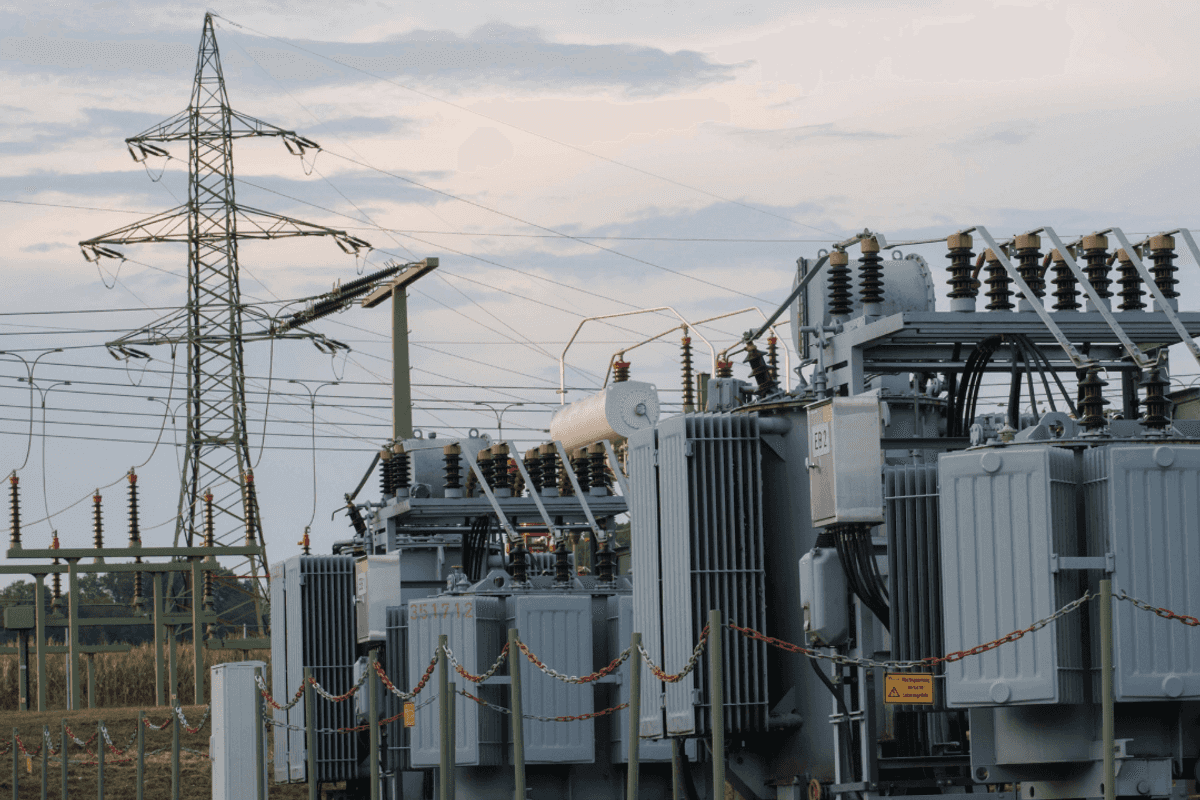
Pakistan paid PKR 1.81 trillion in capacity charges in FY2024-25
Capacity payments to electricity generators remained the largest component of Pakistan’s power purchase cost in fiscal year 2024-25, accounting for nearly 61% of total payments, even as overall energy charges declined, highlighting the growing burden of fixed payments on electricity consumers, according to the State of the Industry Report 2025.
The report said total capacity payments to generators connected to the Central Power Purchasing Agency-Guaranteed (CPPA-G) system stood at PKR 1.807 trillion in FY2024-25, down 4.9% from PKR 1.901 trillion a year earlier. Energy payments also declined 3.4% to PKR 1.149 trillion from PKR 1.189 trillion in FY2023-24.
Despite the decline, capacity payments remained significantly higher than energy payments, reflecting the impact of Pakistan’s “Take or Pay” and “Must Run” power purchase contracts, under which generators receive fixed payments regardless of how much electricity they actually dispatch.
The report warned that the widening gap between fixed obligations and relatively limited electricity offtake points to structural weaknesses in generation planning, dispatch optimization and demand forecasting. Low utilization of power plants has further increased the burden of capacity charges on electricity consumers.
Among generation sources, coal-fired plants received the highest capacity payments at PKR 669.84 billion in FY2024-25, although the amount fell 7.7% from PKR 725.01 billion a year earlier. Coal also accounted for the largest energy payments at PKR 367.05 billion, up 17.4% from PKR 312.84 billion in FY2023-24.
Payments to WAPDA hydel projects recorded the sharpest increase, with capacity charges surging 71.5% year-over-year to PKR 180.45 billion from PKR 105.20 billion. Energy payments increased 11.3% to PKR 3.08 billion.
Capacity payments to independent hydropower producers (IPPs) rose 67.9% to PKR 209.71 billion, while their energy payments climbed 48% to PKR 7.16 billion.
In contrast, capacity payments to RLNG-, gas- and high-speed diesel-fired plants declined 33.3% to PKR 148.11 billion from PKR 221.98 billion. Energy payments fell 6.5% to PKR 624.27 billion but remained the largest contributor to energy costs.
Capacity payments to nuclear plants fell 9.6% to PKR 362.71 billion, while energy payments increased 41.9% to PKR 52.36 billion.
Payments to residual fuel oil (RFO) plants dropped sharply, with capacity charges declining 69.6% to PKR 25.25 billion and energy payments falling 94.9% to PKR 4.48 billion.
The report said wind and solar plants received no separate energy payments because their Energy Purchase Price (EPP) is incorporated into capacity payments under the prevailing regulatory framework.
It said energy payments can be reduced through more efficient dispatch of generating plants, greater reliance on lower-cost and renewable energy sources, and improved system planning. These measures could also reduce part-load adjustment charges and improve overall system efficiency.
However, reducing the burden of capacity payments will require addressing underlying contractual obligations and improving long-term demand forecasting and generation planning.




Comments
See what people are discussing