

China’s global port network expands strategic and economic influence
Kamran Khan says China is building a global strategic network through trade, infrastructure and logistics

News Desk
The News Desk provides timely and factual coverage of national and international events, with an emphasis on accuracy and clarity.
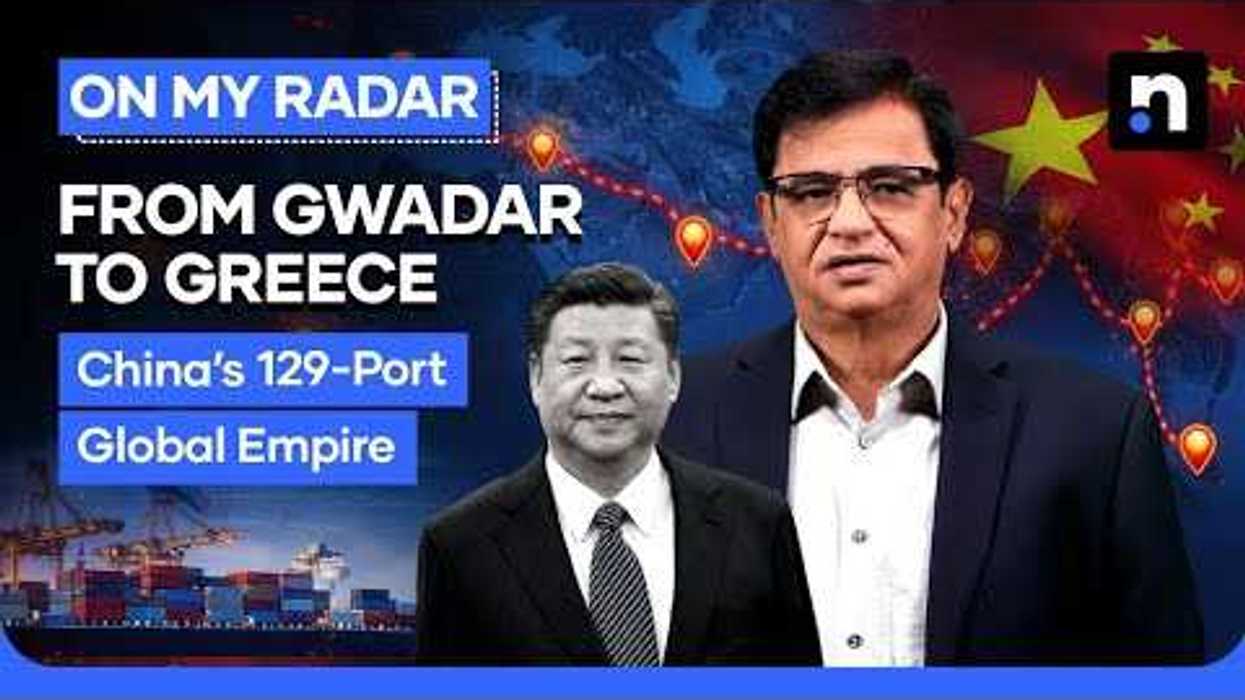
China has established a vast global network of ports, extending its economic and strategic reach across more than 60 countries. The Asian economic powerhouse now has a presence in 129 ports worldwide, with direct control, partnerships and long-term leases that give Beijing significant influence over international trade and maritime logistics.
Analysts say this “ports empire” is transforming global supply chains and creating a new model of influence that combines economic power with strategic positioning.
In the latest episode of On My Radar, Kamran Khan highlighted the scale of China’s maritime expansion. He noted that Chinese companies manage full control of 17 ports, partnerships or joint ventures in 47 ports, and have invested in 42 ports under construction. Additionally, 22 ports are leased to China on long-term agreements, providing operational and financial advantages while ensuring rapid cargo clearance and logistical efficiency.
China’s port investments are part of the Belt and Road Initiative (BRI), which aims to integrate trade and infrastructure projects across Asia, Africa, Europe, and the Americas. Beijing controls key maritime hubs spanning West Africa to the Mediterranean, Latin America to South Asia, and as far as Australia, effectively creating a global maritime network. Notably, seven of the world’s ten busiest ports are already within China’s influence, reflecting the strategic importance of this expansion.
In Europe, China has invested in over 30 ports, including major terminals in Greece, Spain, Belgium, and Italy, with a 67% majority stake in Greece’s Piraeus Port. In Africa, Chinese firms are active in roughly 78 ports across 30 countries, while in South America, they hold majority shares in 17 ports, including a deep-water facility in Peru with a 60% stake. Southeast Asia and Oceania also feature prominently, with long-term leases such as the Port of Darwin in Australia, under a 99-year agreement, and investments spanning Myanmar to Cambodia.
In South Asia, Sri Lanka’s Hambantota Port is leased to China for 99 years, and in Pakistan, Gwadar Port, part of the China-Pakistan Economic Corridor (CPEC), is under exclusive long-term administration by the China Overseas Port Holding Company (COPHC). While the port remains officially owned by Pakistan, Chinese companies receive 91% of port revenues, extensive tax exemptions, and operational control under leases and special economic zone agreements.
These investments provide China with direct access to key global terminals, reduce dependence on third parties, accelerate trade, and resolve disputes efficiently, saving billions of dollars annually. According to Bloomberg, China’s BRI investments of $1.2 trillion have increased partner countries’ reliance on Beijing for trade financing and logistics support.
While China emphasizes the commercial nature of its ports, Western analysts caution that these civilian hubs could potentially serve strategic maritime or naval purposes, effectively giving China a presence similar to historical colonial powers - without direct military engagement. Unlike previous empires, Beijing’s influence has been achieved through trade, investment, construction and logistics, leveraging economic growth rather than warfare.
Experts say China’s port empire is reshaping global trade and geopolitical influence, challenging the traditional dominance of the United States and Europe. By controlling a network of ports and maritime routes, China is creating a new framework for global strategic presence, integrating commerce, infrastructure, and logistics in ways that reinforce its long-term international influence.




Comments
See what people are discussing