

COP31 ends without agreement amid deadlock over emissions and finance
Summit leaves vulnerable nations frustrated as unresolved targets are deferred to next year’s summit in Ethiopia

News Desk
The News Desk provides timely and factual coverage of national and international events, with an emphasis on accuracy and clarity.
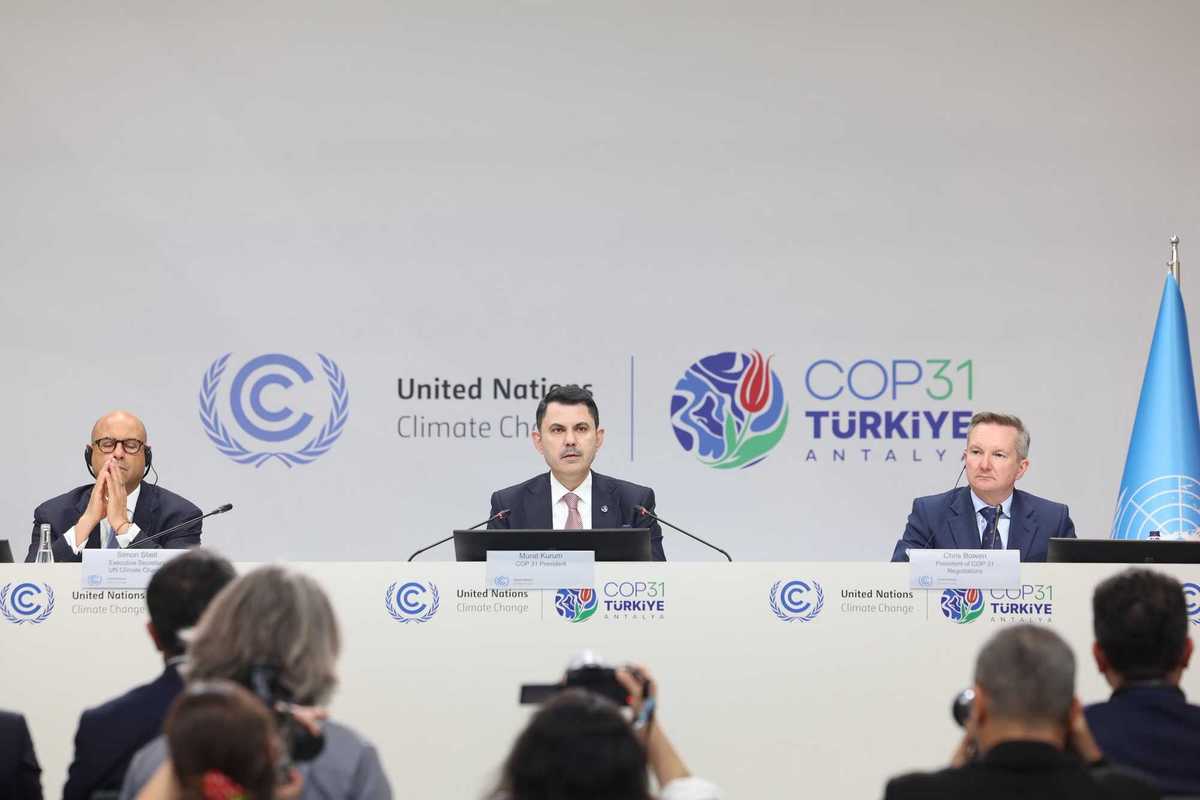
#COP31 President Murat Kurum underlined the need to deliver a practical pathway from Antalya, bringing countries together around shared outcomes.
Picture Courtesy: COP31
Another global climate conference has ended in failure, with the 31st United Nations Climate Change Conference (COP31) concluding in Antalya, Türkiye, on Sunday, without delivering concrete results or binding agreements to curb global emissions and unlock critical climate financing.
According to Al Jazeera, marathon overtime negotiations—which stretched two days beyond the summit’s scheduled November 20 closing date to become the longest UN climate conference in history—deadlocked between developed and developing nations over core disputes, including the scale and delivery of climate finance for vulnerable economies and actionable commitments to transition away from fossil fuels.
Why did negotiations collapse over climate finance and adaptation support?
As per The Guardian and UN News, delegates from climate-vulnerable countries and developing blocs expressed sharp frustration that wealthy industrialized nations failed to bridge persistent funding gaps or guarantee predictable financial flows for climate adaptation and the Loss and Damage Fund established at earlier summits.
Developing country negotiators pointed out that wealthy governments arrived in Antalya without a concrete baseline or delivery roadmap to fulfill the COP30 pledge to triple adaptation finance, while new pledges to the UN Adaptation Fund totaled just $50.2 million—less than half of expectations—alongside a separate $200 million contribution announced for Global Environment Facility (GEF) funds. Talks also broke down over developing nations' demands to establish an institutionalized Just Transition Mechanism, after more than 120 developing countries rejected a watered-down draft text that omitted binding financial and operational backing.
How did fossil fuel disputes and global conflicts overshadow the Antalya talks?
On mitigation, a coalition of countries from Europe, Africa, Latin America, and the Pacific challenged proposed compromise texts for failing to include explicit timelines and binding pathways to phase out coal, oil, and gas. While roughly 80 nations and 185 companies endorsed a separate voluntary pledge to expand electrification across global energy systems, negotiators failed to reach the consensus required for an overarching political cover decision.
Held under the auspices of the United Nations Framework Convention on Climate Change (UNFCCC) in the Turkish coastal city of Antalya—where world leaders, including Pakistani Prime Minister Shehbaz Sharif, had gathered earlier in the two-week summit to urge enhanced global climate action and clean energy transition—the negotiations were heavily overshadowed by escalating regional wars, maritime trade disruptions in the Strait of Hormuz, and competing energy security priorities, according to The Associated Press (AP).
What does the COP31 stalemate mean for global climate targets?
According to BBC News and CBS News, environmental advocates and scientific observers warned that the collapse of talks without meaningful outcomes at COP31 leaves the international community further off track from meeting the Paris Agreement’s 1.5-degree Celsius warming threshold amid accelerating extreme weather events worldwide.
With the Antalya summit concluding without a formal pact, the unresolved financial, adaptation, and fossil fuel transition disputes now pass to incoming COP32 host Ethiopia, which will convene next year's UN climate summit in Addis Ababa.




Comments
See what people are discussing