

Pakistani court rejects plea for probe into 'TTP resettlement' after US withdrawal
High court in Peshawar rules decisions on militant resettlement are policy matters and not subject to judicial interference

Kamran Ali
Correspondent Nukta
Kamran Ali, a seasoned journalist from Khyber Pakhtunkhwa, Pakistan, has a decade of experience covering terrorism, human rights, politics, economy, climate change, culture, and sports. With an MS in Media Studies, he has worked across print, radio, TV, and digital media, producing investigative reports and co-hosting shows that highlight critical issues.
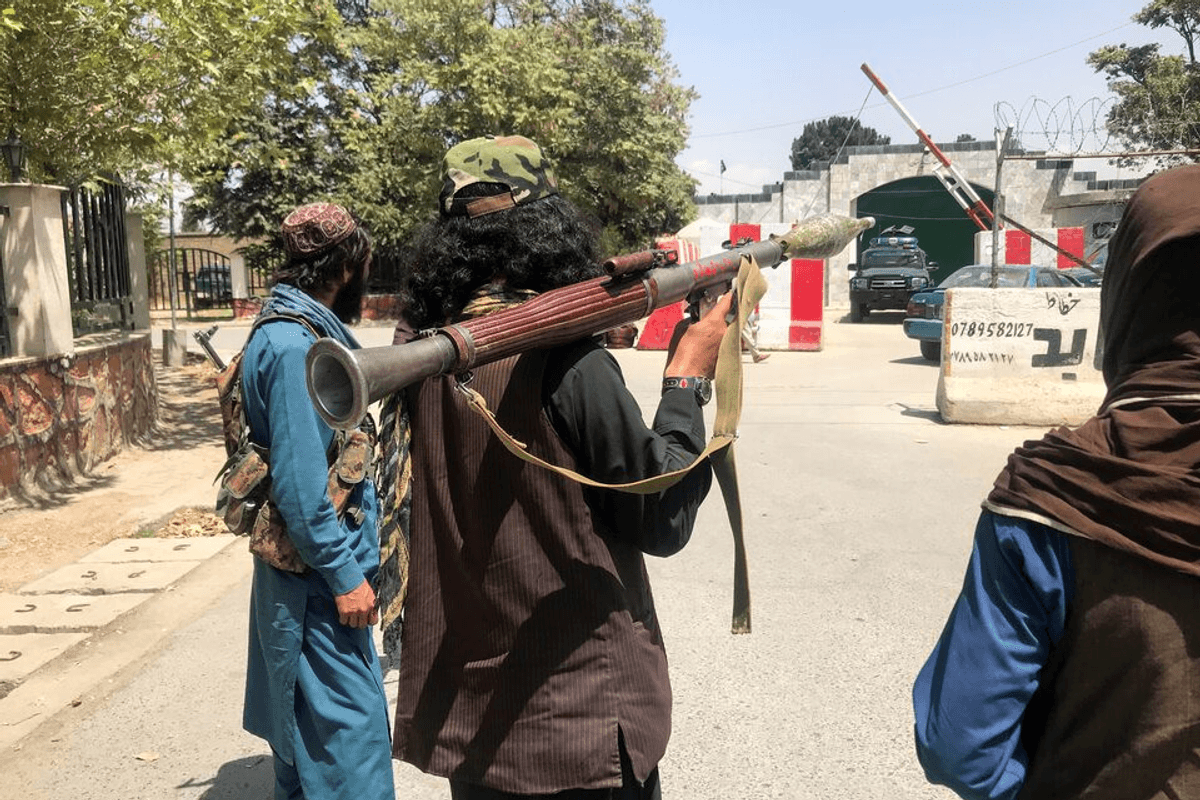
Taliban forces stand guard inside Kabul, Afghanistan August 16, 2021.
Reuters
A Pakistani court has dismissed a petition seeking a judicial inquiry into the alleged resettlement of the Tehreek-e-Taliban Pakistan (TTP) militants in Khyber Pakhtunkhwa (KP) following the U.S. withdrawal from Afghanistan.
Following the Taliban’s capture of Kabul after a major insurgent offensive in 2021, the government of former Prime Minister Imran Khan decided to repatriate TTP militants as part of a strategy to negotiate peace and address insurgency in Pakistan’s tribal regions.
Reports indicated that Khan’s administration planned to resettle these militants in the former Federally Administered Tribal Areas (FATA) as part of a reconciliation process.
Foreign Minister Ishaq Dar, earlier this year, claimed that between 35,000 and 40,000 TTP militants were brought back to the country, raising significant concerns over the rationale behind these actions.
The Peshawar High Court (PHC) ruled on Monday that policymaking, including decisions on peace negotiations and security measures, is the government’s prerogative and falls outside the judiciary’s scope unless fundamental rights are violated.
The two-member bench, comprising Justice Attique Shah and Justice Sahibzada Asadullah, had reserved its verdict on Oct. 1 last year on the petition, which was filed in 2023 by Senator Aimal Wali Khan, the central president of the Awami National Party (ANP).
The court acknowledged the devastating toll of terrorism in KP, citing the loss of thousands of civilian and security personnel lives and targeted killings of political leaders. However, it ruled that the petition lacked sufficient grounds for judicial intervention.
“Aimal Wali, being a senator, could raise the issue in parliament instead,” the ruling stated.
The judgment emphasized the constitutional principle of separation of powers, stating that the legislature makes laws, the executive formulates policies, and the judiciary interprets laws. Courts, it said, cannot interfere in policy decisions unless they violate constitutional provisions or fundamental rights.
The PHC also noted that the alleged TTP resettlement policy had been initiated by a previous government, which had since completed its tenure, rendering the petition irrelevant.
Wali’s petition had named Imran Khan, ex-Inter-Services Intelligence (ISI) chief, now under court martial, Director General Faiz Hameed, former KP Chief Minister Mehmood Khan, and the provincial and federal governments as respondents.
He accused them of facilitating the return of TTP militants from Afghanistan, a move that has been widely debated in Pakistan’s security and political circles.
Aimal Wali to challenge verdict in Supreme Court
Meanwhile, Aimal Wali has announced that he will challenge the decision in the Supreme Court of Pakistan, stating that the judiciary had prioritized government policy over public interest by terming the matter an “administrative decision.”
“The move to rehabilitate 40,000 militants had effectively handed Khyber Pakhtunkhwa over to extremists, endangering both the province and Balochistan,” he added.
Khan also questioned whether the judiciary’s role was not to uphold the constitution and protect citizens’ rights.




Comments
See what people are discussing