


News Desk
The News Desk provides timely and factual coverage of national and international events, with an emphasis on accuracy and clarity.
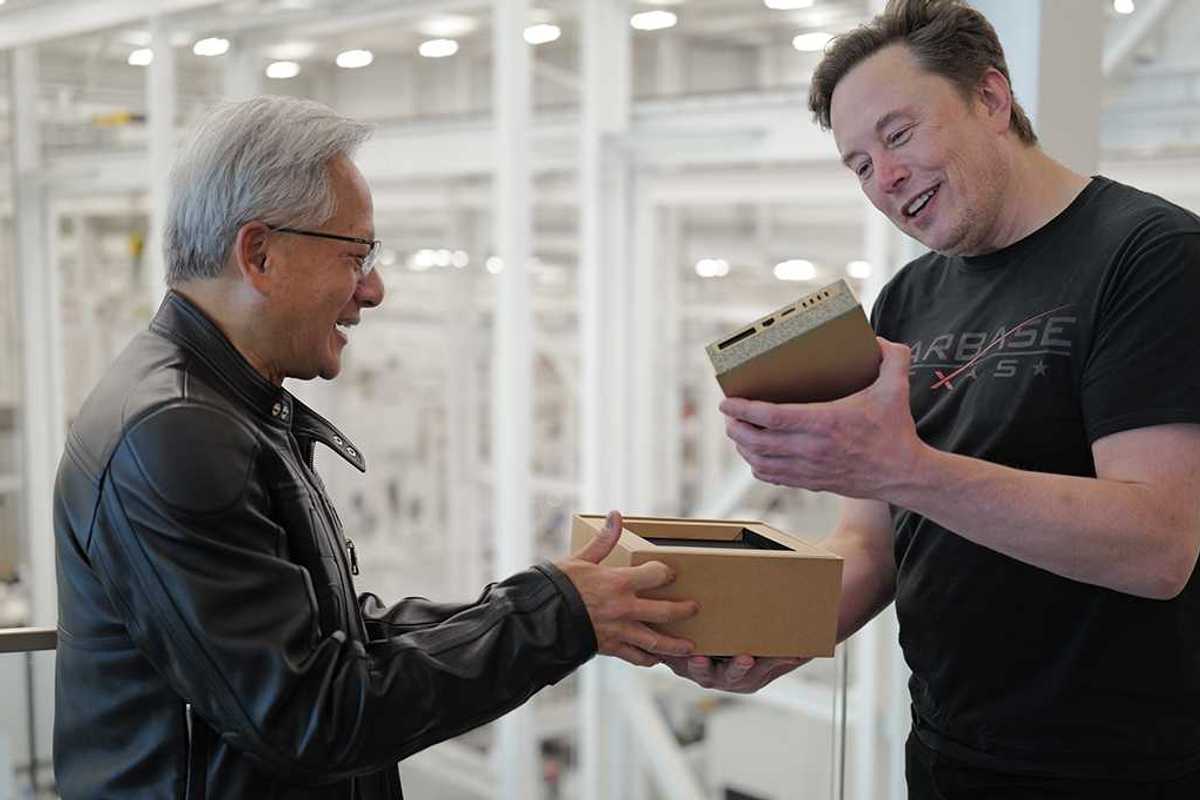
NVIDIA CEO Jensen Huang kicks off the rollout of DGX Spark, the world’s smallest AI supercomputer, with a hand-delivery to Elon Musk.
Courtesy: https://blogs.nvidia.com/
Elon Musk and Uber co-founder Travis Kalanick have joined more than 165,000 signatories on the volunteer-run Stand with Jensen online petition urging Nvidia's board to reinstate former CEO Jensen Huang following his abrupt departure from the chipmaker.
Other prominent supporters include Epic Games CEO Tim Sweeney, Y Combinator CEO Garry Tan and Replit CEO Amjad Masad.
Can Jensen Huang return as Nvidia CEO?
Huang has reportedly discussed returning to Nvidia with close associates, while supporters are assembling a lobbying group to secure backing from the White House and the company's board.
According to a report by The Financial Times, Huang's allies are preparing a so-called "war room" to coordinate efforts to persuade decision-makers to support his return. President Donald Trump has also expressed support for the former CEO.
However, the campaign cannot compel Nvidia to reinstate Huang. The company's board is responsible for selecting its chief executive and has already appointed Chief Financial Officer Colette Kress as interim CEO while considering potential permanent successors.
The open letter argues that Huang was removed without meaningful due process. It calls on the board to bring him back while an independent investigation establishes the facts and to provide him with a fair opportunity to respond.
Among the notable supporters, Kalanick argued that Huang's contributions to Nvidia should be considered before ending his leadership. The campaign website identifies affiliations as self-reported and says they have not been independently verified.
Supporters also argue that Huang's personal relationships with major technology companies and industry leaders are important to Nvidia's business.
Musk warned on X that many of Nvidia's important agreements were established through personal trust and direct relationships with Huang rather than formal written contracts. They fear his departure could disrupt commercial partnerships and affect the wider artificial intelligence industry.
Why did Jensen Huang resign from Nvidia?
Huang resigned on Nov. 12 after 33 years leading the chipmaker, following revelations about extramarital relationships.
The controversy includes his reported relationship with Alice Huang, a former executive at Singapore-based data center company Megaspeed, who is suspected by US intelligence officials of having links to Chinese intelligence.
Authorities are also examining allegations involving the movement of restricted Nvidia chips into China through intermediary companies.
Huang separately acknowledged an affair with Nvidia executive Kimberly Powell, according to reports.
Before his departure, Nvidia's board had announced an independent investigation into concerns that Huang may have been targeted by a foreign intelligence operation. The company said it had no reason to believe national security or corporate secrets had been compromised.
Following his resignation, Nvidia appointed Kress as interim CEO and began considering candidates for a permanent replacement.
Why is the US Treasury opposing Huang's return?
The campaign has encountered resistance from Washington, particularly from US Treasury Secretary Scott Bessent.
On Nov. 15, Bessent said Nvidia should look outside the company for its next chief executive, arguing that the circumstances surrounding Huang's departure required a significant leadership change.
"This makes me think that as the board conducts a search for a new leader that they need to go outside the company," Bessent told Fox News' Sunday Morning Futures program.
He also called for Nvidia's board and outside legal advisers to answer questions about the company's compliance with US export restrictions, particularly concerning allegations that restricted chips reached China.
The dispute has exposed a divide between technology industry leaders who consider Huang essential to Nvidia's future and US officials seeking stronger oversight of the company's business practices.
Nvidia's shareholders also face procedural hurdles if they want to challenge the board. Under the company's bylaws, shareholders must hold at least 15% of its shares continuously for one year to request a special shareholder meeting.
For now, Huang's return remains uncertain, with the final decision resting with Nvidia's board.





Comments
See what people are discussing