

EU envoy urges Pakistan textile industry to step up compliance to retain GSP Plus
EU envoy Raimundas Karoblis discusses extending Pakistan’s GSP Plus facility beyond 2027 with APTMA

Business Desk
The Business Desk tracks economic trends, market movements, and business developments, offering analysis of both local and global financial news.
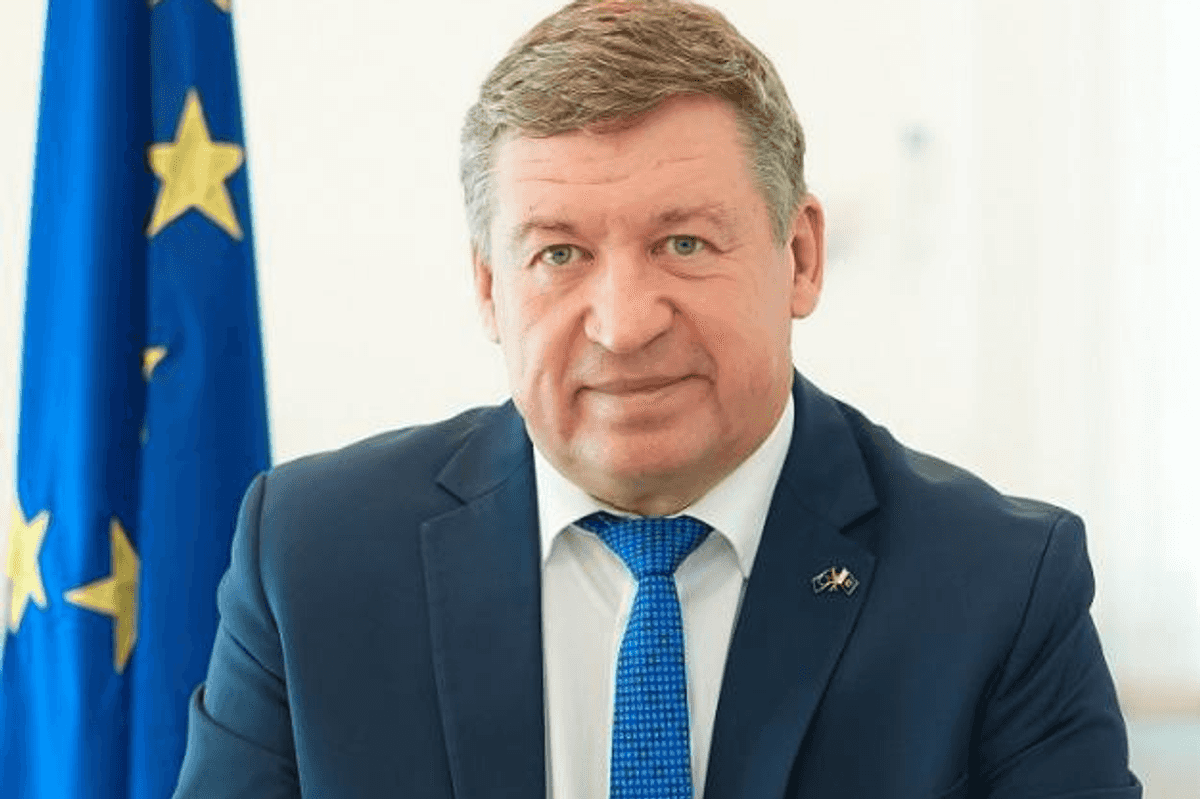
European Union Ambassador Raimundas Karoblis.
File
European Union Ambassador Raimundas Karoblis held extensive discussions with the leadership of the All Pakistan Textile Mills Association (APTMA) on Friday on measures to help extend Pakistan’s Generalised Scheme of Preferences Plus (GSP Plus) trade facility beyond 2027.
Karoblis visited APTMA House in Lahore along with First Secretary Kert Ajamaa, Manager Development Cooperation Theis Munksgaard-Hansen and Senior Economist and Trade Advisor Husnain A. Iftakhar.
The ambassador said Pakistan would need to demonstrate progress in implementing and legislating laws and conventions required to retain GSP Plus status.
He urged the business community, particularly exporters, to take immediate steps to implement the required conventions and engage with the government on concerns raised by the European Commission, particularly regarding human and labour rights, governance and environmental issues.
Karoblis said addressing these concerns would help facilitate the process for a possible 10-year extension of the trade facility.
He also praised Pakistan’s textile industry for its progress on sustainability, saying the issue remained high on the EU’s list of considerations for applications to continue the facility.
APTMA Chairman Kamran Arshad said the EU was Pakistan’s largest trading partner and that GSP Plus had enabled the country’s textile industry to compete more effectively in regional markets.
He said GSP Plus allows Pakistan to export 78% of its products to EU countries on a duty-free basis, helping increase the country’s share of exports to the bloc while supporting employment, investment, technology upgrades and foreign investment.
Arshad said the facility had also supported Pakistan’s efforts towards a greener economy and zero-carbon emissions, with several textile companies expected to achieve net-zero carbon emissions by 2050.
He urged the continuation of GSP Plus until Pakistan achieves economic stability, saying further export diversification could allow the country to derive additional benefits from the facility.
Arshad warned that withdrawal of GSP Plus would hurt Pakistan’s exports and reduce the competitiveness of its textile industry. He estimated that the industry could face losses of at least PKR1 trillion annually, along with increased unemployment, mill closures and higher poverty.
He also warned of wider economic repercussions, saying withdrawal of the facility could affect the banking, real estate, transportation and allied sectors because more than 40% of bank loans are obtained by the textile sector, according to APTMA.
Arshad said losing the facility could also undermine initiatives related to environmental protection, human rights, labour and gender rights, anti-corruption and narcotics control.
APTMA Chairman North Asad Shafi told the ambassador that Pakistan’s textile industry had imported billions of dollars worth of textile machinery from EU member states as part of its expansion plans.
Shafi expressed hope that GSP Plus would be extended to support poverty alleviation and increase workers’ take-home salaries through improved skills.
He also urged the EU to facilitate the early finalisation of a free trade agreement between Pakistan and the EU, saying it should follow the model of the India-EU FTA before any withdrawal of GSP Plus.
Shafi briefed the ambassador on APTMA’s advocacy for GSP Plus compliance and its role in developing Pakistan’s compliance infrastructure.
He outlined the proposed National Compliance Entity’s facilitative, regulatory and dispute-settlement functions and reaffirmed APTMA’s commitment to meeting GSP Plus obligations, addressing compliance gaps and strengthening engagement with the government and other stakeholders.
He said APTMA would remain engaged until the GSP Plus reapplication process was completed and a comprehensive National Action Plan developed.




Comments
See what people are discussing