

Fuel prices in Pakistan may not rise as sharply as expected after global decline
Crude slump trims expected petrol and diesel increases by up to 40%

Business Desk
The Business Desk tracks economic trends, market movements, and business developments, offering analysis of both local and global financial news.
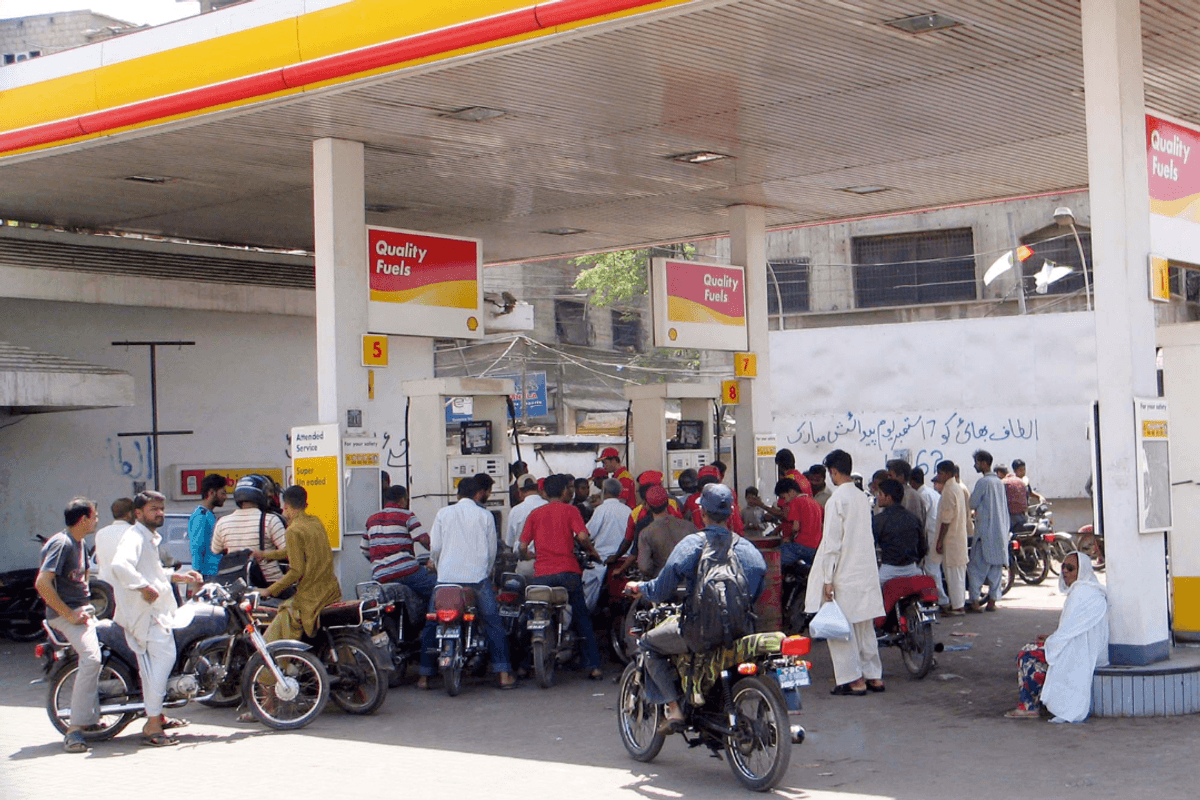
A sharp drop in global crude oil prices during a single trading session has eased pressure on Pakistan’s domestic fuel prices, with refinery estimates now suggesting smaller increases for petrol and diesel in the upcoming review.
Earlier projections based on a surge in international oil prices had signaled steep hikes for Pakistani consumers. But after crude fell by more than 15% on Tuesday, industry officials say the expected increase may be trimmed by as much as 40%.
Initial refinery calculations prepared around March 9 were based on a spike in global benchmarks, when both West Texas Intermediate (WTI) and Brent crude touched about $119 a barrel — their highest levels in roughly six years. At that level, analysts had estimated diesel prices could jump by about PKR 82 per liter and petrol by roughly PKR 66 per liter.
The latest decline in oil markets has moderated those estimates. Updated projections suggest petrol prices could rise by about PKR 48 per liter while diesel may increase by roughly PKR 38 per liter.
Why prices have declined
Global oil markets tumbled Tuesday amid signs of possible de-escalation in tensions in the Middle East. WTI crude fell 16.4% to $79.26 a barrel, while Brent dropped 14.7% to $84.22 in a single session.
From their recent peaks of about $119.50 a barrel, WTI has declined roughly 33.6%, while Brent has dropped about 29.5%.
Oil prices retreated after U.S. President Donald Trump suggested the conflict involving Iran might soon end, raising hopes that disruptions to global energy supply routes could be limited.
“The market is reacting quickly to any indication that tensions in the region could ease,” said an energy analyst. “Even a partial reopening of supply routes or reduced risk to shipping lanes can dramatically change oil price expectations.”
The Strait of Hormuz — a critical maritime corridor through which roughly 20% to 25% of global oil shipments pass — has been at the center of concerns during the conflict.
Prolonged disruptions could be catastrophic
Executives in the energy sector have warned that prolonged disruption there could have severe global consequences. The head of Saudi Arabia’s Aramco, the world’s largest oil exporter, cautioned that continued blockage of the strait could lead to “catastrophic consequences” for energy markets.
Despite the latest drop, oil prices remain well above levels seen before the conflict escalated. Brent crude traded at around $73 a barrel before fighting involving the United States, Israel and Iran intensified in late February.
Global stock markets rebounded Tuesday as oil retreated, reflecting investor hopes that the conflict may not become prolonged.
In Pakistan, where fuel prices are adjusted periodically to reflect global market movements and exchange rate changes, the government is expected to announce revised petrol and diesel prices in the next review.
“Consumers may still face an increase, but the magnitude could be significantly lower than feared earlier,” he said. “Everything now depends on whether crude prices stabilize in the coming days.”


Comments
See what people are discussing