

Pakistan’s constitutional court recalls SC orders behind Nasla Tower demolition
Pakistan's Federal Constitutional Court withdraws Supreme Court orders that led to Karachi's Nasla Tower demolition, citing judicial overreach.

Ali Hamza
Correspondent
Ali; a journalist with 3 years of experience, working in Newspaper. Worked in Field, covered Big Legal Constitutional and Political Events in Pakistan since 2022. Graduate of DePaul University, Chicago.
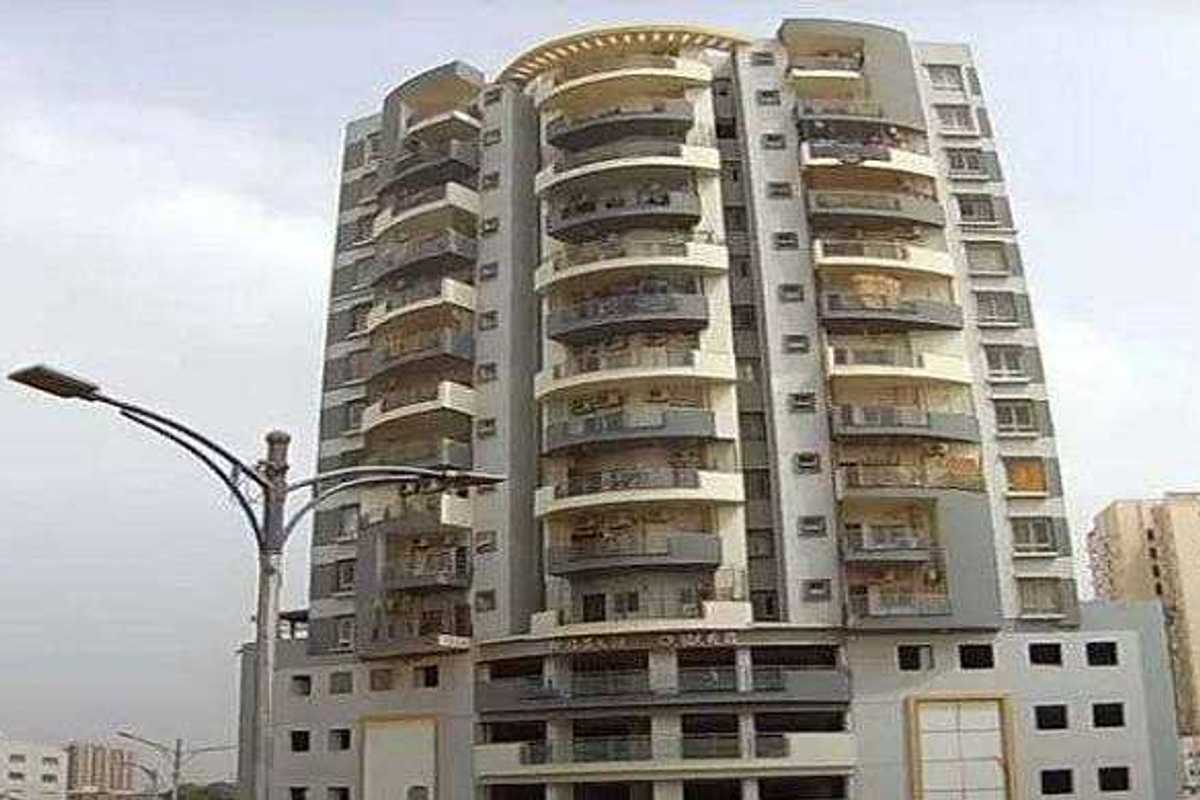
Among the most prominent outcomes was the demolition of Nasla Tower, a 15-story residential and commercial building on Sharea Faisal.
File photo
Pakistan's Federal Constitutional Court has ruled that the Supreme Court exceeded its constitutional authority by expanding a single property dispute into a citywide campaign against illegal construction. The ruling overturns the legal basis for years of demolition orders in Karachi, including those that led to the destruction of the high-profile Nasla Tower.
What did the Federal Constitutional Court rule on Nasla Tower?
The Federal Constitutional Court recalled Supreme Court orders issued on December 21, 2018, and January 22, 2019, which had authorized authorities to pursue illegal construction across Karachi. It also recalled all reports, proceedings and actions taken under those directives, finding that the court had gone beyond the case originally before it.
How did the Nasla Tower case begin?
The judgment stems from the case Abdul Karim versus Nasir Salim Baig, which started as a dispute over a single building in Karachi's Lyari neighborhood before expanding into a broader judicial campaign against unauthorized construction. The FCC, established under Pakistan's 27th Constitutional Amendment in November 2025 to assume the Supreme Court's constitutional jurisdiction, said the earlier orders went beyond the issues before the court.
A two-member bench led by Justice Aamer Farooq ruled that courts may issue directions beyond the immediate dispute only when necessary to resolve the case at hand. It found that extending a single-building case into citywide demolition orders did not meet that standard. The court also said enforcement of building laws is the constitutional responsibility of Sindh's provincial government, not the judiciary.
Why was Nasla Tower demolished?
The case began in 2016 as an appeal against a Sindh High Court order to demolish a building on Mussa Lane in Lyari, allegedly built on evacuee property. In 2018, the Supreme Court expanded the proceedings by seeking details of unauthorized buildings across Lyari before directing the Sindh Building Control Authority to act against illegal construction throughout Karachi. By January 2019, it had imposed a citywide ban on land use changes and ordered the demolition of several commercial buildings.
Among the most prominent outcomes was the demolition of Nasla Tower, a 15-story residential and commercial building on Sharea Faisal. The Supreme Court ruled in June 2021 that the building had encroached on land reserved for a service road and ordered its demolition, instructing the developer to refund registered buyers within three months. After review petitions were dismissed, residents were ordered to vacate before the building was destroyed by controlled implosion in late October 2021.
Does the ruling reverse the Nasla Tower demolition?
The FCC said its ruling does not reverse the demolition itself, which cannot be undone. Instead, it removes the legal foundation that allowed the Supreme Court to supervise illegal construction across Karachi on a continuing basis rather than through individual cases.
The decision also creates uncertainty over unresolved compensation for Nasla Tower's apartment and shop owners. A 2024 Supreme Court order had directed authorities to auction the site to compensate buyers, but payments had not been made by last year, and that auction process was based on the orders the FCC has now recalled.
How have residents and industry figures reacted to the ruling?
According to ARY News, several former residents and owners visited the Nasla Tower site after the ruling. Muhammad Ali, who said he owned three apartments in the building, criticized the demolition, saying one judge's decision had destroyed many families. He questioned the significance of the latest ruling, noting there was now a separate decision for Nasla Tower and a separate order for Islamabad.
Association of Builders and Developers of Pakistan Chairman Hassan Bakshi welcomed the ruling, saying it corrected an approach that had taken eight years to reverse. He urged the federal and Sindh governments to sell the Nasla Tower land and compensate apartment and shop owners, and called on former Chief Justice Gulzar Ahmed to acknowledge what he described as a mistake.
What other cases could be affected by the ruling?
The court's decision could affect the legal standing of other actions from the earlier judicial campaign, including clearance operations along Karachi's Gujjar and Orangi nullahs. Those operations, launched under a related 2020 Supreme Court order, displaced more than 50,000 people according to residents' groups, many of whom said compensation was delayed, incomplete or never received.
The ruling does not affect every land-use decision from that period. A separate 2022 Supreme Court judgment voiding the allotment of 200 acres of Karachi Metropolitan Corporation land at Gutter Baghicha for a housing society remains in force, since it addressed a specific land grant rather than broader judicial oversight.
The FCC emphasized that its judgment should not be interpreted as legalizing illegal construction, stating that encroachments remain the responsibility of Sindh's government and regulatory agencies. In a separate opinion, Justice Syed Arshad Hussain Shah said protecting parks, playgrounds, sidewalks and other public spaces remains a constitutional obligation of the state. The judgment leaves unresolved whether Sindh's regulatory authorities can effectively enforce building laws without judicial oversight.




Comments
See what people are discussing