

Iran-Pakistan gas pipeline revival could save Pakistan over $1 billion a year, ease inflation
Sanctions relief could unlock cheaper energy, cut power costs and strengthen supply security, Analysts say

Haris Zamir
Business Editor
Experience of almost 33 years where started the journey of financial journalism from Business Recorder in 1992. From 2006 onwards attached with Television Media worked at Sun Tv, Dawn Tv, Geo Tv and Dunya Tv. During the period also worked as a stringer for Bloomberg for seven years and Dow Jones for five years. Also wrote articles for several highly acclaimed periodicals like the Newsline, Pakistan Gulf Economist and Money Matters (The News publications)
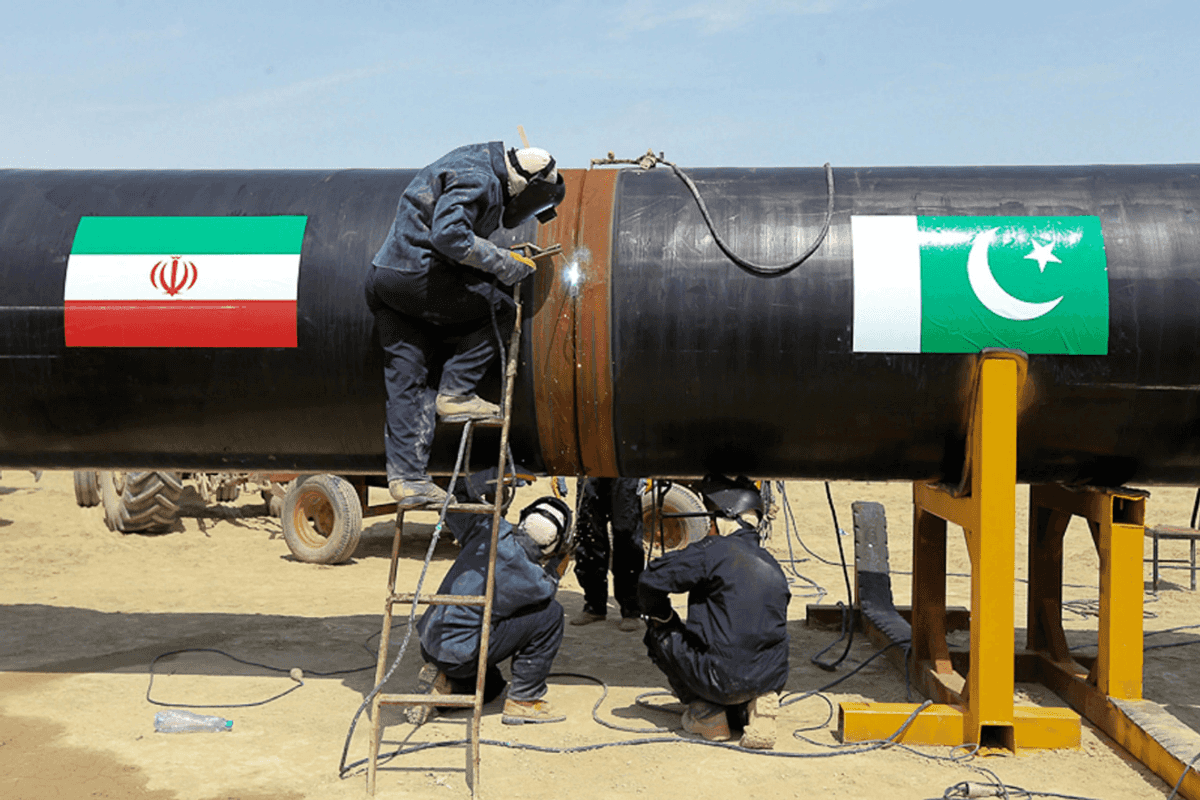
Iran-Pakistan gas pipeline could save Pakistan over USD 1 billion annually, easing energy costs
Iran-Pakistan gas pipeline could save Pakistan over USD 1 billion annually, easing energy costs
Pakistan's long-stalled Iran-Pakistan gas pipeline is back in focus as analysts say cheaper pipeline gas could lower electricity costs, reduce supply shortages and strengthen energy security, provided sanctions are eased and the two countries reach a new pricing agreement.
The prospect of reviving the pipeline has gained renewed attention following the de-escalation of tensions in the Middle East. Energy economists and market analysts say the project could significantly reduce Pakistan's energy import bill, improve power sector economics and enhance long-term energy security if geopolitical barriers are removed and commercial terms are renegotiated.
The project, first conceived more than two decades ago, has remained stalled largely because of international sanctions on Iran and Pakistan's failure to complete its section of the pipeline. However, analysts say improved regional stability and the possibility of sanctions relief could reopen discussions on a project that was once expected to deliver 750-850 MMcfd of natural gas to Pakistan.
Pipeline gas offers significant cost advantage
Dr. Ali Salman, CEO of Prime Institute, said the economic case for pipeline gas remains compelling despite the project's prolonged delay.
"There are three layers," Salman said, pointing to pricing, deliverability and changing demand dynamics.
On pricing, he noted that pipeline gas avoids the liquefaction, shipping and regasification costs associated with LNG imports, potentially saving between USD 3.5/MMBtu and USD 6/MMBtu.
Pakistan's recent experience during disruptions around the Strait of Hormuz highlighted the importance of those savings. Spot LNG prices surged to USD 18-19/MMBtu, compared with long-term LNG supplies from Qatar priced at around USD 7-9/MMBtu, Salman said.
According to estimates cited by Salman, Pakistan may have forgone approximately USD 3.3 billion in annual savings between 2013 and 2019 because the pipeline was never completed.
However, Salman cautioned that the commercial framework underpinning the project is outdated. The Gas Sales Purchase Agreement signed in 2009 no longer reflects current market realities, and both sides have acknowledged the need for renegotiation.
Demand landscape has changed
Salman said Pakistan's gas market today differs significantly from the assumptions used when the pipeline was originally designed.
National gas consumption has fallen below 4,000 MMcfd, compared with earlier projections of around 6,000 MMcfd, reflecting slower economic growth, higher energy prices and the rapid expansion of solar power generation.
"The 750 MMcfd pipeline intended for the 2009 demand profile would join a fundamentally different market today," he said.
The observation raises questions about whether Pakistan would require the full contracted volumes if renewable energy continues to gain market share and electricity demand growth remains subdued.
Potential savings for power sector
Bazif Memon, research analyst at Optimus Capital Management, said the pipeline could still generate substantial savings for Pakistan's power sector if gas prices remain competitive.
Pakistan currently uses around 400-500 MMcfd of RLNG for electricity generation, while the proposed pipeline could supply approximately 750-850 MMcfd.
Memon said Pakistan's dependence on RLNG-fired power generation is expected to gradually decline as renewable energy penetration increases. Nevertheless, pipeline gas could replace a large portion of imported LNG volumes if delivered at competitive rates.
"Currently, Pakistan imports RLNG from Qatar at an average price of USD 12-13/MMBtu," Memon said. "If pipeline gas arrives at USD 8-9/MMBtu, which is likely because transportation and regasification costs are avoided, it would create meaningful savings."
He estimated that approximately 15% of Pakistan's electricity generation currently relies on RLNG. At prevailing LNG prices, electricity generated from RLNG costs roughly PKR23 per kWh.
If Iranian gas were supplied at USD 7-8/MMBtu, generation costs could decline to between PKR14 and PKR17 per kWh, potentially saving around PKR7 per kWh.
LNG commitments and penalty risks
Despite the economic appeal, Memon highlighted practical challenges.
Pakistan remains committed to long-term LNG supply agreements with Qatar through 2031. If the pipeline becomes operational before those contracts expire, Islamabad may need to resell surplus LNG cargoes in international markets, potentially at lower prices and resulting in financial losses.
The analyst also warned of legal risks associated with further delays.
Iran has already completed its portion of the pipeline infrastructure and retains the option of pursuing international arbitration against Pakistan for non-compliance with contractual obligations.
According to Memon, potential penalty exposure could reach approximately USD 18 billion.
Energy security and lower electricity tariffs
Abdul Azeem, head of research at Al-Habib Capital Markets, described the project as potentially transformational for Pakistan's energy sector.
Pakistan currently imports LNG from Qatar under a Brent-linked pricing formula equivalent to approximately 13.37% of Brent crude oil prices. LNG import volumes declined sharply to around 695 MMcfd during the first 11 months of FY26 from 920 MMcfd a year earlier amid disruptions linked to tensions around the Strait of Hormuz, Azeem said.
With total RLNG demand estimated at 1,000-1,200 MMcfd, the decline in imports has widened supply shortages and forced greater reliance on furnace oil and imported coal for power generation.
RLNG's share in Pakistan's electricity generation fell to 13.6% in FY26 from 17.6% a year earlier.
Azeem estimated that Iranian gas could be supplied at USD 8-10/MMBtu, representing a discount of roughly 20%-37% compared with prevailing LNG costs.
At full utilization, the pipeline could save Pakistan more than USD 1 billion annually and reduce electricity generation costs to around PKR15-18 per kWh.
Lower fuel costs would likely ease inflationary pressures and provide relief to electricity consumers, he said.
Iran possesses the world's second-largest natural gas reserves, offering long-term supply security that could reduce Pakistan's exposure to volatile spot LNG markets.
Geopolitics remain the deciding factor
Nasheed Malik, head of research at Growth Investments, said a pipeline agreement would become realistic only if broader diplomatic conditions improve, particularly between Iran and the United States.
"The main uncertainty surrounding the project is geopolitical rather than economic," Malik said.
He added that any revival would likely require at least tacit acceptance from major stakeholders, including the United States, China and Saudi Arabia.
Pipeline gas from Iran could provide a lower-cost alternative while reducing exposure to LNG shipping disruptions and maritime chokepoints.
Malik also noted potential benefits for Pakistan's fertilizer industry. Several fertilizer plants currently depend on RLNG, and access to cheaper pipeline gas could improve profitability and support higher domestic urea production.
Companies such as Fatima Fertilizer, Agritech and Fauji Fertilizer could benefit from more reliable and affordable gas supplies, potentially reducing Pakistan's dependence on imported fertilizers.
Outlook
While the economics increasingly favor pipeline gas over imported LNG, the project's future hinges on factors beyond energy markets. Sanctions relief, renegotiated pricing terms, evolving domestic gas demand and Pakistan's existing LNG commitments will all influence whether the Iran-Pakistan pipeline can move from a long-delayed proposal to a commercially viable energy corridor.
For Pakistan, however, analysts agree that a successful pipeline agreement following sustained Middle East stability could offer one of the country's biggest opportunities in decades to reduce energy costs, strengthen supply security and ease pressure on external accounts.





Comments
See what people are discussing