

Pakistan increases profit margin for oil marketing companies
Move likely to make petrol and diesel costlier irrespective of global prices

Business Desk
The Business Desk tracks economic trends, market movements, and business developments, offering analysis of both local and global financial news.
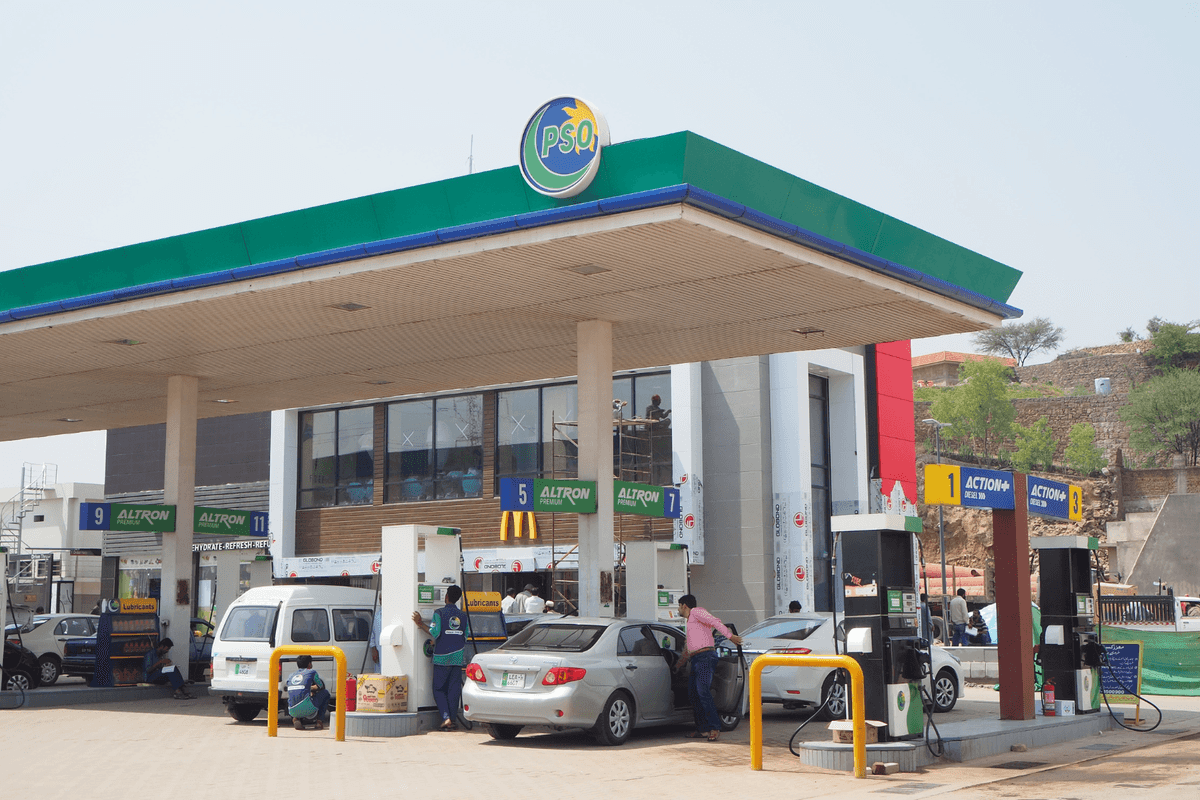
The margins have been adjusted in line with the inflation trends over the past two years
Pakistan has increased the profit margin of oil marketing companies (OMCs), making a future price hike likely.
The Economic Coordination Committee (ECC), Pakistan’s top economic decision-making body, has approved a proposal to revise the margins of OMCs on petrol and diesel.
A statement issued after the ECC meeting on Tuesday said the margins have been adjusted in line with the inflation trends.
The ECC capped the increases between 5% and 10%, half of which will be paid immediately, making a price hike likely.
The remaining half will be conditional on the digitization progress of the financial transactions of OMCS. The Petroleum Division will submit a report on digitization by June 1, 2026.
In Pakistan, fuel prices are adjusted in line with the international oil prices. However, there are several other factors that impact the pricing.
According to the pricing structure, the rate at which citizens get petrol and diesel also includes profit margins for the company selling the fuel and the petrol station.
The current margins for OMCs, which is also called the dealer’s margin, are PKR7.87 per liter on both petrol and diesel, according to an analyst. The ECC has allowed an increase of 10% for FY24 and 5% for FY25, which translates into PKR 1.18 per liter, out of which 0.59 per liter will be paid immediately.
Currently, the price of petrol is PKR 263.45 per liter and that of high-speed diesel is PKR 279.65 per liter.
Fuel prices in Pakistan are also influenced by the government’s tax structure, particularly the Petroleum Development Levy (PDL).
The PDL is a fixed amount per liter levied on petroleum products. It is a key source of non-tax revenue for the federal government because, unlike the general sales tax, which must be shared with provinces under the National Finance Commission Award, the petroleum levy remains entirely in the hands of the federal government.
As part of commitments made under the International Monetary Fund program, Pakistan has gradually increased the levy on petrol and diesel in recent months.
The government can impose a maximum PDL of PKR 90 per liter on petrol and diesel under the Finance Act 2025. At present, the PDL on diesel is around PKR 77 per liter and that on petrol PKR 78 per liter. Even when global oil prices fall, domestic price reductions may be limited if the government chooses to maintain or increase the levy to meet fiscal targets.


Comments
See what people are discussing