

France braces for nationwide student protests over crumbling schools and police crackdown
Tens of thousands of students and labor union members are prepared to march across Paris and major French cities on Tuesday, demanding a €10 billion investment in public education and an end to heavy-handed police tactics

News Desk
The News Desk provides timely and factual coverage of national and international events, with an emphasis on accuracy and clarity.
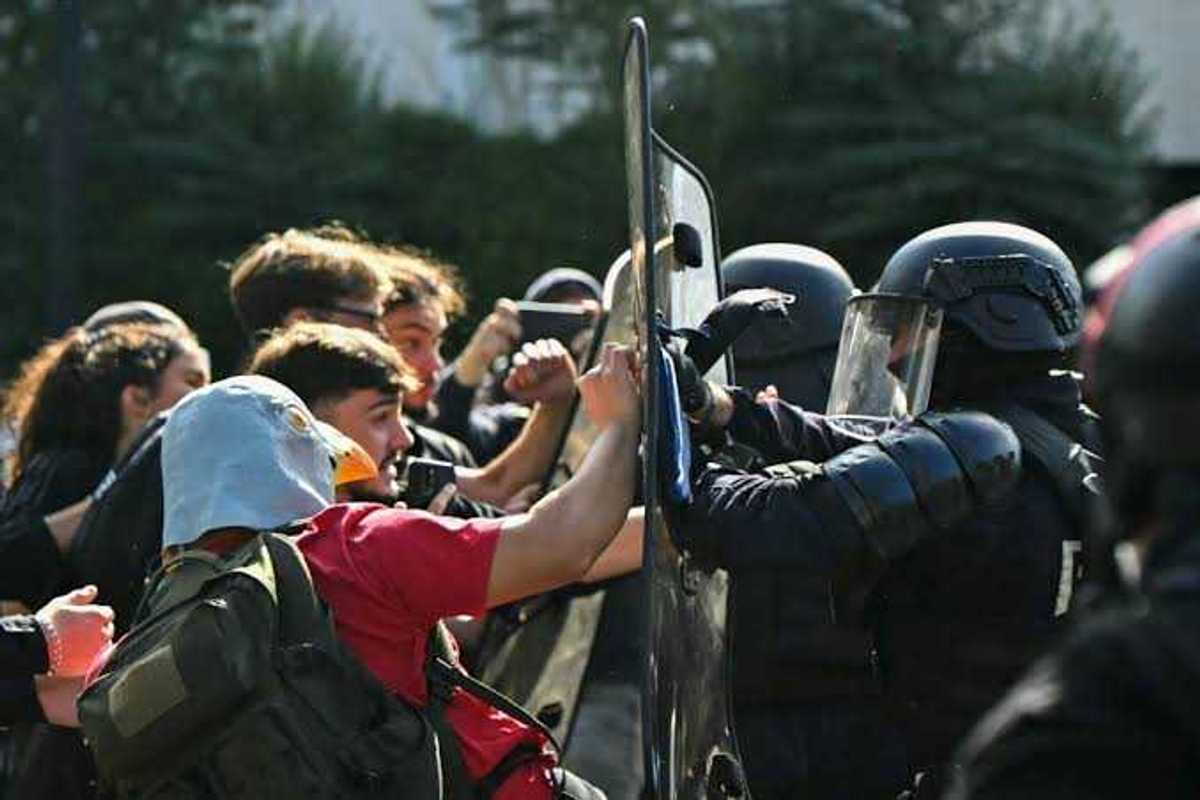
French high school students lit fires and hurled projectiles at police, who responded by firing tear gas, as activists urged new rallies in an escalating protest movement demanding better conditions in education.
AFP
French authorities braced for renewed nationwide demonstrations on Tuesday, October 13, as high school students, supported by major labor unions and the left-wing opposition party France Unbowed, mobilized across Paris and regional hubs to protest deteriorating classroom conditions, chronic teacher shortages, and aggressive police tactics.
What is driving the student protests and the dispute over education funding?
The mobilization follows weeks of disruptions that began in late September, where students used dumpsters and makeshift barricades to blockade high schools across the country.
Demonstrators are demanding urgent structural reforms to address chronic teacher absenteeism, dilapidated infrastructure, and overcrowded course schedules. While the education ministry attempted to defuse tensions by deploying 3,000 substitute teachers to 114 severely impacted high schools, national student unions dismissed the measure as "crumbs," calling instead for an immediate €10 billion ($11 billion) emergency funding package for secondary education.
Tensions have mounted following Thursday’s demonstrations, which brought over 70,000 people into the streets nationwide and resulted in roughly 500 arrests. While high school closures dropped to 130 out of France's 3,700 lycées by Monday, the education ministry warned that clashes around school perimeters have grown more confrontational, with eight teaching staff injured across Paris, Bordeaux, and Lyon, and several police officers targeted with fireworks in Reims and Marseille.
How have authorities, parents, and rights groups responded to the unrest?
The government's security response has faced mounting scrutiny from civil liberties groups and student organizations, who allege excessive use of force against minors.
More than 6,800 people—mostly high school students—have been taken into police custody since the start of the movement, with authorities opening 24 internal investigations into allegations of police brutality following reports of severe injuries from tear-gas canisters and stun grenades. Speaking on Monday, President Emmanuel Macron urged restraint from demonstrators, emphasizing that resolving systemic education challenges requires structured consultation, dialogue, and time.
The dispute has also divided parents and university communities, with some warning of significant learning losses and criticizing school blockades as undemocratic disruptions. However, organizers aim to expand the movement, planning to merge Tuesday's youth mobilization with broader nationwide cost-of-living rallies scheduled for Saturday.
According to Le Monde and France 24, interior ministry officials have deployed heightened security cordons along Paris march routes to prevent property damage and clashes.




Comments
See what people are discussing