

Geopolitics, IMF review to set direction of Pakistan equities in near future
The KSE-100 index saw a sharp sell-off last week, closing at 173,170, a decline of 3.6%

Business Desk
The Business Desk tracks economic trends, market movements, and business developments, offering analysis of both local and global financial news.
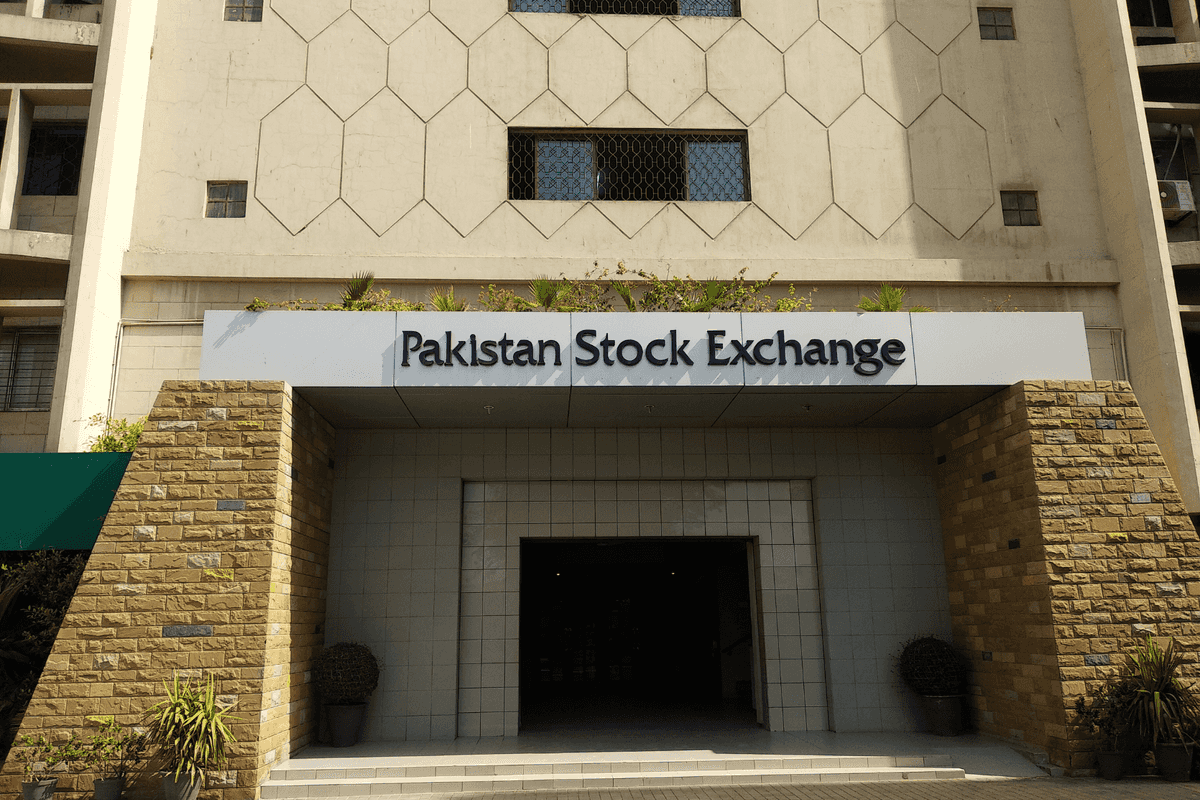
Pakistan's stock market last week saw a strong tussle between bulls and bears, with analysts predicting significant dependence on the geopolitical situation and corporate earnings, mostly below expectations.
The expectation of US strikes on Iran is also keeping the market on the hook.
The KSE-100 index saw a sharp sell-off last week, closing at 173,170, a decline of 3.6%.
The bearish momentum over the week was largely driven by persistent selling activity and geopolitical risks. Furthermore, the index fell 15,997 points to 173,170, down 8.5% from its January peak of 189,167, indicating a notable market correction.
An analyst from Arif Habib Ltd., the direction of the KSE-100 Index next week will hinge on developments on the geopolitical front. Meanwhile, the ongoing results season could offer upside momentum, particularly if corporate earnings surprise on the higher side.
Additionally, any constructive outcome, especially from the IMF visit scheduled for next week, may further reinforce positive sentiment and support market gains.
"We expect the market to recover as domestic and geopolitical uncertainties subside, with market trading at attractive valuations of forward PE of 7.3x and Dividend Yield of 6.4%,” said another analyst from AKD Securities said.
The KSE-100 Index is currently trading at a PE of 8.7x, offering a dividend yield of around 5.6%.
According to an analyst at Spectrum Securities, the market direction is expected to be influenced by the upcoming visit by IMF representatives to Pakistan, who will evaluate the country’s performance under the ongoing program and gauge the likelihood of additional financing, potentially providing a supportive backdrop for investor sentiment.
Additionally, the upcoming monthly inflation data will be closely watched, as inflation trends shape monetary policy expectations – a higher CPI may signal rising inflation, potential interest rate pressures, and elevated borrowing costs, which could weigh on corporate earnings and equity valuations.
Conversely, a softer CPI reading would ease inflationary pressures, improve liquidity conditions, and support equity markets, he said.
Meanwhile, several major corporations are scheduled to announce their earnings, and positive results could further boost investors’ exposure and risk sentiment.
Overall, macroeconomic developments and corporate earnings will remain key catalysts in determining the near-term market trajectory.
The average volume of the KSE All-Index decreased by 24% to 649 million shares during the outgoing week. Whereas KEL, WTL and BOP topped the volume charts with 102 million, 40 million, and 30 million shares, respectively.
The market capitalization of the KSE-All Index decreased by 3.62% to USD 66,795 million.
The sector-wise market capitalization decreased in the refinery (12.47%), OMC (8.79%), and transport (8.11%) sectors.
The sectors that contributed negatively were banks (1,044 points), fertilizer (931points), cement (814 points), investment banks (599 points), and OMCs (509 points).




Comments
See what people are discussing