


News Desk
The News Desk provides timely and factual coverage of national and international events, with an emphasis on accuracy and clarity.
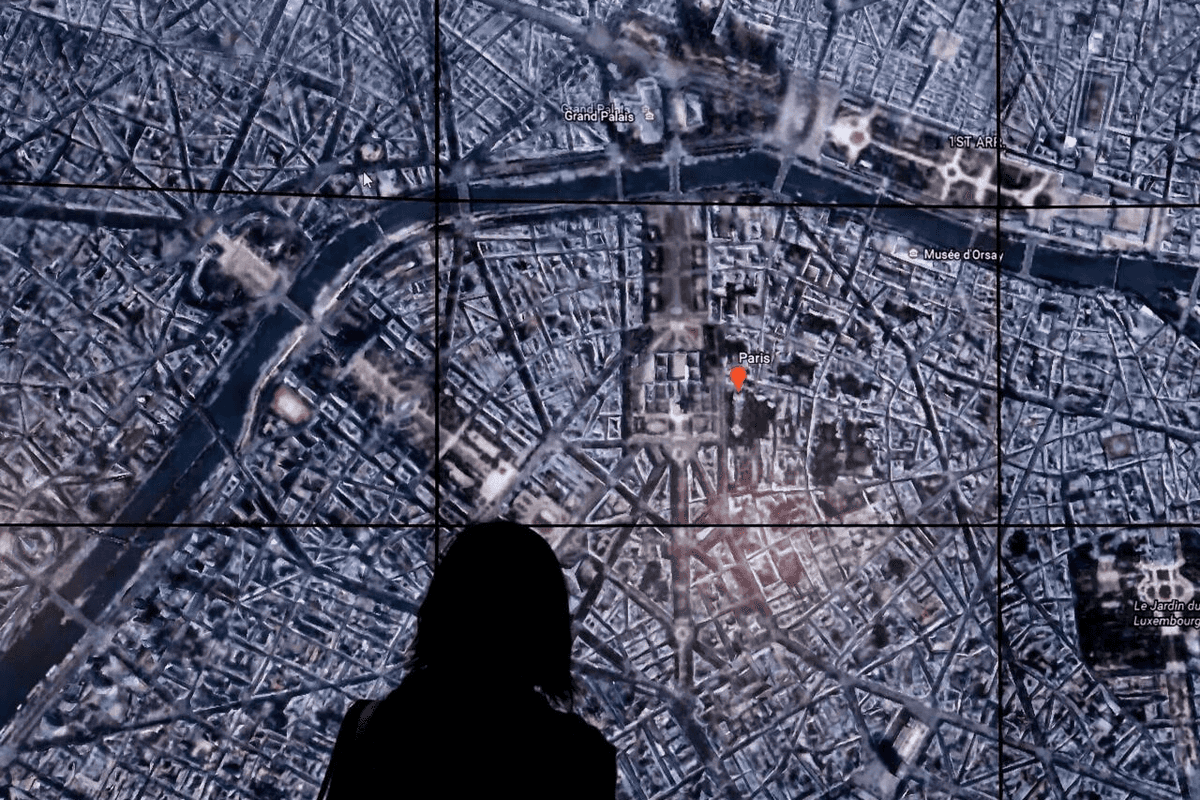
Google pulls AI visualization feature from Google Earth.
AFP/File
Google rolled back Friday a new feature letting Google Earth users generate AI visualizations on top of the service's satellite imagery.
The move followed a furious backlash from researchers and open-source intelligence experts warning of the tool's potential for disinformation, just a day after its launch.
Why did Google roll back its Google Earth AI tool?
Google said it had seen geospatial professionals using the feature for useful purposes, but also saw people sharing generated imagery that appeared to violate its policies. The company said it was rolling back the tool in Google Earth while it works on implementing stronger guardrails, adding that people uniquely trust the platform for a reliable view of the world.
The "create image" tool, unveiled Thursday, integrated Google's Nano Banana 2 image-generation technology into Google Earth. It let users zoom into locations and build pictures in seconds based on the program's satellite, aerial and 3D-mapping data, which Google had described as a way to visualize history, create real estate plans and more.
What did critics say about the fake satellite images tool?
Disinformation researchers warned the feature could let bad actors misuse Google Earth, a key resource for fact-checking and verification, to create realistic geospatial fakes. Digital investigations expert Henk Van Ess wrote in a widely shared Substack post that Google had spent 20 years building the reference the world checks against, then added a button that makes things up.
Brady Africk, a research analyst at the American Enterprise Institute specializing in satellite imagery analysis, told AFP the update would have made it easier to generate convincing fake satellite imagery that spreads quickly online and misleads the public. He said such fakes erode public trust in satellite imagery and make the jobs of journalists and researchers more difficult.
What fake images did the tool generate in tests?
As criticism mounted, Google said on X that images created with the feature included SynthID digital watermarks, invisible markers embedded in AI-generated media. The company said it takes misinformation seriously and linked to an AI policy barring misinformation, misrepresentation or misleading activities.
AFP's tests of the feature on Friday fabricated satellite images with potentially serious global consequences, including an explosion in Paris, a nuclear site in Iran, a bomb crater in Russia, and an Islamic State group training ground in Syria. The tool also fulfilled prompts for other fake scenes, such as floods across Bangladesh, a migrant caravan at the US-Mexico border, and a suspicious warehouse holding vans in Georgia, a state Trump has falsely accused of widespread election fraud. The "create image" button no longer appeared within Google Earth after the pause.
Have fake satellite images caused problems before?
Similar fakes have had real-world impacts in the past. In 2023, an AI image depicting an explosion at the Pentagon briefly rattled the markets, and early in the US war with Iran, an AI-altered satellite image of a destroyed US military base drew millions of views across platforms.
The London-based Centre for Information Resilience was among the groups urging Google to reverse course, with executive director Ross Burley calling the feature irresponsible. He said trust in satellite imagery has taken decades to build and could be irrevocably damaged overnight.
GeoConfirmed, a volunteer-driven open-source intelligence project that verifies visuals from global conflicts, also urged Google to reconsider before the rollback was announced. The group said on X that it was already observing people exploiting the tool to fake military positions, relabel buildings as schools, and manipulate the information environment, adding that the tool's primary practical use appeared to be creating and spreading mis- and disinformation.





Comments
See what people are discussing