

Hezbollah Secretary-General Naim Qassem again rejects Israel-Lebanon framework deal, vowing no 'surrender'
Hezbollah chief Naim Qassem publicly rejected the US-sponsored framework agreement between Israel and Lebanon, condemning plans for the group's disarmament and calling for the total downfall of the proposal

News Desk
The News Desk provides timely and factual coverage of national and international events, with an emphasis on accuracy and clarity.
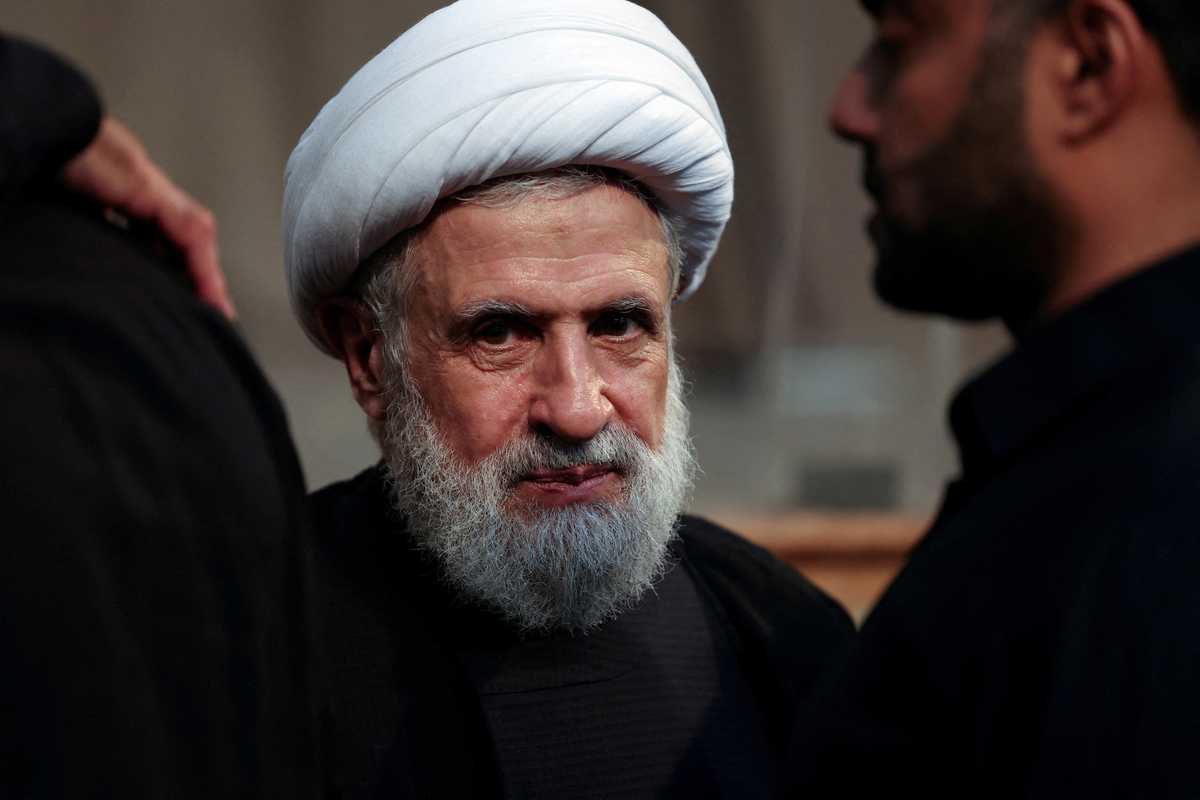
Hezbollah Secretary-General Naim Qassem again rejected the framework agreement negotiated between Israel and Lebanon on Friday, declaring that his group refuses to "surrender" nearly six months after war erupted across the region.
In a televised address broadcast on the group's Al-Manar channel, Qassem denounced the US-sponsored diplomatic efforts as an infringement on Lebanese national sovereignty.
Why is Hezbollah rejecting the Israel-Lebanon framework agreement?
The framework agreement—signed in late June during direct US-brokered talks—calls for the gradual disarmament of Hezbollah, the dismantling of its military infrastructure, and the progressive withdrawal of Israeli forces from southern Lebanon. In their place, the Lebanese Armed Forces (LAF) are slated to deploy to designated "pilot zones" along the border to assume exclusive security control.
Qassem forcefully rejected the plan, describing it as "illegitimate, unlawful, humiliating, and destructive to Lebanese sovereignty." He explicitly dismissed the proposed pilot zones and international verification mechanisms designed to oversee the disarmament process. Qassem reiterated that Hezbollah remains committed solely to the parameters of the November 2024 ceasefire agreement, vowing that the movement "will keep our heads high and will not surrender."
According to Al Jazeera, Hezbollah's political leadership informed Lebanese Parliament Speaker Nabih Berri that the group will not relinquish its weapons arsenal under any foreign-backed arrangement.
What is the current security situation along the Israel-Lebanon border?
Despite a reduction in large-scale combat following a US-Iran memorandum of understanding in June, cross-border violence and military operations persist. Israeli military forces continue to operate within a self-declared 10-kilometer-deep "security zone" inside southern Lebanese territory.
Lebanon's state-run National News Agency reported multiple Israeli airstrikes and artillery shelling across southern villages on Friday, with intensified attacks striking targets in the Nabatieh district. Lebanese health authorities report that overall casualties since the conflict escalated in March 2026 have surpassed 4,300 deaths, alongside widespread destruction of civilian infrastructure across border communities.
Negotiations between Israeli and Lebanese delegations in Rome recently produced a shortlist of neutral nations to oversee potential LAF deployments. However, Qassem's total repudiation of the framework casts significant uncertainty over a new round of direct talks scheduled for early September.




Comments
See what people are discussing