


News Desk
The News Desk provides timely and factual coverage of national and international events, with an emphasis on accuracy and clarity.
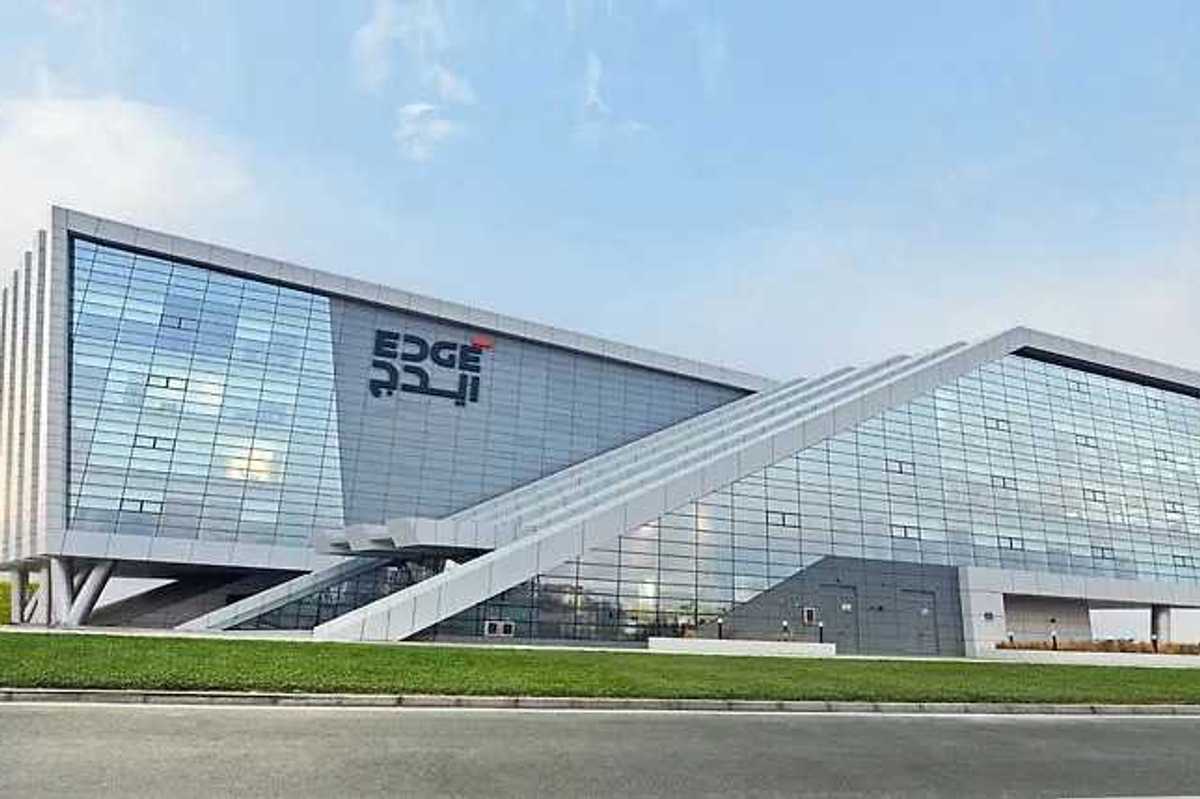
EDGE deployed its systems and geofenced the UAE within 48 hours of the February 28 escalation
Abu Dhabi Media Office
EDGE Group deployed its systems along the UAE's shore border and established a geofence around the country within 48 hours of the February 28 escalation, said Hamad Al Marar, managing director and CEO of EDGE Group, Gulf News reported.
How did EDGE respond to the February 28 escalation?
EDGE deployed its full range of border defense systems within 48 hours of the escalation. The company used its own equipment alongside systems from allied nations to secure the UAE's shore border. Al Marar said this rapid response was possible because EDGE had been ready to deploy before the conflict began.
Al Marar said the speed of that deployment came from years of preparation. "The reality is we prepare for this day every day," he said, describing how EDGE responded when the attacks began.
The UAE-based technology group consolidates more than 35 entities into six core clusters. These cover platforms and systems, missiles and weapons, advanced sensing, secure intelligence systems, technologies and industrialization, and homeland security.
Al Marar said the UAE's broader readiness could not have been built in response to a single event. "This is not something you can prepare for overnight. It took decades," he said.
Has the conflict changed EDGE's technology strategy?
The conflict has not led EDGE to rewrite its technology strategy, according to Al Marar. Instead, it has pushed the company to accelerate the introduction of some capabilities.
Technologies once planned for deployment years later are now being assessed for earlier rollout. International partnerships are one way EDGE is shortening development and qualification timelines, he said.
Al Marar said working with established technology partners allows EDGE to move proven systems into service faster without compromising sovereignty. He named Europe, South Korea, India and the United States as important international partners.
He said shared regional conditions make cooperation more effective. Partners operating in the same time zone, climate and language make integration smoother and support more economical, he said.
EDGE is also evaluating acquisitions of companies, intellectual property or technology that could shorten development timelines. Al Marar said these investment decisions are guided primarily by their potential to accelerate technology development and add expertise, not by financial returns alone.
Why does EDGE prioritize local defense manufacturing?
Al Marar said no country can be fully self-reliant, but overreliance on overseas suppliers carries its own risks. He said vulnerabilities can emerge in production capacity, lead times and equipment availability.
Building capability inside the UAE gives the country continuity and allows systems to be modified quickly as threats evolve, he said. Localization, according to Al Marar, extends beyond manufacturing equipment domestically.
He said the greater value lies in retaining the technical knowledge and design capability needed to adapt systems. "Your enemy is smart, and you need to outsmart them every single day," he said.
EDGE already has significant technology and manufacturing capability in the UAE, Al Marar said, though external expertise is still brought in for specific projects depending on capacity needs.
What role will counter-drone systems play going forward?
Al Marar said counter-drone, electronic warfare and related technologies will remain in growing demand, as threats can originate from outside or within national borders. The objective is to detect and address threats as early as possible while reducing human error, he said.
EDGE will continue upgrading existing systems and pursuing more powerful equipment as threats evolve, according to Al Marar. He said future systems will place greater emphasis on autonomy, ease of use and extended range.
Does EDGE see a wider role for Gulf defense cooperation?
Al Marar said he sees room for deeper defense cooperation across the Gulf, including shared manufacturing, deployment of proven systems and strategic technology hubs. He said GCC countries face similar security requirements and operating conditions that support closer collaboration.
"Today this is a GCC sovereignty. It's not only the UAE sovereignty," he said.
He said distributing manufacturing and support capabilities across multiple Gulf countries could reduce the risk of relying on a single production location. This approach would also provide continuity if one facility or supply route were disrupted, he said.
What comes next for EDGE's defense systems?
Al Marar said the longer-term challenge is that threats will continue to evolve, requiring EDGE to keep upgrading its systems. He said the company plans to make its systems more robust, more autonomous and capable of detecting and repelling threats at greater distances.
"If we want to be and reflect the same readiness that we had in the UAE on the 28th, we need to always plan for the worst," he said.



Comments
See what people are discussing