

Study reveals 125,000-year history of human settlement in Sharjah’s Faya
Excavations at Faya reveal humans lived there repeatedly from 125,000 to 16,000 years ago

News Desk
The News Desk provides timely and factual coverage of national and international events, with an emphasis on accuracy and clarity.
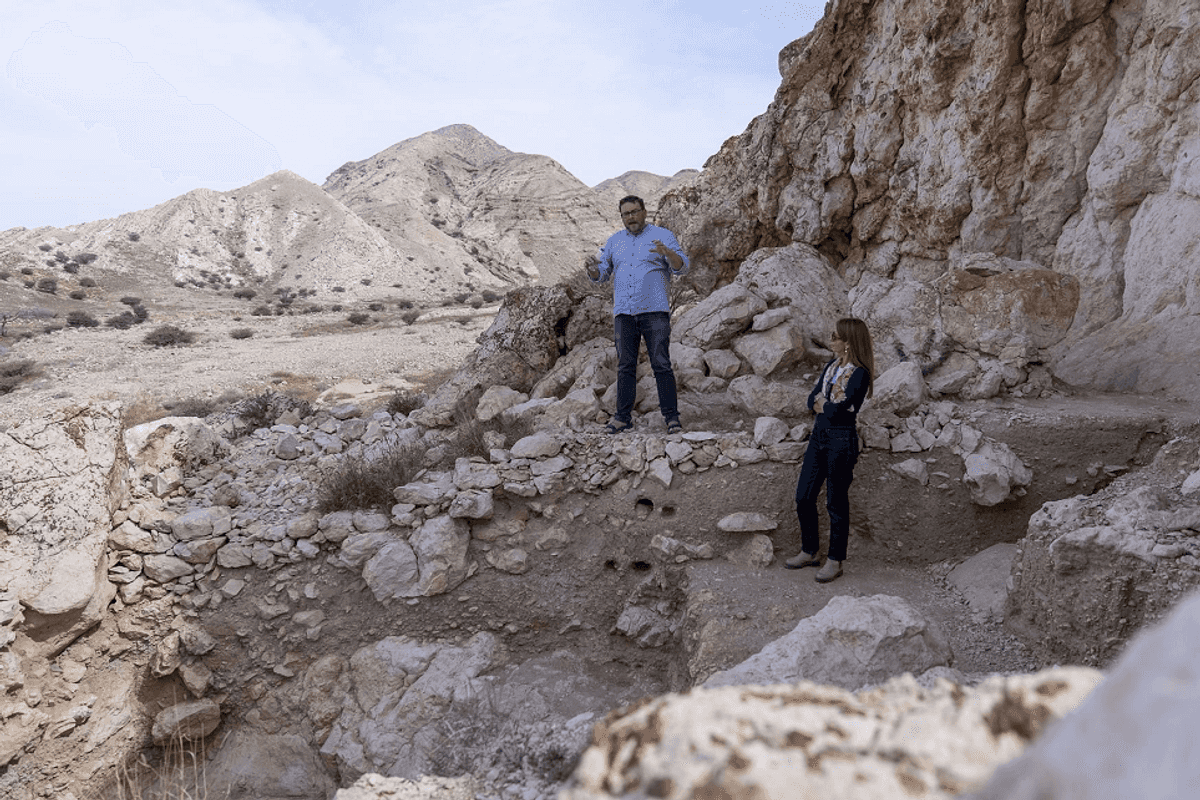
The study highlights southeastern Arabia’s role in early human adaptation and the UAE’s contribution.
WAM
A new international study has uncovered evidence that early humans repeatedly occupied the Buhais Rockshelter in Sharjah, dating back as far as 125,000 years, challenging previous assumptions about human settlement in southeastern Arabia, WAM reported.
Published in Nature Communications, the research was led by the Sharjah Archaeology Authority in collaboration with scholars from Oxford Brookes University, Friedrich Schiller University Jena, and other German institutions.
Excavations at the UNESCO-listed Faya Palaeolandscape revealed multiple phases of human presence around 125,000, 59,000, 35,000, and 16,000 years ago - showing that the region was more than just a migration corridor.
The findings indicate that early populations returned to the area repeatedly, adapting to shifting environmental conditions. Periods of increased rainfall and water availability created habitable conditions, allowing humans to sustain life, develop tools, and exploit local resources over tens of thousands of years.
Stratified sediment layers within the limestone rockshelter preserved stone tools and artefacts, enabling researchers to reconstruct a detailed timeline of human activity using luminescence dating techniques.
These discoveries extend the known sequence of human settlement in the Arabian Peninsula and highlight the Faya Palaeolandscape as a key site for understanding early human evolution and migration.
The study underscores the importance of southeastern Arabia as a center of early human activity and demonstrates the UAE’s growing contribution to global knowledge of human prehistory, emphasizing adaptation and survival in arid environments.




Comments
See what people are discussing