

ICMA weighs inflation risks against business costs after SBP rate hike
Review compares the 12% policy rate with holding at 11.5% or cutting to 10.5%, highlighting the impact on investment and industrial recovery

Business Desk
The Business Desk tracks economic trends, market movements, and business developments, offering analysis of both local and global financial news.
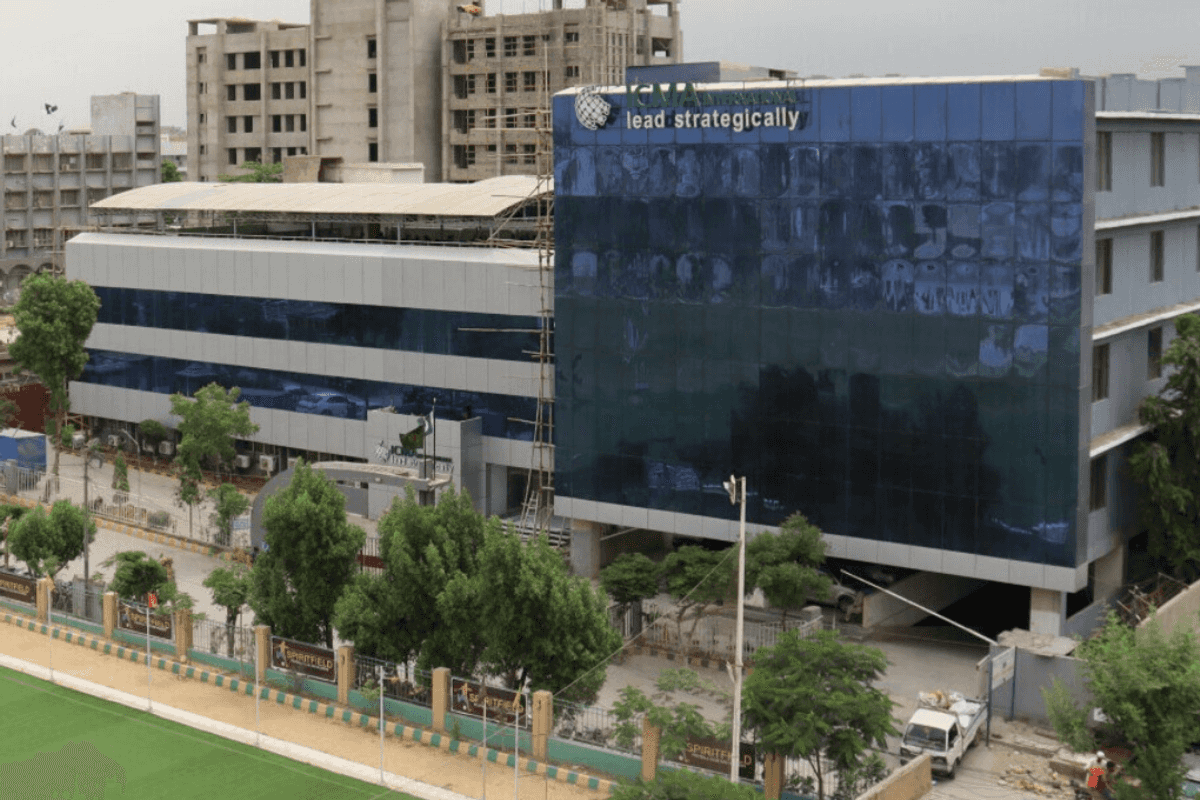
ICMA's review examines how the three interest-rate scenarios could affect inflation.
The Institute of Cost and Management Accountants of Pakistan (ICMA) has examined the potential economic impact of the State Bank of Pakistan's (SBP) latest interest rate increase, highlighting the need to balance inflation control against higher borrowing costs and pressure on businesses.
In the 27th issue of its Monetary Policy Statement (MPS) Review, ICMA compared the central bank's decision to raise its policy rate by 50 basis points to 12% with two alternatives: keeping it unchanged at 11.5% or cutting it to 10.5%.
The SBP announced the increase on October 26, with the new rate taking effect on October 27. Nine of the Monetary Policy Committee's 10 members supported the increase.
What are the economic trade-offs of the SBP's rate hike?
ICMA's review examines how the three interest-rate scenarios could affect inflation, exchange-rate stability, borrowing costs, industrial liquidity and economic recovery.
Maintaining the rate at 11.5% could have prevented an immediate increase in borrowing costs and given the SBP more time to assess the impact of higher energy and food prices. However, ICMA warned that keeping rates unchanged might have been insufficient if inflationary pressures persisted, potentially putting further pressure on the rupee.
Reducing the rate to 10.5% could have made loans cheaper and supported investment, production and employment, provided banks passed the reduction on to borrowers. But cutting too early could have increased inflation and exchange-rate pressures, raising the cost of imported fuel and industrial materials.
The actual increase to 12% was intended to contain inflation expectations and prevent higher energy and food prices from spreading across the wider economy. ICMA cautioned that the decision could also raise financing costs and constrain productive investment.
The institute emphasized that interest-rate decisions alone cannot resolve supply-driven inflation caused by energy costs, wheat-supply pressures and disruptions to supply chains.
What economic indicators did ICMA highlight?
Pakistan's headline inflation stood at 10.3% in September 2026, while core inflation remained elevated at approximately 8.4%, according to the SBP.
Large-scale manufacturing recorded year-on-year growth of 1.9% during July–August FY2027, compared with 0.4% growth in the final quarter of FY2026.
The SBP maintained its FY2027 economic growth forecast at 3.5–4.5%.
ICMA also referred to its External Economic Stress Index, which declined to -6.12 in August 2026, mainly because of improving global economic activity. However, the institute cautioned that oil prices and supply-chain pressures remained risks despite the lower reading.
The review compared current monetary conditions with Pakistan's responses to the Russia–Ukraine conflict in 2022 and the COVID-19 pandemic in 2020.
In March 2022, the SBP maintained its policy rate at 9.75% before increasing it to 12.25% in April as inflation and external pressures intensified.
During the pandemic, the central bank reduced its rate from 12.5% in March 2020 to 7% in June to support businesses and economic activity.
What are businesses saying about higher interest rates?
Industry representatives and economists cited in ICMA's review raised concerns about financing costs, liquidity, investment and competitiveness.
Muhammad Sabir, principal economist at the Social Policy and Development Centre, warned that monetary tightening could worsen financing costs and constrain economic recovery without directly addressing supply-driven inflation.
Faisal Sharif, director for South Asia at GAC Group, emphasized the need to translate macroeconomic stability into productive investment and export diversification, supported by fiscal discipline and energy-sector reforms.
Muhammad Raza, chairman of the Rice Exporters Association of Pakistan, called for affordable financing and sufficient liquidity for small and medium-sized businesses and exporters.
Junaid Naqi, former president of the Korangi Association of Trade and Industry and chairman of the Institute Management Committee, questioned the rate increase amid mounting industrial costs, tax burdens and liquidity constraints.
Hamid Zahur, former chairman of the Pakistan Tanners Association, argued that maintaining or reducing interest rates would have been more supportive of industrial competitiveness and business confidence.
Usman Shaukat, vice chairman of the Pakistan Pharmaceutical Manufacturers Association, opposed the increase and advocated a gradual shift toward a single-digit policy rate.
Imran Batada, president of the Pakistan Freelancers Association, described the SBP's decision as a measured response to inflation risks but warned that expensive financing could hinder technology investment and digital exports.
Zulfiqar Alam, CEO of Pakistan Housing Finance Company Limited, cautioned that excessive tightening could weaken household purchasing power, investment, employment and economic recovery.
What does ICMA recommend?
ICMA recommended that the SBP assess whether the rate increase is containing inflation expectations and preventing higher food and energy costs from spreading to other goods and services.
The institute said further rate increases should not be automatic if price pressures prove temporary. However, persistent inflation across sectors could justify maintaining restrictive monetary policy.
It also called for monitoring how higher oil prices and exchange-rate movements affect import costs and foreign exchange requirements.
To support businesses, ICMA recommended measures to reduce energy and transport costs, improve energy efficiency and help exporters and smaller firms access working capital.
The institute emphasized that monetary restraint should be accompanied by efforts to address supply constraints, strengthen fiscal discipline and protect productive investment.





Comments
See what people are discussing