

IHC issues verdict on petition over PTI march, says no political party can block roads
Islamabad High Court did not bar PTI from protesting but ruled no political party can block roads, issuing guidelines on citizens' rights
Aamir Abbasi
Editor, Islamabad
Aamir; a journalist with 15 years of experience, working in Newspaper, TV and Digital Media. Worked in Field, covered Big Legal Constitutional and Political Events in Pakistan since 2009 with Pakistan’s Top Media Organizations. Graduate of Quaid I Azam University Islamabad.
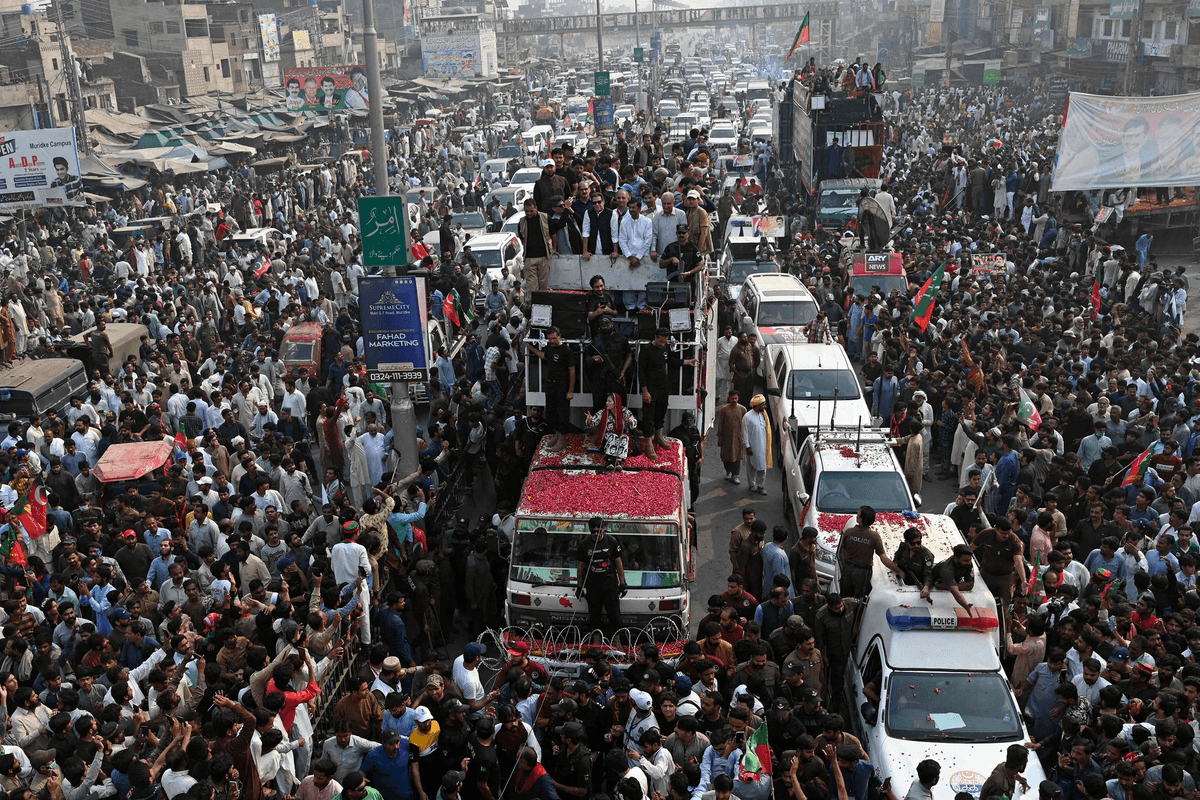
The court's ruling came as it concluded proceedings on the petition concerning PTI's planned march to Islamabad on September 27.
Reuters/File
The Islamabad High Court has ruled that no political party or public office holder has the legal authority to block roads, highways or other public places in the capital.
The verdict came in a petition concerning Pakistan Tehreek-e-Insaf's planned march on September 27.
What did the Islamabad High Court rule on PTI's planned march?
A larger bench headed by Chief Justice Sarfraz Dogar ruled that political parties cannot obstruct public roads during protests. The court directed provincial governments to ensure that public funds, officials, vehicles, machinery and other state resources are not used for political marches, rallies or demonstrations.
A citizen, Waqas Ahmed, had challenged the planned move on the grounds that the protest could disrupt routine life, traffic and business activities in the federal capital.
The court did not bar the Pakistan Tehreek-e-Insaf (PTI) from holding a protest. The court rejected the petitioner's request to restrain PTI from holding the protest. In its written order, the court issued clear guidelines regarding the rights of citizens.
What directions did the court issue to provincial governments?
The court also directed chief ministers to ensure that government machinery is not used for political party activities, and said no government employee should be compelled to participate in any march, procession or rally. It directed chief secretaries and provincial inspectors general of police to ensure implementation of its orders.
The Islamabad administration and the Ministry of Interior were directed to protect citizens' constitutional rights, including freedom of movement. The Federal Secretary Interior, Chief Commissioner Islamabad and Inspector General of Islamabad Police were also issued directions to ensure compliance with the verdict.
What happened during the Islamabad High Court hearing?
The court's ruling came as it concluded proceedings on the petition concerning PTI's planned march to Islamabad on September 27. During the hearing, the bench also viewed video footage of PTI protests held in the capital in 2022 and 2024, after Chief Justice Dogar allowed the footage to be played in court.
The Islamabad advocate general told the court that government machinery had allegedly been used during previous protests, resulting in injuries and deaths of police personnel and damage to public property. He said the right to peaceful protest was protected by the Constitution but was subject to certain conditions.
What conditions apply to protests in Islamabad?
The advocate general said permission from the district magistrate was mandatory for holding a protest in Islamabad. He said the magistrate could reject an application, and that the government also had the authority to declare any area a Red Zone.
During the proceedings, the bench asked whether chief ministers or other government representatives could make provocative speeches in connection with political protests. The advocate general replied that no one had such a right.
The court observed that it should play its role and issue necessary directions before protesters arrived in the capital in large numbers. The advocate general also referred to statements by the Khyber Pakhtunkhwa chief minister, as well as slogans and stated objectives of PTI leaders, arguing that a distinction had to be maintained between a provincial government and a political party. The Chief Secretary of Khyber Pakhtunkhwa and the provincial Inspector General of Police also submitted affidavits before the court during the proceedings.



Comments
See what people are discussing