


News Desk
The News Desk provides timely and factual coverage of national and international events, with an emphasis on accuracy and clarity.
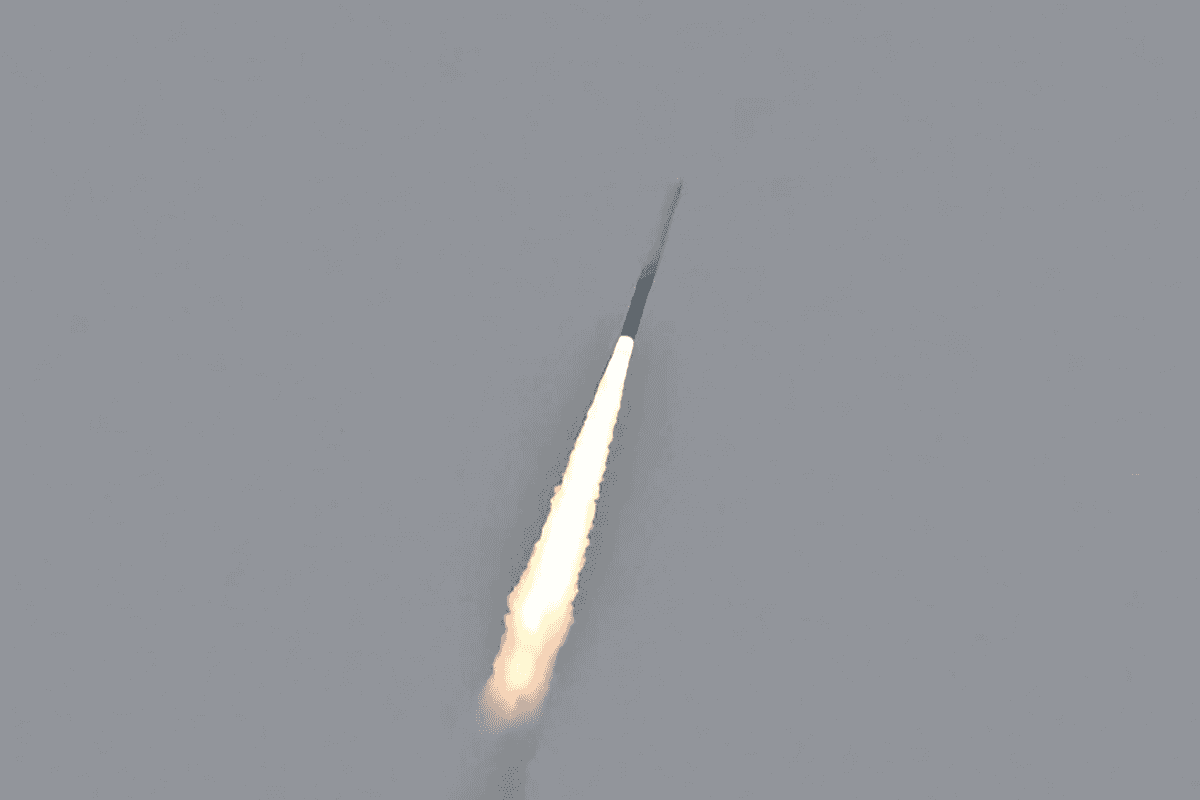
Vikram-1 is an orbital-class rocket built by Skyroot Aerospace, an Indian private space company, to carry small satellites into low-Earth orbit.
Reuters/File
Skyroot Aerospace launched Vikram-1 on Saturday, becoming the first Indian private company to fly an orbital-class rocket, the company said.
The rocket lifted off from the Satish Dhawan Space Centre in Sriharikota amid loud cheers. The mission marks a step forward for India's private space sector as it seeks a larger share of the global space economy.
What is Vikram-1 and who built it?
Vikram-1 is an orbital-class rocket built by Skyroot Aerospace, an Indian private space company, to carry small satellites into low-Earth orbit. It stands about as tall as a seven-story building and can carry payloads of up to 350 kilograms (771 pounds). The rocket is named after Vikram Sarabhai, widely regarded as the founder of India's space program.
Skyroot confirmed the mission's success on social media platform X. "Hello space, we have arrived!" the company wrote, adding that Vikram-1's Test Flight-1 had completed its mission and that this was the first private sector orbital launch in India's history.
What is Vikram-1 carrying?
The rocket carries a varied set of payloads, including a lab-grown diamond and robotic arms designed to remove space debris. It also carries a miniature 18-karat gold rocket, featuring small sculptures of Indian physicists Vikram Sarabhai and CV Raman.
A sculpture of former Indian president and aerospace engineer APJ Abdul Kalam is included as well.
Why does this launch matter for India's space industry?
India's space program has been built on decades of investment by the Indian Space Research Organization (ISRO), and momentum has picked up in recent years. The sector opened to private players in 2020, and India's space economy is now valued at around $8.4 billion. More than 400 space startups now operate in the country.
Pawan Goenka, chairman of the government's Indian National Space Promotion and Authorization Centre, said the achievement went "way beyond expectation for the very first orbital launch ever taken by an Indian private company." Former ISRO chairman K. Sivan credited the milestone to years of groundwork after the sector opened to private firms.
"With Skyroot especially, the rocket is one of the most challenging and complex technologies in the space system... It is going to motivate many people," Sivan told AFP. He added that the launch would have a global impact, saying it would boost India's reputation if a startup could achieve one of the space industry's hardest technical feats.
What have Indian officials said about the launch?
Prime Minister Narendra Modi called the launch "a defining moment in India's space journey." He said growing private sector participation was opening new frontiers and accelerating innovation, and that the achievement would encourage young people to dream bigger and innovate fearlessly.
Foreign Minister S. Jaishankar said India's space ambitions were soaring to new heights following the launch. In August 2023, India became the fourth country to land an uncrewed spacecraft on the Moon, following Russia, the United States and China.





Comments
See what people are discussing