


News Desk
The News Desk provides timely and factual coverage of national and international events, with an emphasis on accuracy and clarity.
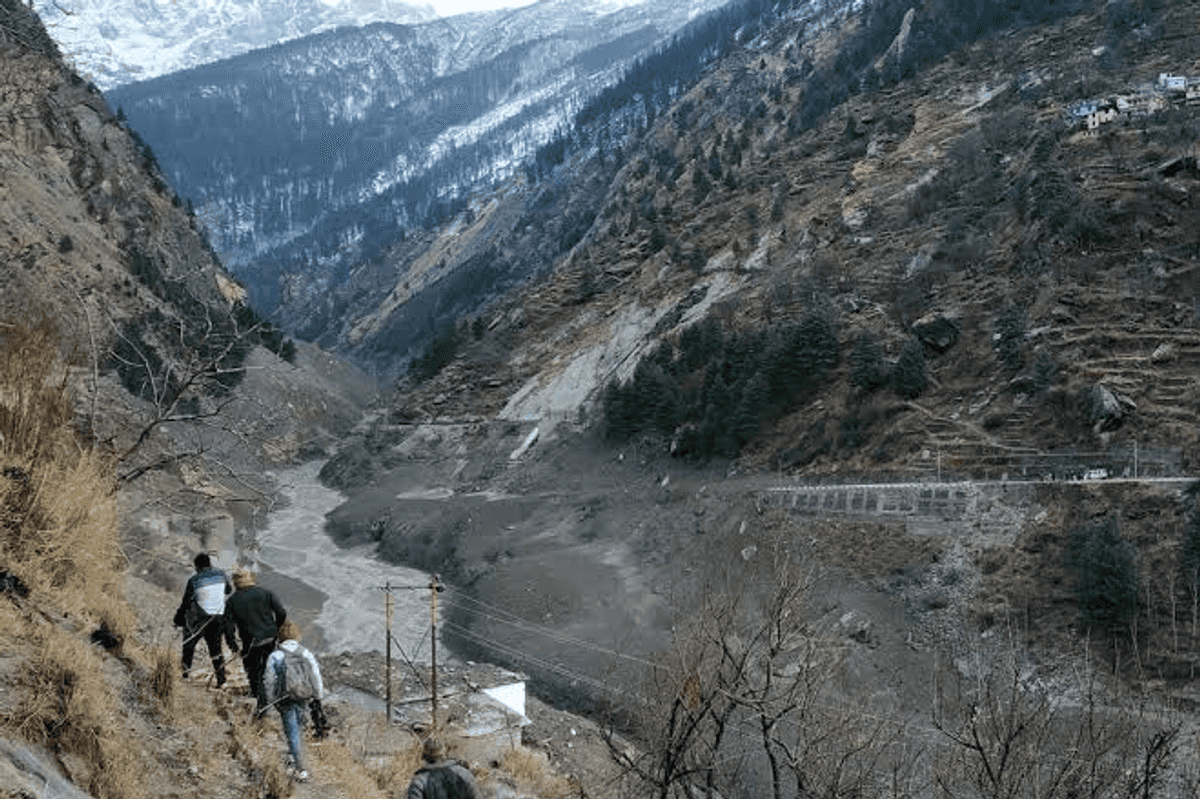
People walk past a destroyed dam in Uttarakhand after a glacier broke, February 7, 2021.
Reuters/File
India is stepping up glacier monitoring in Himalayan regions bordering China and Nepal, authorities said Saturday, days after deadly floods triggered by a glacial collapse.
The US Geological Survey said Wednesday's disaster on the Tibet-Nepal border unleashed a torrent of debris, leaving nearly 3,000 people missing and 633 confirmed dead.
What caused the Nepal glacier disaster?
The floods followed a glacial collapse on the Tibet-Nepal border on Wednesday, which sent a torrent of debris downstream, according to the US Geological Survey. The exact trigger remains unclear, but scientists say climate change is accelerating glacier melt worldwide, raising the likelihood of similar collapses.
Why is India stepping up glacier monitoring?
Madan Kaushik, disaster management minister for India's Himalayan state of Uttarakhand, said the state shares Nepal's geography and border and has ordered officials to monitor all glaciers and known glacial lakes in the region. "We have asked our teams to be vigilant and monitor if a similar situation is emerging anywhere in the state," he told AFP.
How many glacial lakes does Uttarakhand have?
Uttarakhand is one of India's most ecologically sensitive regions, with 1,266 glacial lakes, according to government figures. Himalayan glaciers supply critical water to nearly two billion people, but scientists warn they are melting faster than ever due to climate change. This is exposing communities to unpredictable and costly disasters.
How does climate change increase glacier disaster risk?
Melting glaciers and thawing permafrost can destabilize mountain slopes and increase the risk of landslides, experts say. Climate change, combined with poorly planned development, is increasing the frequency, severity and impact of such disasters.



Comments
See what people are discussing