


News Desk
The News Desk provides timely and factual coverage of national and international events, with an emphasis on accuracy and clarity.
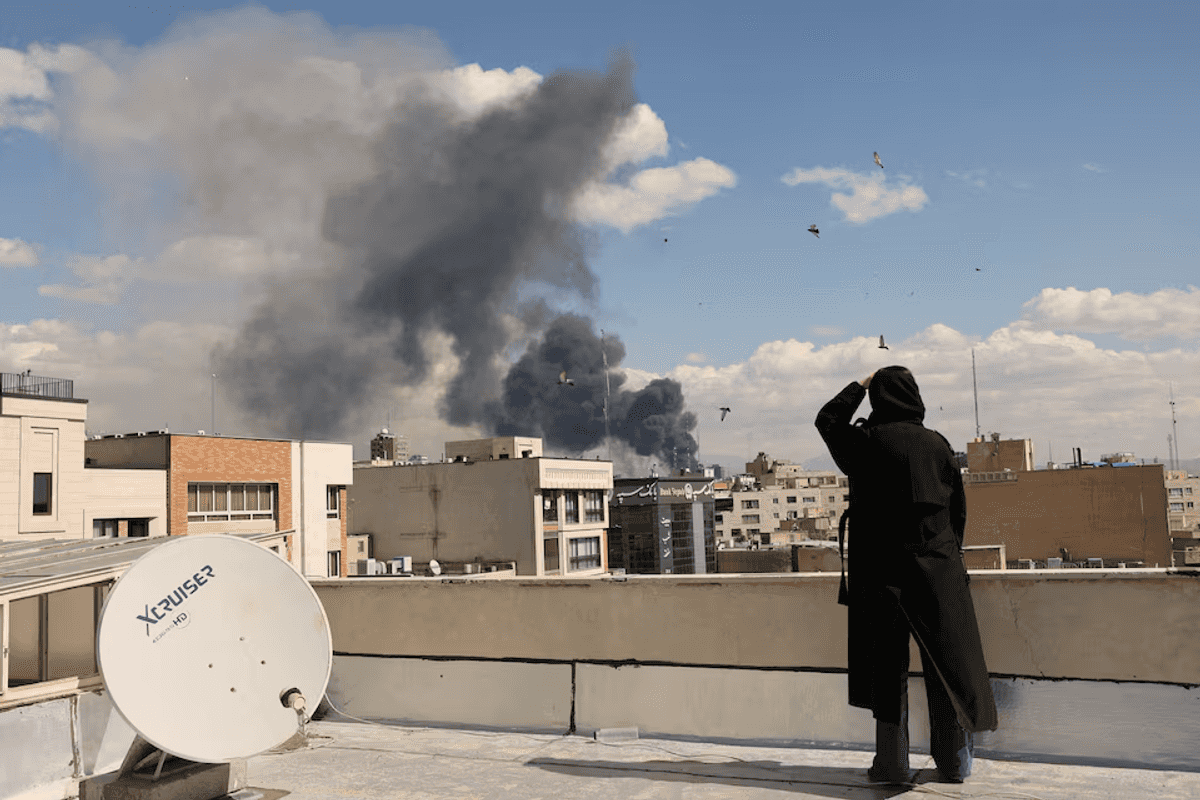
Iran’s Guards say they struck a US base in Jordan after US forces destroyed five Iranian oil tankers.
Reuters/File
Iran launched fresh attacks against US targets in the Middle East on Wednesday, retaliating for American strikes on Iranian oil tankers and dragging the two foes deeper into war.
Tehran's Revolutionary Guards said they struck a US base in Jordan and 20 US vessels attempting to pass through the Strait of Hormuz.
Does Iran control the Strait of Hormuz?
Yes. Iran has largely controlled the Strait of Hormuz, which normally carries around a fifth of the world's oil and liquefied natural gas, since the war began in February. Traffic through the waterway remains virtually paralysed, and Tehran now requires vessels to obtain permission and pay transit fees before passing through.
The United States and Iran are locked in a stalemate six months into the war. Iran maintains its stranglehold on the strait, while Washington pushes a campaign to choke Iran's ports and economy.
What did Iran's Revolutionary Guards attack this week?
The Guards said on Wednesday they struck a US military base in Jordan, a day after US forces destroyed five Iranian oil tankers. The US military said it acted after Iran targeted an American warship, the second such attack in less than a week. Iran's Revolutionary Guards, the most powerful arm of the Iranian military, said they hit the US air base of Al-Azraq in Jordan with missiles, according to state media.
The "punitive operation" damaged maintenance and repair facilities, deployment locations and shelters for fighter jets, IRNA reported. Jordan's army said it shot down 18 missiles targeting the kingdom. The strikes came after Tehran urged crews on oil tankers off Kuwait and Bahrain to leave their vessels, warning they "will be targeted", the Guards said in a statement.
The Islamic republic also said it would target oil tankers off US-allied Kuwait and Bahrain in retaliation for the US strikes on its own tankers.
How are oil prices reacting to the Iran-US strikes?
Oil prices climbed to near $100 a barrel in Asian morning trade, as the flare-up threatened to further choke supply from the crude-rich Middle East. Brent crude, the benchmark international contract, rose to $99.46 a barrel, while the main US contract West Texas Intermediate reached $94.45 a barrel. The price rise reflects growing concern that the conflict will disrupt output from a region critical to global energy supply.
Why did the US destroy Iranian oil tankers?
The latest round of fighting was triggered after US forces destroyed five Iranian oil tankers, with the US military saying it "directed the crews to abandon ship" before hitting the vessels. "Iran continues to try to hit US naval ships, and for every time they do that or try to do that, they're going to lose tankers, and I think you'll see that again today," US Secretary of State Marco Rubio told reporters on Tuesday during a visit to Colombia.
Iranian media reported on Tuesday that a US missile struck a tanker off the coast of Kharg Island, adding that there were no casualties. Iran's army chief of staff, Ali Abdollahi, had earlier warned that Tehran would hit US bases in the region if its oil tankers were struck.
What other US assets has Iran targeted?
Iran's Guards also said on Tuesday they seized what they called one of the most modern unmanned American submarine drones in the Strait of Hormuz. The US military said the drone had malfunctioned and was an older model that did not carry any sensitive data. Iranian state television also reported that the Guards had attacked two US destroyers with ballistic missiles, a claim the US military did not immediately address.





Comments
See what people are discussing