

Iran says ball in US court as it rejects reopening Hormuz under blockade
Iran says ball in US court, with no Strait of Hormuz deal unless Washington ends its naval blockade, Foreign Ministry spokesman Baghaei said on Monday

News Desk
The News Desk provides timely and factual coverage of national and international events, with an emphasis on accuracy and clarity.
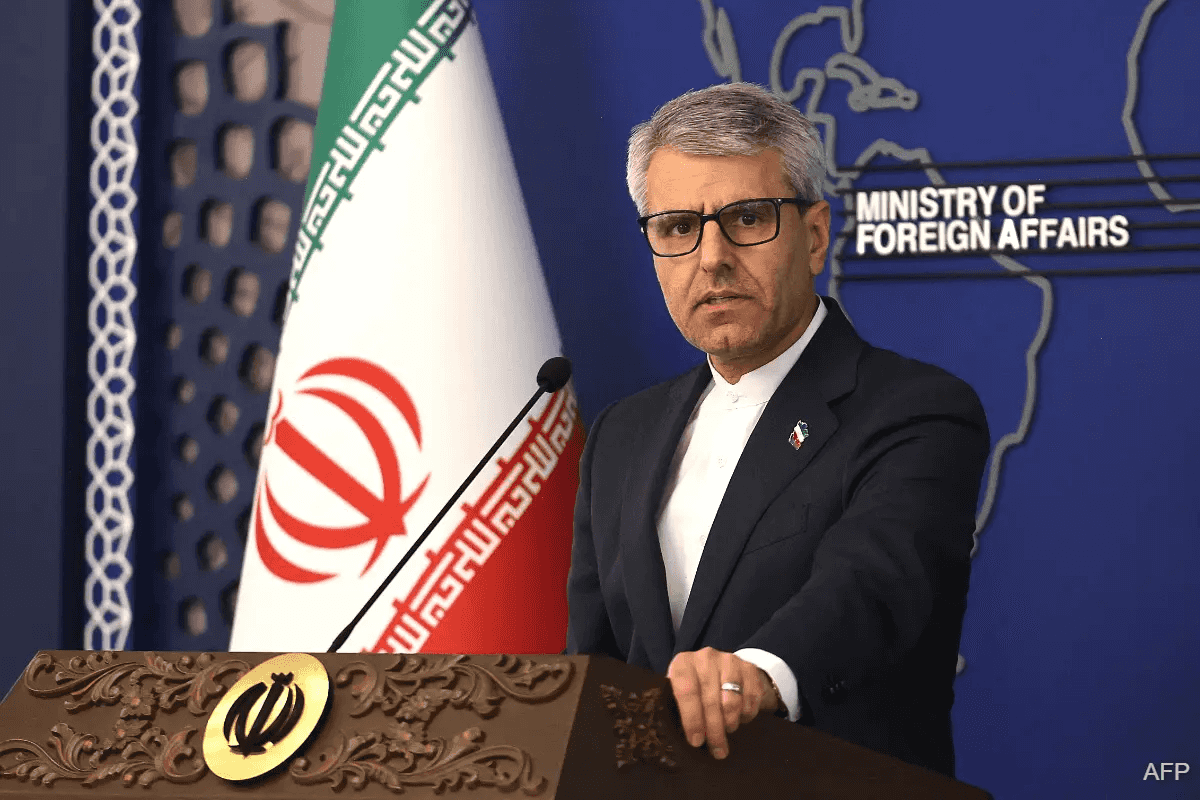
Iran’s Foreign Ministry spokesman Esmaeil Baghaei said on Monday that the ball is in the US court, telling his weekly news conference that Tehran will not agree to a settlement or reopen the Strait of Hormuz unless Washington lifts its naval blockade and addresses Iran’s demands, WANA News reported.
Why does Iran say the ball is in the US court?
Baghaei said Iran has already presented its position through diplomatic channels, and its proposal remains the basis for indirect exchanges with the United States. He said Tehran has communicated its demands clearly and is waiting for Washington to act. Washington must now decide whether to move forward.
“The ball is now in Washington’s court,” he said, stressing that Tehran had communicated its demands clearly and was waiting for the other side to act.
Baghaei said the United States could not expect security in the Strait of Hormuz while maintaining a naval blockade against Iran. He argued that neither a final agreement nor the restoration of safe passage through the strategic waterway was possible without an end to the blockade and recognition of what Tehran considers its legitimate demands.
He also rejected the prospect of either side establishing security unilaterally in the Strait of Hormuz and the wider Persian Gulf, saying commitments would have to be honored for a lasting arrangement to take shape.
What is Iran’s revised proposal for the Strait of Hormuz?
The spokesman said Tehran’s diplomatic initiative had been discussed during an Iranian delegation’s visit to New York, after which Iran received Washington’s position through intermediaries. The two sides had exchanged views and considerations, he added, without indicating that an agreement had been reached.
Baghaei described the proposal as a seven-stage initiative and said its implementation framework had since been shortened to a period of two days.
He presented the revised timeline as evidence of Iran’s willingness to make progress, saying the arrangement could pave the way for negotiations and a restoration of security in the strait if Washington accepted Tehran’s conditions.
Diplomatic contacts have continued through intermediaries, he said, confirming that Deputy Foreign Minister Kazem Gharibabadi had travelled to Doha to help facilitate the exchange of messages. Baghaei said the discussions involved complicated issues that had become more difficult over time, particularly because of developments linked to US actions. However, he said communications between the two sides had not stopped.
He also rejected reports of changes to Iran’s negotiating team. Mohammad Bagher Ghalibaf and the foreign minister remained the country’s senior negotiators, he said, while the Supreme National Security Council was responsible for overseeing decisions on the matter.
The council, chaired by the president, includes the foreign minister and representatives of other state institutions, and Baghaei described coordination among the country’s decision-making bodies as strong.
How did Iran respond to JD Vance’s letter?
Baghaei was asked about a letter reportedly sent by US Vice President JD Vance to Mohsen Rezaei, secretary of Iran’s Supreme National Security Council. Responding to reports that the letter’s tone differed from earlier correspondence, he said variations in writing styles were normal and that Tehran was more concerned with the US government’s actions than the wording of individual communications.
Asked whether Tehran would respond, the spokesman said Rezaei, as the recipient, would decide on the appropriate response. He added that the correspondence had not created a new negotiating framework, with indirect exchanges still centered on Iran’s existing proposal.
Why does Tehran question Washington’s commitment to diplomacy?
Baghaei accused Washington of repeatedly disrupting diplomatic efforts, arguing that its conduct over the past two years had undermined attempts to resolve disputes through negotiations. He cited the Islamabad understanding as an example, alleging that it had been breached two or three weeks after it was reached. He also noted that the US president had recently described the process as a waste of time.
The spokesman did not rule out the possibility that conflicting messages from US officials, including Trump’s threats against Iran and Vance’s letter, could form part of an effort to mislead Tehran. He said Iran would not be taken in by such tactics, pointing to its previous dealings with Washington.
Baghaei recalled that Trump had announced on social media that negotiations with Iran were continuing about half an hour before what Tehran described as US military aggression in June last year. Iran was assessing the current situation in light of its experience over the past two years and earlier diplomatic episodes in 2015 and 2018, he said.
Does Iran blame itself for strained trust with the UAE?
Baghaei pushed back against suggestions that Iran had damaged trust with the United Arab Emirates, saying regional countries should prevent their territory and military facilities from being used in operations against Tehran. Responding to comments by an adviser to the UAE president about declining trust between the two countries, he said Iran could not remain silent when facilities in neighboring states were allegedly used in actions against its sovereignty and people.
He blamed developments over the previous eight months partly on what he described as excessive reliance by some regional governments on the US military presence in their territories. He alleged that these countries had failed to stop the use of their facilities in attacks against Iran and, in some cases, had encouraged such actions.
Baghaei said Iran did not regard any country in the region as an enemy and supported cooperation aimed at building mutual confidence and lasting regional security. He added that Tehran considered it a reasonable expectation that neighboring states would not allow their territory or military installations to be used for attacks against Iran.





Comments
See what people are discussing