

Iran says Strait of Hormuz closed again over Israel attacks on Lebanon
Iran's military says it has closed the Strait of Hormuz again, blaming Israeli strikes on Lebanon for breaching its agreement with the US

News Desk
The News Desk provides timely and factual coverage of national and international events, with an emphasis on accuracy and clarity.
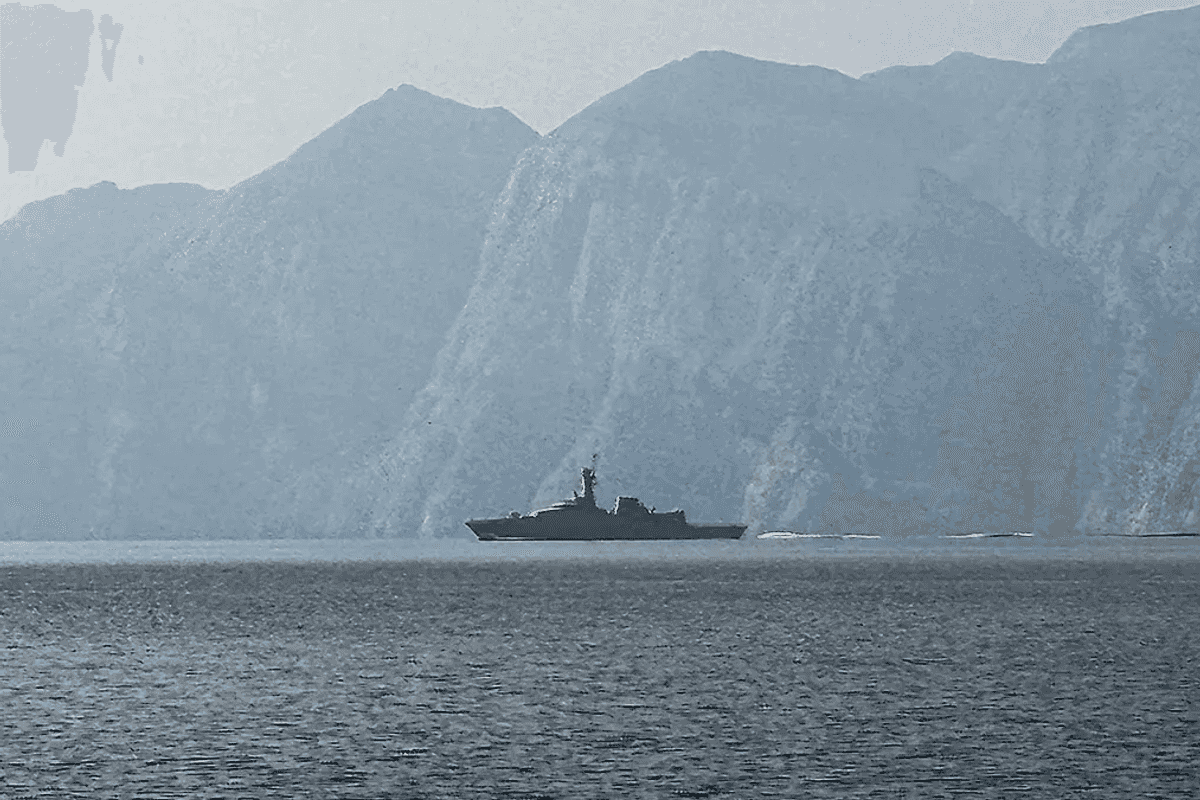
Iran's central military command announced on Saturday that it had once again closed the Strait of Hormuz, citing Israel's attacks on southern Lebanon as a breach of Tehran's agreement with Washington. The announcement came as Pakistan's interior minister was in Tehran trying to keep the broader US-Iran peace process on track.
Why has Iran closed the Strait of Hormuz again?
Iran's Khatam-al Anbiya Central Headquarters said the closure is a direct response to Israel's continued strikes on Lebanon, which it views as a violation of the ceasefire terms agreed under the US-Iran memorandum. The statement warned that further measures would follow if the attacks continue, signalling the closure is meant as pressure rather than a final step.
"It is hereby announced that the Strait of Hormuz will be closed to vessel traffic," the command said in a statement carried by state TV. It added that the move was "a response to the enemy's breach of promise" and that "further steps will be planned and taken to force the enemy to comply with its obligations" if the aggression continues.
What triggered the latest escalation in Lebanon?
The statement came a day after a scheduled meeting between Washington and Tehran in Switzerland was called off due to Israel's continued strikes on Lebanon. Under the 14-point agenda signed between the US and Iran to end the Middle East war, Israel was expected to observe a complete ceasefire with Hezbollah starting Wednesday.
Pakistan's Interior Minister Mohsin Naqvi arrived in Tehran earlier today for high-level talks with Iranian leadership, days after Islamabad brokered the memorandum aimed at ending the conflict. His visit was meant to help break the deadlock caused by Iran's postponement of follow-up talks in Switzerland over the continued Israeli operations in Lebanon.
What does the Islamabad memorandum say about Hormuz?
Direct meetings meant to convert the interim framework into a permanent peace treaty were delayed by Tehran in protest of the ongoing Israeli strikes. A signing ceremony and follow-up talks had been expected at the Bürgenstock Resort near Lucerne, Switzerland, before the postponement. Iranian foreign ministry spokesperson Esmaeil Baghaei confirmed Naqvi's visit, saying Pakistan's continued mediation remains essential to resolving the remaining differences.
The Islamabad memorandum was signed electronically by US President Donald Trump and Iranian President Masoud Pezeshkian, opening a 60-day window for negotiations. It also mandated the reopening of the Strait of Hormuz and the lifting of the US naval blockade, making the strait's status a key indicator of whether the agreement is holding.
What happens next in the US-Iran peace process?
The US and Iran reached a final agreed text for the peace deal on June 12, and Pakistani Prime Minister Shehbaz Sharif announced on June 18 that the agreement had taken effect immediately. The conflict began on February 28, when US and Israeli forces struck Iran, triggering retaliation that disrupted global energy markets before a temporary ceasefire was secured on April 8.
After arriving in Tehran, Naqvi held separate meetings with his Iranian counterpart, Interior Minister Eskandar Momeni, and Foreign Minister Abbas Araghchi. According to Pakistani and Iranian officials, Naqvi also carried a message from Pakistan's Army Chief, Field Marshal Asim Munir, addressed to Iranian Supreme Leader Ayatollah Seyyed Mojtaba Khamenei, concerning regional stability. The talks are expected to focus on unresolved issues including verification mechanisms, the lifting of US sanctions, and the future of Iran's nuclear program.



Comments
See what people are discussing