

Iran says US respects neither Arab nor Iranian sovereignty
Araghchi says the US respects neither Arab nor Iranian sovereignty, defending Tehran's strikes after Jordan criticised Iran's response to Washington

News Desk
The News Desk provides timely and factual coverage of national and international events, with an emphasis on accuracy and clarity.
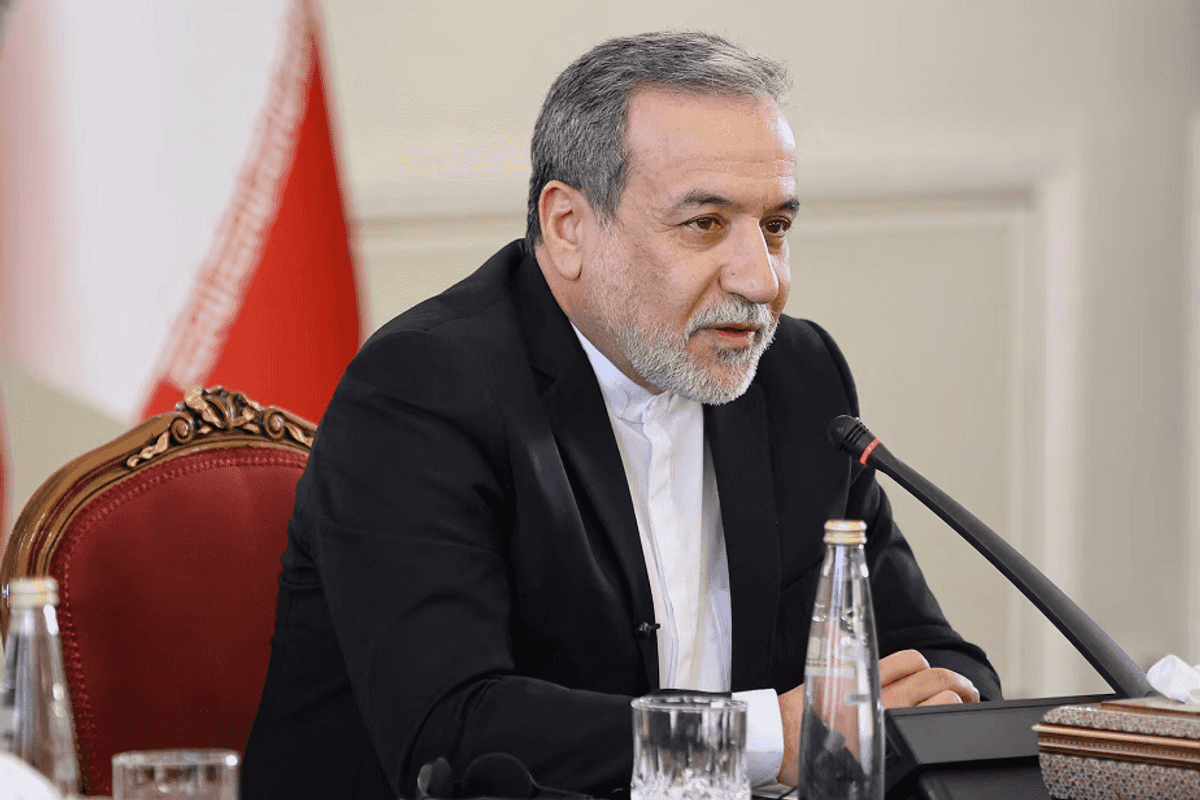
Iranian Foreign Minister Abbas Araghchi.
Reuters/File
Iranian Foreign Minister Abbas Araghchi accused the United States of violating both Iranian and Arab sovereignty on Friday, as Tehran defended its military response to recent US strikes.
He was responding to criticism of Iran's retaliation from Jordanian Foreign Minister Ayman Safadi.
Does the US respect Arab and Iranian sovereignty, according to Iran?
Araghchi asked how long Tehran was expected to wait before responding to what it considers an attack on its sovereignty.
"How much time does the Jordanian Foreign Minister believe Iran should wait before responding to an aggressor that respects neither Arab sovereignty nor Iranian sovereignty?" he said.
كم من الوقت يرى وزير الخارجية الأردني أنه يتعين على إيران أن تنتظر قبل أن تردّ على معتدٍ لا يحترم سيادة العرب ولا سيادة إيران؟
وهل هو حقًا غير مدرك أن المجال الجوي والأراضي والمياه العربية استُخدمت في الهجمات الأمريكية الأولى التي أسفرت عن مقتل إيرانيين أبرياء؟ pic.twitter.com/joI7qMsMOS
— Seyed Abbas Araghchi (@araghchi) September 4, 2026
What did Iran say about US bases in Jordan and Kuwait?
He also questioned whether Safadi was unaware that Arab airspace, territory and waters had been used by the United States during its initial attacks on Iran, which Tehran says killed civilians. The remarks came after Iran's Islamic Revolutionary Guard Corps said it had launched a ballistic missile strike against a US military facility in Jordan.
The IRGC said it had carried out an "intense ballistic missile attack" on Camp Titin, a US Marine Corps base near the Gulf of Aqaba, close to Jordan's borders with Israel and Saudi Arabia, according to Iranian news outlet Tasnim. Jordan's military said it intercepted 10 ballistic missiles launched from Iran, while three others landed in remote areas. No injuries were reported.
Tensions also spilled into Kuwait, where the military said it was responding to what it described as "hostile missile and drone attacks".
What triggered the latest escalation between the US and Iran?
The latest exchanges followed US strikes on Iranian targets after Washington accused Tehran of attempting to attack vessels in the strategically vital Strait of Hormuz. The United States had also carried out strikes on Iranian targets on Sunday, marking its first known attacks there in several weeks.
Iran subsequently said it had targeted US military positions in Kuwait and the United Arab Emirates, describing the attacks as retaliation for a deadly strike on a wedding in Iran that Tehran blamed on Washington. Kuwait's military said it intercepted an Iranian missile and drone attack, while Iran's armed forces claimed to have struck US assets at Ahmad al-Jaber Air Base with missiles and drones.
Kuwait condemned the attacks as a "grave breach of the rules of international law". Iran also said it had targeted Al Minhad Air Base in the UAE, although Emirati authorities did not report such an attack.
What happened in the Kuhestak wedding strike?
The escalation followed an alleged missile strike on a wedding in the coastal Iranian town of Kuhestak on Tuesday night. The Iranian Red Crescent said four people, including a child, were killed and more than 50 wounded.
US Vice President JD Vance said Washington was investigating the reported attack but expressed scepticism about Tehran's account. "I know that we're investigating," Vance told a White House briefing, adding that Iranian state media had not provided reliable accounts of events during the conflict.
IRGC chief Ahmad Vahidi later vowed retaliation for those killed in the wedding attack. "The pure blood of these oppressed martyrs... will not go unanswered," he said. The exchanges have further intensified the confrontation between Washington and Tehran, with the Strait of Hormuz remaining a major flashpoint.




Comments
See what people are discussing