

Iran vows to retaliate after US widens sanctions
Tehran threatens retaliation as US expands sanctions, warns Iran trade could cost dollar access.

News Desk
The News Desk provides timely and factual coverage of national and international events, with an emphasis on accuracy and clarity.
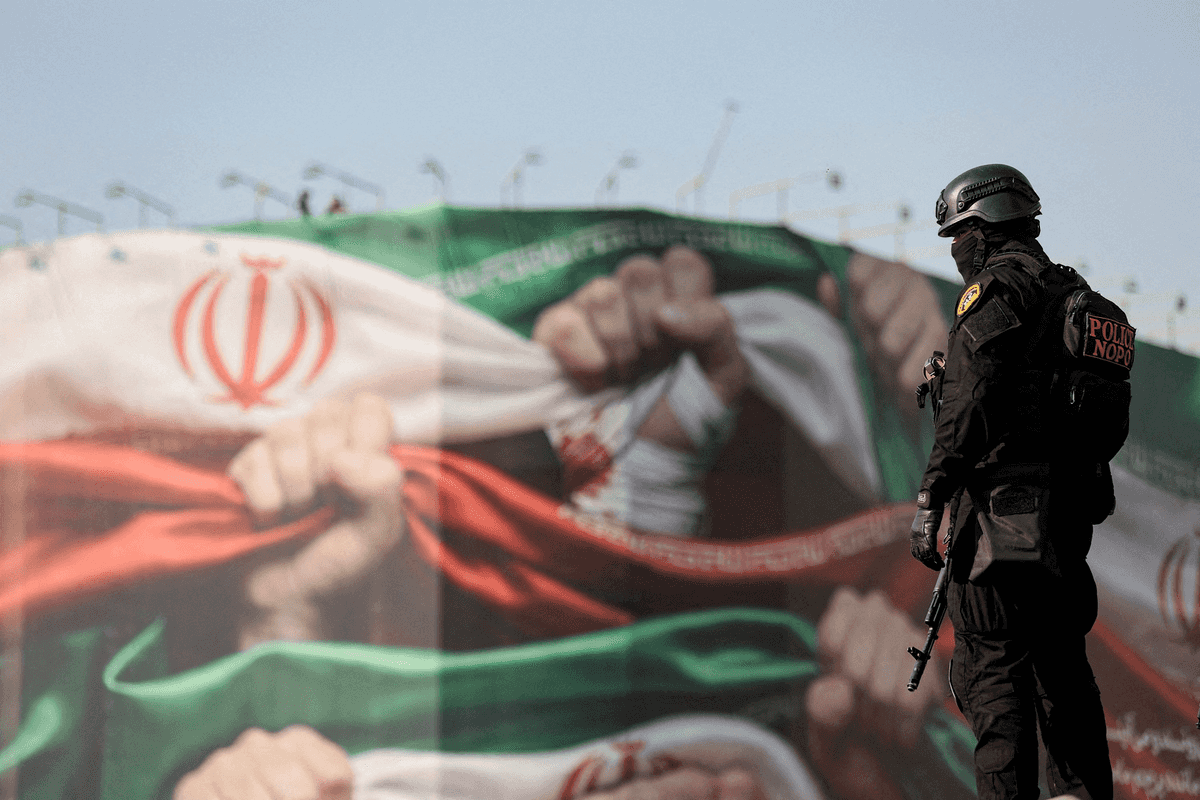
Iranian Economy Minister Ali Madanizadeh said Tehran is fully prepared for the U.S. sanctions.
Reuters/File
Iran vowed retaliation on Tuesday after the United States widened economic sanctions it said would cut off Tehran's economic lifeline, with Iranian officials expressing confidence that major trading partners including China and Russia would resist Washington's pressure campaign.
Has the US put new sanctions on Iran?
Yes. The US Treasury announced expanded sanctions on Monday, targeting 60 individuals, entities and vessels connected to Iran's oil trade. Treasury Secretary Scott Bessent stopped short of the toughest measures, giving countries and companies time to comply before further penalties take effect.
Bessent declined to identify the countries that would be targeted or say when the penalties would take effect. He said he wanted to give governments and companies time to comply with the new directive. "Why would I want to blow up the global financial system?" he said. The Treasury's list of 60 sanctioned individuals, entities and vessels did not include any of the Chinese financial institutions suspected of facilitating Iran's oil trade.
Did Iran say it would retaliate against the US?
Iranian Economy Minister Ali Madanizadeh said Tehran was "fully prepared for the U.S. sanctions" after the measures were unveiled. He told state television that "the enemies intend to launch an economic terrorist attack on us, but we also have our own tools and know how to play the game." He added, "Our defense is no longer so defensive; the enemies should wait for an attack." Madanizadeh said neither China nor Russia had "accepted" the U.S. measures and predicted other countries would resist them too.
Brigadier General Hossein Mohebbi, a spokesperson for Iran's Islamic Revolutionary Guard Corps, vowed heavy blows against U.S. interests and energy chokepoints if Iran's infrastructure is threatened, Press TV reported.
Is Pakistan mediating between Iran and the US?
Iran and the United States signed an interim deal in June aimed at ending the war that began with U.S. and Israeli attacks on Iran, known as the Islamabad memorandum. The agreement quickly faltered. Pakistan, acting as mediator, made "significant progress" in the latest talks with Tehran, the Pakistani military said in a statement on Tuesday. The talks focused on preventing further escalation and reopening the Strait of Hormuz.
Interior Minister Mohsin Naqvi, who accompanied army chief Asim Munir to Tehran, said on X that the Iranian president had "candidly shared his government's perspective" and that the exchange was "very constructive." The White House and the State Department did not immediately respond to requests for comment made outside business hours. Iran has not yet commented on the latest talks with Pakistan.
What is the current state of the Iran-US war?
The Trump administration appears to be counting on further economic pressure to end an unpopular war that has pushed up energy prices. Iran has spent decades under layers of U.S. and international sanctions that have battered its economy without deterring its leadership. Despite no major strikes by either side in recent weeks, the war shows little sign of reaching a diplomatic solution. The United States is seeking new ways to end Iranian attacks on ships in the Gulf and, more recently via its allies, in the Red Sea.
Almost six months have passed since the U.S. and Israel launched strikes on Iran. Thousands of people have died, most of them in Iran and Lebanon. The war has degraded much of Iran's conventional military capacity, inflicted economic pain and killed then-Supreme Leader Ayatollah Ali Khamenei. Iran has preserved enough missile and drone capability to attack Gulf neighbors and threaten oil tankers in the Strait of Hormuz. The exact state of Iran's nuclear program, which the Americans and Israelis aim to eliminate, remains unknown.
Is the Strait of Hormuz open?
Just two commodity vessels transited the Strait of Hormuz on Monday, the lowest daily tally since early May, according to shipping data. Before the conflict, the strait carried about a fifth of global crude oil and liquefied natural gas flows. Oil prices steadied on Tuesday, having fallen more than $2 a barrel the previous day.
Why is China central to the Iran sanctions dispute?
Bessent had previously urged cooperation from China, the biggest buyer of Iranian oil for several years. The U.S. blockade of Iran's ports, renewed in mid-July, has already cut Iranian oil flows to China. Experts say Washington is wary of Chinese retaliation for any sanctions on its banks ahead of expected talks next month between Trump and Chinese President Xi Jinping, with any curbs on China's exports of critical minerals seen as especially sensitive.
Asked about Chinese banks on Monday, Bessent said, "We want to make clear here today that no one is above the reach of U.S. sanctions." The Chinese Foreign Ministry said sanctions and pressure tactics do not help, and Beijing would do what was necessary to protect its interests.



Comments
See what people are discussing