


News Desk
The News Desk provides timely and factual coverage of national and international events, with an emphasis on accuracy and clarity.
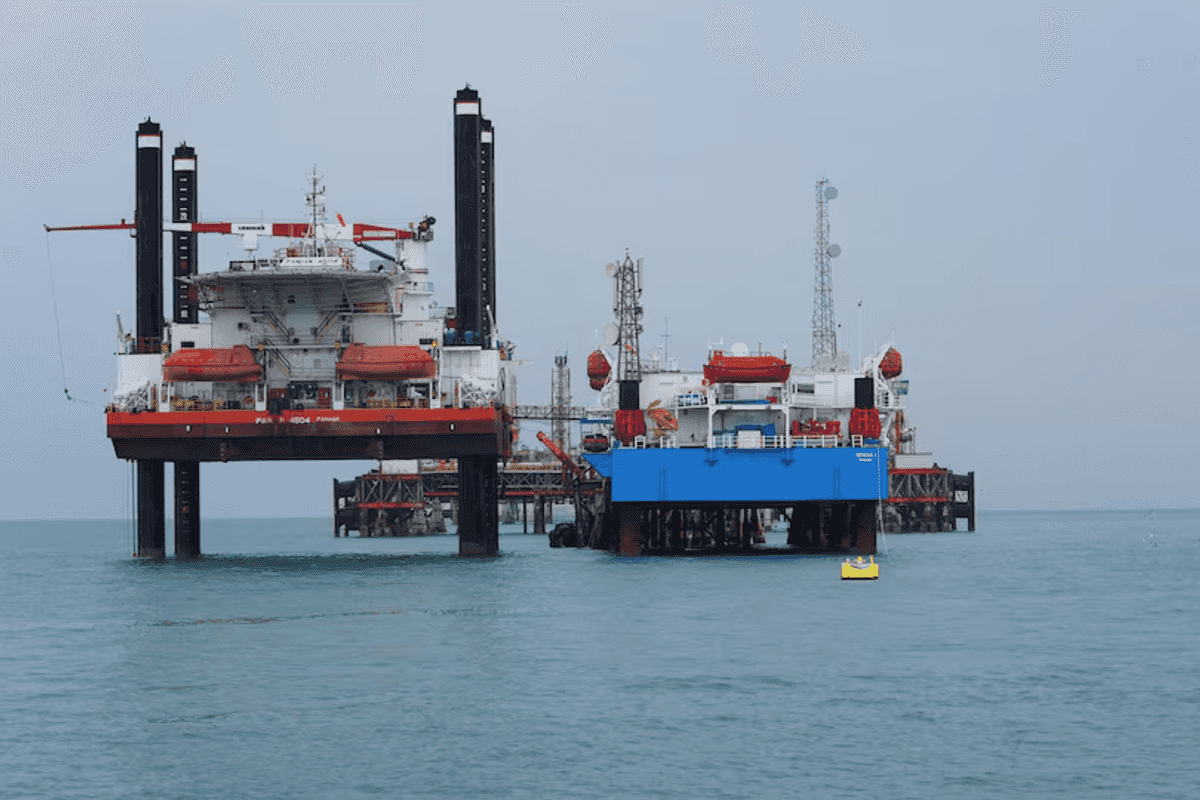
Iran’s armed forces chief said aiding the US military would amount to joining its side in the conflict.
Iran's armed forces warned Gulf countries on Wednesday against assisting the US military, hours after the United Arab Emirates said it was suspending all trade and financial ties with Tehran.
The warning followed new attacks on shipping near UAE waters, as tensions over the US-Iran war continue to threaten the Strait of Hormuz.
Why did Iran warn Gulf countries against helping the US military?
Iranian armed forces chief of staff Ali Abdollahi said any assistance given to the US military would count as joining the American side in the conflict. He said Gulf states were likely aware of US aircraft, including refuelling planes, operating from their territory. Abdollahi added that Iran was "fully aware of the situation" across the region.
The Gulf hosts numerous US military installations, including in the UAE. Since the war began, several Middle Eastern countries have said they would not let the US use their territory to launch attacks, though Abdollahi cast doubt on those assurances. Media reports have claimed Saudi Arabia, the UAE, Kuwait and Bahrain struck targets in Iran in retaliation, though the countries have mostly denied this.
Why did the UAE suspend trade ties with Iran?
The UAE announced on Tuesday that it was halting all trade, commercial and financial dealings with Iran "until further notice." Foreign ministry communications director Afra Al Hameli linked the decision to regional escalation. Abu Dhabi had earlier accused Iran of firing two ballistic missiles towards the country.
The UAE later clarified the missiles were aimed at shipping rather than at the country directly, with both falling into the sea and one landing within its territorial waters. Iranian foreign ministry spokesman Esmaeil Baqaei rejected the UAE's claim that Iran had launched a missile at the country. The UAE is home to a large Iranian community and had remained a major trading partner for sanctioned Iran before the war.
Tuesday's move was the UAE's latest step against Iran. It had already recalled its ambassador early in the conflict and closed Iran-linked schools and a hospital. Tankers belonging to UAE state oil firm ADNOC have been targeted repeatedly in recent weeks.
What is happening in the Strait of Hormuz?
Iran has blockaded the Strait of Hormuz, through which vessels leaving most UAE ports must pass, and attacks on commercial ships have continued despite a recent lull in US-Iran hostilities.
A framework deal aimed at reopening the corridor collapsed. US President Donald Trump said on Tuesday that talks were off, posting a map depicting the strait as "NEW U.S. Territory."
Are the US and Iran holding talks?
Trump's envoy and son-in-law Jared Kushner said on Monday that the US and Iran were having "very positive and active conversations."
Trump denied this on Tuesday and insisted the strait remained open, despite months of disrupted traffic under the Iranian blockade. He wrote on social media that no talks were scheduled and that the US naval blockade of Iranian ports remained in force.
What is the status of US military operations in the region?
The US has largely paused military operations in the conflict. US media have reported the war has strained stockpiles of essential munitions, a claim Trump and the Pentagon have publicly denied.
The USS George Washington aircraft carrier is being redeployed to the Middle East to replace the USS Abraham Lincoln, following reports of worsening living conditions for its crew.



Comments
See what people are discussing