

Fazlur Rehman, eight other leaders face Sargodha entry ban as JUI-F protests spread across Pakistan
Sargodha entry ban: Fazlur Rehman and eight JUI-F leaders barred for 30 days, citing risk of provocative speeches, as protests spread across several cities

News Desk
The News Desk provides timely and factual coverage of national and international events, with an emphasis on accuracy and clarity.
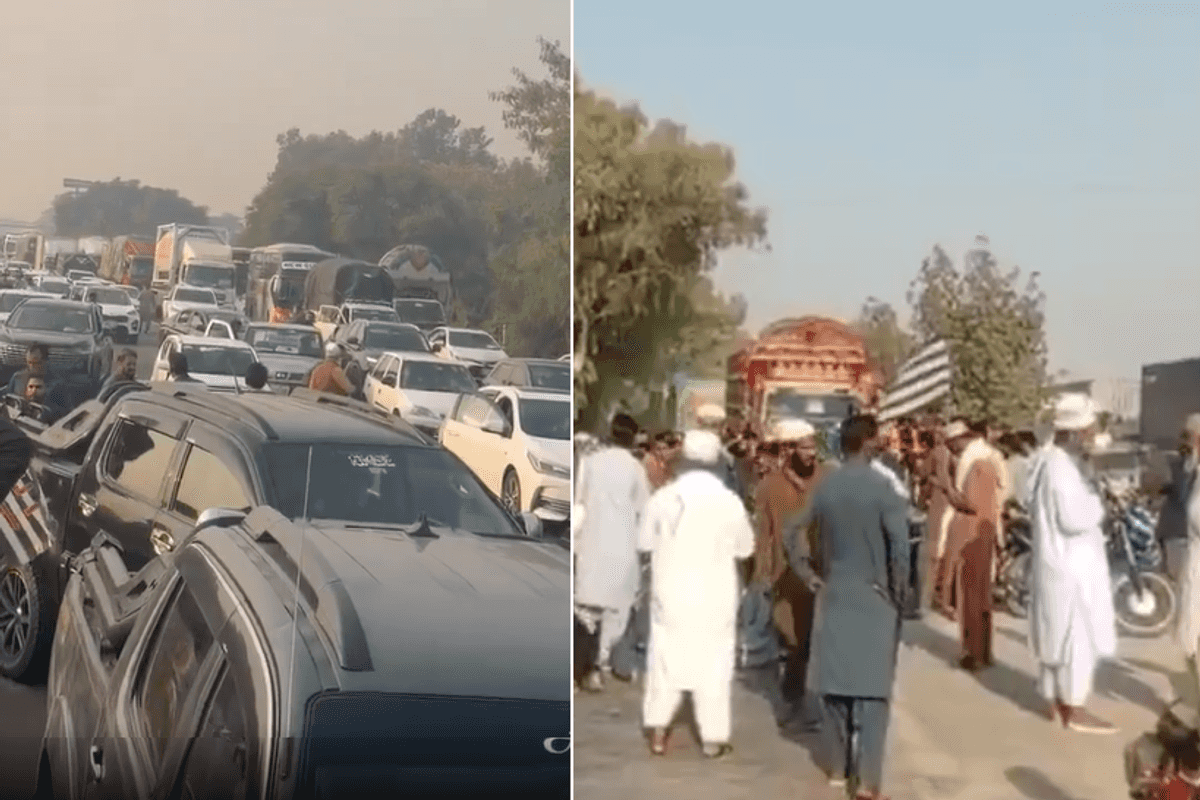
The Sargodha entry ban came as JUI-F protests over restrictions on political gatherings spread to several cities on Thursday.
Screengrab
Authorities in Punjab have barred Jamiat Ulema-e-Islam-Fazl (JUI-F) chief Maulana Fazlur Rehman and eight other religious leaders from entering Sargodha for 30 days, citing public order concerns.
The Sargodha entry ban came as JUI-F protests over restrictions on political gatherings spread to several cities on Thursday.
Why has Sargodha barred Fazlur Rehman and eight JUI-F leaders?
Sargodha Deputy Commissioner Hussain Ahmad Raza Chaudhary issued the order on November 25, following a report from the district police chief.
It says the nine leaders were likely to make provocative and objectionable speeches that could threaten public safety and disrupt law and order if allowed to enter or remain in the district.
Which leaders are covered by the Sargodha entry ban?
Besides Fazl, the list includes Maulana Naseer Ahmad Abrar, Maulana Amjad Khan, Maulana Safi Ullah, Professor Ghazanfar Aziz, Maulana Muhammad Noor Khan Hans, Maulana Muhammad Zakria Shah, Maulana Muhammad Yahya Abbasi and Maulana Jamal Abdul Nasir.
The restrictions prohibit all nine from entering, residing or remaining within Sargodha's administrative boundaries. They took immediate effect and will remain in force for 30 days from November 25 under Section 7(1) of the West Pakistan Maintenance of Public Order Ordinance, 1960.
Where have JUI-F protests been held?
JUI-F supporters staged demonstrations and blocked roads in several parts of the country on Thursday after Fazl called for nationwide protests. He said the party faced restrictions on political activity and that its workers faced violence.
In a video statement, Fazl urged supporters in all provinces to take to the streets and block major roads, highways and motorways. He questioned why the party was being prevented from holding rallies and why its workers were facing violence.
JUI-F Senator Attaur Rehman blocked the Lahore-Islamabad Motorway near Bhera Interchange. Party messages reported disruptions on the Dera Ismail Khan-Mianwali road near Chashma, the National Highway in Sujawal and the Jamrud-Torkham road in Khyber district. A demonstration was also reported at Sohrab Goth in Karachi.
The party had separately accused the Punjab administration of obstructing its planned conference in Sargodha by closing access routes and preventing supporters from reaching the venue.
Spokesperson Aslam Ghouri questioned the motorway closures, saying authorities had cited fog despite clear weather. He urged workers to remain peaceful and avoid provocation, while maintaining that the conference would proceed with Fazl and other senior leaders scheduled to address it.
What did Fazlur Rehman say about the restrictions?
Speaking to reporters while travelling with his caravan, Fazlur Rehman alleged that party workers were being arrested and subjected to violence across Punjab, citing Khushab, Mianwali and Bhakkar. He said senior leaders, including Secretary General Maulana Abdul Ghafoor Haideri and Punjab chief Maulana Amjad Khan, had been placed under house arrest, and that all major routes had been sealed.
ہم نے پورا ملک بند کرنے کی اپیل کردی ہے، تین صوبوں میں مکمل پہیہ جام ہوگا۔ مولانا فضل الرحمان https://t.co/qNkdDo1jhT
— Ali Tanoli (@alitanoli889) November 26, 2026
"Despite this, we are determined and will reach our destination," he said. "In protest, we have appealed to shut down the entire country. There will be a complete wheel-jam strike in three provinces, and all roads will be blocked."
Fazl accused the government of trampling on the Constitution, the law and democratic norms. He criticised what he called selective enforcement of Section 144, saying the law was being used only against the opposition.
"There is no Section 144 for them, yet Section 144 is imposed everywhere for us," he said. "The law is supposed to be equal for everyone, not permissible for them and prohibited for us. These powers are being misused, and we will confront them."
Asked whether the Punjab government or provincial police were behind the obstacles, and whether he was launching a formal protest movement, Fazl pointed to the enthusiasm of his supporters. The reporter noted that Khyber Pakhtunkhwa Chief Minister Sohail Afridi had recently faced similar restrictions.
"You can consider this a movement right now; you are witnessing the enthusiasm and fervor of the workers yourself," he said. "As for who is ordering these blockades, you should ask them directly whose instructions they are following."
Which JUI-F leaders have been detained?
The protests also followed the detention of several senior JUI-F figures ahead of the planned Sargodha gathering. Ghouri said late Wednesday that Punjab Police had arrested National Assembly member Maulana Abdul Ghafoor Haideri, Punjab chief Maulana Amjad Khan and Jamiat Talaba Islam central president Malik Owais.
He demanded their immediate release, questioned whether Haideri's detention had been authorised by the National Assembly speaker and warned the government would be responsible for any deterioration in the lawmaker's health. He also alleged that police were raiding the homes of other party officials.
Sargodha Regional Police Officer Sohail Sikhera confirmed the detention of Haideri, Amjad Khan and Malik Owais, telling Dawn that they had been served notices over violations of Section 144, which prohibits public gatherings in the division.
The JUI-F has accused authorities of restricting its political activities and using arrests to prevent its supporters from exercising their right to peaceful assembly. The administration has cited public order concerns for its measures.

Comments
See what people are discussing