

KSE-100 historically bounces back after conflict-driven drops, report says
J.S. Global says volatility during crises has often been followed by strong gains

Business Desk
The Business Desk tracks economic trends, market movements, and business developments, offering analysis of both local and global financial news.
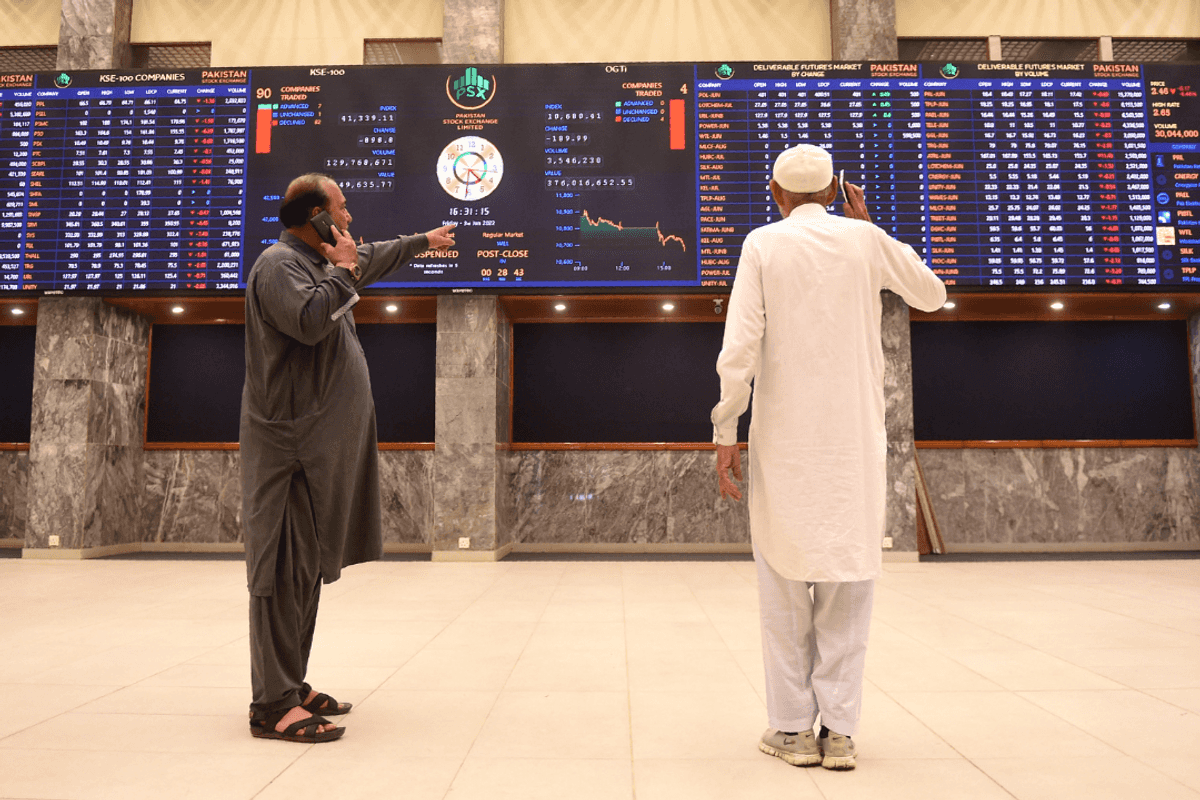
Pakistan’s benchmark stock index has historically shown sharp reactions to geopolitical crises but tends to recover quickly once uncertainty subsides, according to a report by J.S. Global Capital Limited.
The brokerage said the KSE‑100 Index has repeatedly followed a pattern of short-term declines during global conflicts followed by strong rebounds as oil prices stabilize and investor sentiment improves.
J.S. Global highlighted several historical episodes where geopolitical shocks initially weighed on the Pakistani equity market before a subsequent recovery.
Following the September 11 attacks, the KSE-100 fell about 1% amid heightened global uncertainty while oil prices rose 7%. The index later rebounded 9% within a month after oil prices normalized and Pakistan’s strategic alignment with the United States improved investor confidence.
Similarly, during the start of the United States invasion of Afghanistan in October 2001, the index declined 3.4% in the initial days as regional tensions escalated. It later gained 12% in the following weeks once geopolitical clarity improved.
During the Russian invasion of Ukraine, Brent crude surged 32% to around $128 per barrel. The KSE-100 experienced volatility but ultimately declined only about 5% from the start of the conflict before rebounding roughly 9% in the month after oil prices stabilized.
More recently, during the 2025 India-Pakistan military tensions, the KSE-100 dropped 9% in two trading sessions after Indian airstrikes on May 7, 2025. The index recovered 13% within days after a ceasefire was announced.
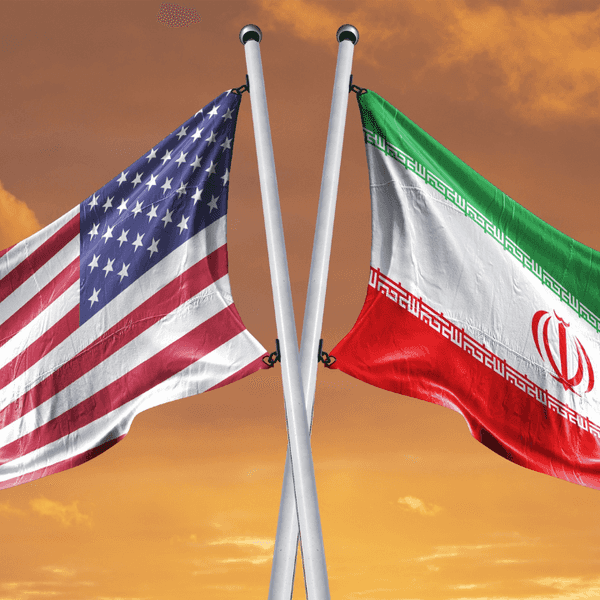
In the latest crisis involving the US‑Israel-Iran conflict, Brent crude has surged 48% from $72 per barrel to about $107, while the KSE-100 has fallen around 8%, or roughly 14,000 points, since airstrikes began on Feb. 28.
According to J.S. Global, such patterns reinforce the idea that returns in Pakistan’s equity market often materialize when sentiment is most negative rather than when uncertainty has fully cleared.
Energy sectors likely to benefit
The brokerage said sectors linked to energy are likely to outperform in the current environment of elevated oil prices.
Exploration and production companies could benefit from higher realized crude prices, while oil marketing companies and refineries may see improved profitability from stronger crack spreads for refined products such as petrol and diesel.
However, sectors sensitive to interest rates, including cement, automobiles and construction-related industries, may face pressure if the State Bank of Pakistan opts to tighten monetary policy.
Volatility seen as opportunity
Despite near-term turbulence, the firm maintains a constructive outlook for the Pakistan Stock Exchange over the medium to long term.
Pakistan is not directly involved in the current Middle East conflict, and the domestic macroeconomic framework remains supported by external financing arrangements and ongoing economic reforms, the report said.
The brokerage added that attempting to perfectly time market bottoms during geopolitical crises is historically difficult. Instead, gradual accumulation during periods of pessimism — particularly in fundamentally strong sectors — has often proven more effective for disciplined investors.
Rising retail participation and increased leverage in the market over the past year have made the KSE-100 more sensitive to corrections, amplifying volatility during sell-offs.
As tensions eventually ease and a ceasefire scenario emerges, equity markets typically reprice quickly, rewarding investors who remain invested through periods of uncertainty.
Prolonged conflict could increase risks
J.S. Global warned that a prolonged war could push commodity prices higher and disrupt supplies of energy and industrial inputs.
Even if tensions ease, restarting oil production after shutdowns often takes time, meaning supply disruptions could persist beyond the immediate crisis.
The firm also noted that foreign inflows into Pakistan’s treasury bills have already been affected, while remittances could face pressure, potentially weakening the Pakistani rupee after recent appreciation.
A direct involvement by Pakistan in the conflict, or retaliation from Iran, would significantly increase downside risks to the economic outlook, the report added.


Comments
See what people are discussing