

LHC judge Mohsin Akhtar Kayani resigns, citing 'judicial independence' concerns
Lahore High Court Justice Mohsin Akhtar Kayani resigns, citing health and what he calls executive control over judges under the 26th and 27th amendments

News Desk
The News Desk provides timely and factual coverage of national and international events, with an emphasis on accuracy and clarity.
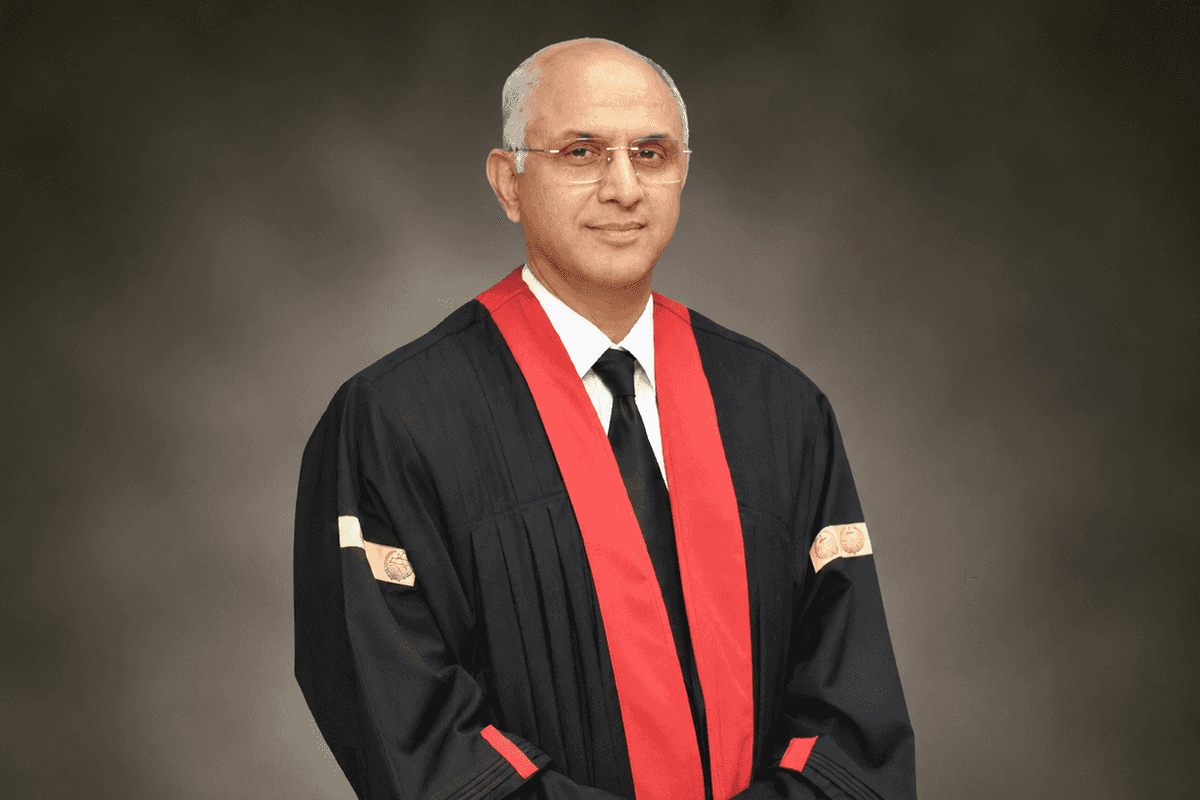
In his resignation letter to the president, Justice Mohsin Akhtar Kayani said constitutional amendments had increased executive control over the courts.
Photo source: LHC website
Lahore High Court Justice Mohsin Akhtar Kayani resigned on Wednesday, citing health concerns after recent surgery and what he described as a threat to judicial independence.
In his resignation letter to the president, he said constitutional amendments had increased executive control over the courts.
Why did Justice Mohsin Akhtar Kayani resign?
Kayani cited his health and what he described as the executive’s growing control over the judiciary. He said the 26th and 27th constitutional amendments had "compromised the independence and institutional integrity" of the high courts, raising concerns about executive influence over judicial appointments and transfers.
“I have witnessed what I regard as the executive’s growing control over judicial institutions, extending to the appointment and transfer of judges,” he wrote. He added that such interference had eroded public confidence in judicial independence and the fairness of the judicial process.
“My conscience does not permit me to continue on the Bench,” Kayani said, describing his resignation as a painful decision. He said he intended to return to legal practice, where he would continue working to protect rights and promote legal awareness.
Kayani also expressed concern about ordinary litigants, saying their needs had too often been neglected while others had benefited from a system intended to serve the public. He said he had disposed of more than 23,000 cases during his judicial career and had sought to uphold the Constitution, protect fundamental rights and administer justice “without fear or favor”.
Kayani said he was grateful to his teachers, fellow judges and family for their support and guidance during his judicial career and in reaching the decision to resign.
What led to the Lahore High Court judge’s resignation?
His resignation follows a period of judicial reshuffling and legal disputes over the transfer of high court judges. Kayani was transferred from the Islamabad High Court to the Lahore High Court in April under changes associated with the 27th constitutional amendment. He had challenged the inter-high court transfers, which were subsequently upheld by the Supreme Court’s constitutional bench.
Before his resignation, Kayani had been assigned to a single bench at the Lahore High Court’s Rawalpindi registry under a revised roster. He had previously served as the Islamabad High Court’s senior puisne judge, the court’s second-most senior judge. He had also challenged the administrative powers exercised by the Islamabad High Court’s chief justice, alongside other senior judges.
The constitutional changes have prompted debate over judicial appointments, transfers and the balance of power between the executive and judiciary. Kayani’s criticism reflects his own assessment of their impact on the courts.
Who is Justice Mohsin Akhtar Kayani?
Born in Islamabad on February 11, 1970, Kayani pursued his education in the capital before studying law at the University of Punjab, according to his profile on the LHC website. He completed his LLB there in 1994.
He later earned a master’s degree in political science in 1996, an LLM from Karachi University in 2003 and an MSc in Pakistan Studies in 2005. He also completed a postgraduate diploma in human rights through the University of Peshawar in collaboration with the Norwegian Institute of Human Rights at the University of Oslo.
Kayani enrolled as a district court advocate in 1995 and advanced to the high court and Supreme Court bars in 1997 and 2009, respectively. He held several positions in the Islamabad District Bar Association, including joint secretary and general secretary. He served as president of the Islamabad High Court Bar Association from 2013 to 2014.
He was elevated to the Islamabad High Court in December 2015, where he later became senior puisne judge, before his transfer to the Lahore High Court in April 2026. His judicial work included cases involving human rights and enforced disappearances.
He also advocated legislative reforms to strengthen accountability in such cases and served as visiting faculty at academic institutions in Islamabad between 2006 and 2012.





Comments
See what people are discussing