

Pakistan's Judicial Commission approves transfer of three IHC judges in contentious meeting
JCP voted 11-4 to transfer justices Kayani, Babar Sattar and Saman Rafat Imtiaz out of the IHC, with Chief Justice Afridi among those opposing the move.

Ali Hamza
Correspondent
Ali; a journalist with 3 years of experience, working in Newspaper. Worked in Field, covered Big Legal Constitutional and Political Events in Pakistan since 2022. Graduate of DePaul University, Chicago.
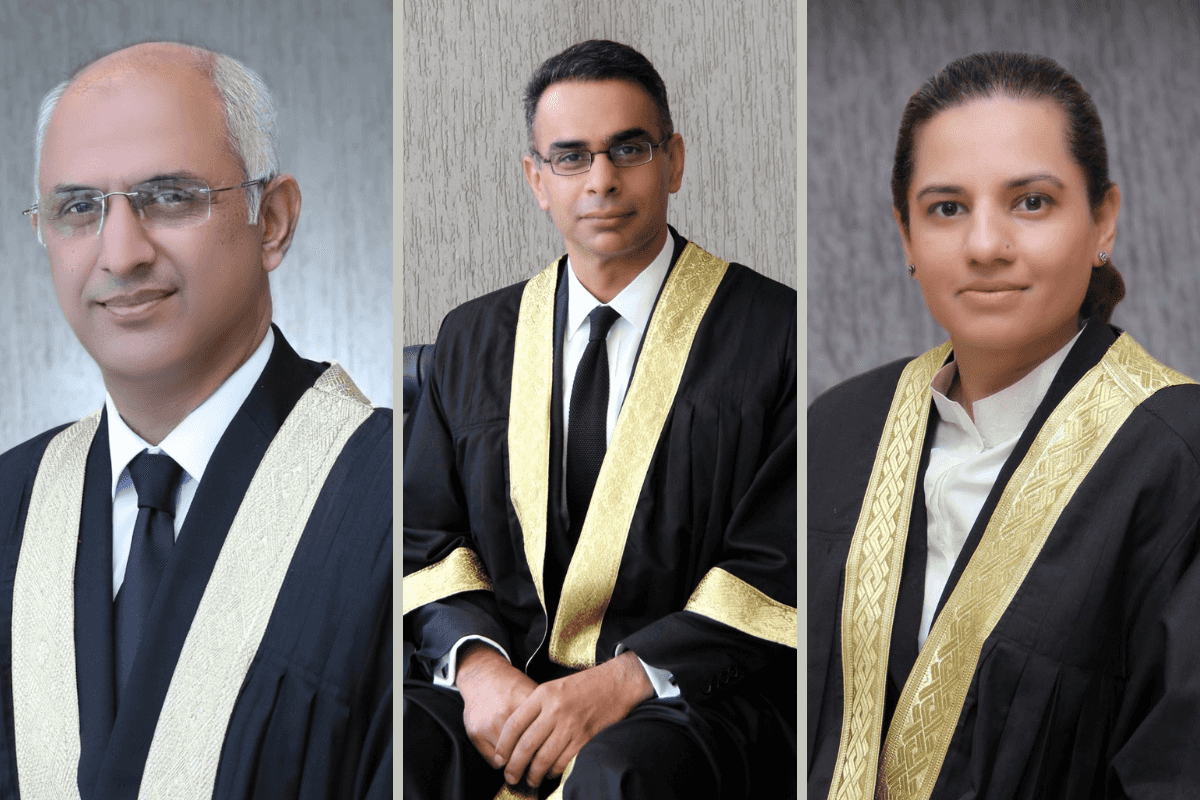
Justice Mohsin Akhtar Kayani (L); Justice Babar Sattar (C); Justice Saman Rafat Imtiaz (R).
Pakistan's Judicial Commission approved the transfer of three Islamabad High Court judges to other provincial high courts on Tuesday, April 28, following a contentious meeting at the Supreme Court in Islamabad.
The commission approved the transfers by an 11–4 majority despite opposition from Chief Justice Yahya Afridi, who chaired the session, with Justice Ateeq Shah, Chief Justice of the Peshawar High Court, dissenting over the move to transfer Justice Babar Sattar; the decision was enabled by the 27th Constitutional Amendment, which allows the Judicial Commission of Pakistan (JCP) to transfer judges without their prior consent.
Which IHC judges did the Judicial Commission approve for transfer?
The Judicial Commission approved the transfer of Justice Mohsin Akhtar Kayani to the Lahore High Court, Justice Babar Sattar to the Peshawar High Court, and Justice Saman Rafat Imtiaz to the Sindh High Court.
Separate proposals to transfer Justice Arbab Muhammad Tahir to the Balochistan High Court and Justice Khadim Hussain Soomro to the Sindh High Court were later withdrawn by the members who had sought the meetings.
The three judges — Justice Kayani, Justice Saman Rafat Imtiaz and Justice Babar Sattar — were among signatories to a March 15, 2024 letter addressed to then-Chief Justice Qazi Faez Isa, raising concerns about alleged executive interference in judicial affairs.
How did the JCP vote on the IHC judge transfers?
PTI chairman Barrister Gohar Ali Khan told reporters that 11 members voted in favor of the transfers and four voted against.
Those opposing the transfers were Barrister Gohar himself, PTI Senator Ali Zafar, Chief Justice Yahya Afridi, and Supreme Court Justice Muneeb Akhtar. Barrister Gohar and Senator Ali Zafar described the transfers as driven by the government's mala fide intentions.
The commission met from 1:25 p.m. until around 5 p.m. to consider the proposals under Article 200 of the Constitution. The meeting was convened by the commission's secretary under constitutional powers, after the chairman declined an earlier request from one-third of the total members to call the session.
Chief Justice Afridi had reportedly opposed the proposed transfers during earlier consultations as well, citing concerns about judicial independence.
Why was the JCP meeting itself disputed?
The meeting was called after a requisition by five JCP members, despite Chief Justice Afridi's refusal to convene it. Under constitutional provisions, the secretary of the commission stepped in to call the session. The chief justices of the relevant high courts participated as additional members when each proposed transfer was individually considered.
Justice Babar Sattar had written to the commission requesting a hearing before any decision on his transfer was made. Barrister Gohar confirmed that no such hearing was granted. The commission also decided by majority that any vacancy arising from a transfer would be filled through a further transfer, not treated as a vacancy for an initial appointment.
What is the Judicial Commission of Pakistan and who are its members?
The Judicial Commission of Pakistan has 13 permanent members, including senior Supreme Court judges, the law minister, the attorney general, lawmakers from both houses of parliament, a Pakistan Bar Council representative, and a woman or non-Muslim member nominated by the speaker of the National Assembly.
In transfer matters, two additional members join: the chief justice of the high court from which a judge is being transferred and the chief justice of the receiving court.
The transfers mark the latest episode in an ongoing controversy surrounding the IHC. A previous round of transfers into the court in early 2025 was challenged by five IHC judges in the Supreme Court, and vacancies from these new transfers will now be filled the same way, through further transfers rather than fresh appointments.



Comments
See what people are discussing