

Makkah defense pact open to regional expansion, Pakistan says
Ishaq Dar says the Makkah defense pact with Saudi Arabia and Turkey is purely defensive and open to other countries in the region.

News Desk
The News Desk provides timely and factual coverage of national and international events, with an emphasis on accuracy and clarity.
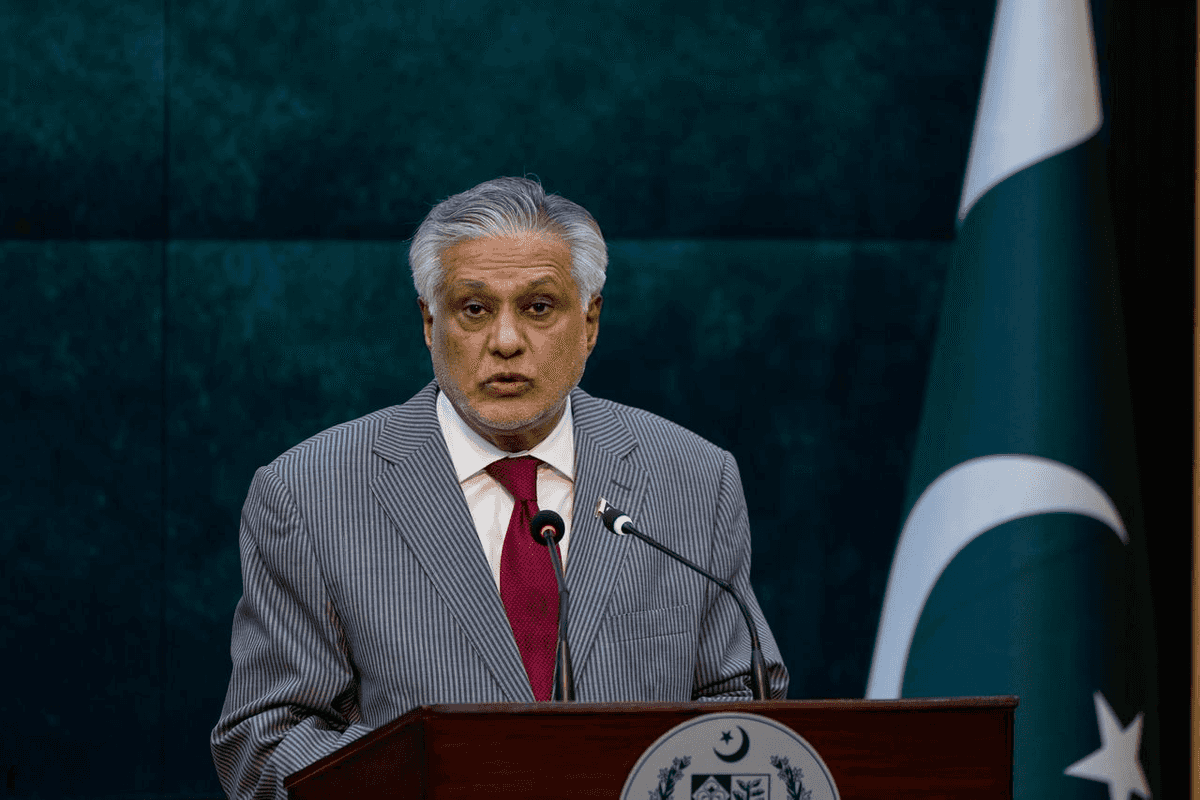
Pakistan's Deputy Prime Minister and Foreign Minister Ishaq Dar said on Sunday that the Makkah Joint Defense Agreement, signed Friday with Saudi Arabia and Turkey, remains open to other countries in the region. Dar stressed the pact was "purely defensive" and not directed against any country.
What is the Makkah Joint Defense Agreement?
The Makkah Joint Defense Agreement is a mutual defense pact signed by Pakistan, Saudi Arabia and Turkey in the Saudi city of Makkah. It stipulates that an external armed attack on any one signatory would be considered an attack on all three. The pact aims to strengthen collective deterrence and advance regional peace, stability and prosperity.
What did Dar say about the Makkah pact?
"The Makkah Joint Defense Agreement […] reflects the depth of the brotherly relations between the leadership and peoples of the three countries," Dar said in a post on X, referring to the agreement as the Makkah Accord. He said the pact was "the culmination of years of discussions and coordination, with a common desire to strengthen strategic cooperation in addressing multifarious peace and security challenges and advancing regional peace, stability and prosperity."
Dar said the agreement did not abrogate or replace any existing bilateral or multilateral agreements between the signatories or with other countries or organizations. He said the mutual defense provision was consistent with the inherent right of individual and collective self-defense under Article 51 of the UN Charter. "It is not targeted against any country and its sole purpose is to further strengthen our ongoing efforts towards peace, stability and prosperity in the wider region," he said.
Is the Makkah pact open to other countries joining?
"The Makkah Accord remains open to any country in the region willing to uphold its fundamental principles and resolve differences through mutual respect, cooperation and peaceful means," Dar said, adding the pact was consistent with the fundamental pillars of Islamabad's foreign policy. "Pakistan looks forward to continuing to work closely with all brotherly countries in the region towards lasting peace and stability. We remain committed to advancing the cause of peaceful resolution of all conflicts and building a more secure, stable and prosperous future for our peoples," he concluded.
Could Egypt join the Makkah defense pact?
Dar's comments came a day after Turkish Foreign Minister Hakan Fidan said Egypt could join the alliance once several technical issues were resolved. "Egypt is already our natural partner on all issues. I believe that at the next stage, Egypt will also be among us in the alliance. We already act toward one another as if we were alliance members. There are a few technical issues. Once these are implemented, there is no reason for Egypt not to be part of it," Fidan told Turkey's state-run Anadolu news agency on Saturday.
Fidan said other countries had also expressed interest in joining, though the founding members had discussed how any expansion should be managed. Some countries seeking to join had asked not to be identified, he said. The preferred model is for Turkey, Saudi Arabia and Pakistan to remain the three core founding countries responsible for establishing the alliance's principles, standards and long-term structure, while other countries could join with the approval of the core members. "Under our president's vision, we should not remain limited to three countries. We should grow," Fidan said, adding that Pakistan's participation gave the initiative a broader geographical scope than the traditional definition of the Middle East.
How does the Makkah pact compare to NATO's Article 5?
Fidan said the pact was technically similar to NATO's Article 5 mutual defense provision, under which an attack on one member is considered an attack on all. The Makkah pact contains the same basic commitment, though its practical implementation would depend on consultations and decisions by the alliance's relevant bodies, he said. A country would first need to request assistance and would determine the type of support required, ranging from intelligence and logistics to ammunition or, if necessary, military units, depending on the scale of the threat.
The signatories would decide through consultations the degree, form and format of assistance required in the event of an attack, Fidan said. No country would be considered a threat as long as a member state was not attacked, he added. Fidan stressed the alliance was not directed against Iran or any other country, but was a general commitment to support the security of the three signatories, noting that discussions on the initiative began before the current regional war environment.
Fidan said the signatories did not have expansionist policies. "They are countries concerned with their own borders, their own problems and their development, and, if possible, they want to contribute positively to their environment through good relations and good neighborliness," he said. He described the three countries as having different styles and capabilities that naturally formed a defense-oriented organization rather than an offensive one. "It is not an approach of going on the offensive and saying, 'Let's do this or that together.' Therefore, unless it is attacked by a country, whether from inside or outside the region, this alliance cannot have any dispute with any country. But, of course, the power composition we have put forward will make a constructive contribution to regional stability," he said, calling the pact the "most important step" toward bringing lasting stability to the region.
How will the Makkah defense alliance function?
Fidan said the pact would operate under a political and military committee comprising foreign and defense ministers and chiefs of general staff, similar to NATO structures. The committee would translate the leaders' vision into decisions and oversee related work, while a secretariat would be established to implement those decisions. "At the first committee meeting, ministers would likely present proposals to the leaders on the establishment, structure and functioning of the secretariat, as well as its initial tasks," Fidan said.
The pact would cover a broad range of military issues, including interoperability, the ability of countries with different military structures to operate together, alongside joint training, mutual support, logistics, threat assessments, intelligence sharing and defense industry cooperation. The committee would meet at regular intervals during the year, while a permanent secretariat would be established in Saudi Arabia. Its structure, functioning and additional units would be determined through discussions among the members, Fidan said, adding that joint exercises and training would be necessary to build the ability of the three countries to operate together. "Because after a while you will see that when you find yourselves in a common combat scenario, how your weapons systems and communications systems will communicate with one another and how they will be compatible are important issues. These are the things that will be done after the secretariat is established," he said.
What support has the Makkah pact received?
Fidan said the defense agreement had received strong support from countries in the Muslim world, including those that were not members but welcomed the agreement, as well as supporters in the West who understood its substance. "Especially in the Islamic world, there are many who strongly support this issue. There are also supporters in the West, among those who understand the essence of the matter. The way for the Middle East to cease being a place that produces problems for humanity and the international community and instead become a place that creates added value with everything it possesses is through implementing constructive alliances of this kind," Fidan said.
He said the leadership of Turkey, Saudi Arabia and Pakistan had created significant regional and global expectations, placing responsibility on officials to implement the initiative effectively. "Our responsibility, in the positions we hold, is to recognize that the political will put forward by the leadership of the three countries has created a very significant regional and global expectation. We need to fill that expectation very professionally, move forward step by step and make it work. We have begun doing this, and God willing, we will continue," he said.




Comments
See what people are discussing