

Mari Energies announces copper-gold discovery in Chagai, 50 km away from Reko Diq
Drilling at East Siah Diq found porphyry copper mineralization across 1.4 square kilometers, but scale and economics are yet to be established

Business Desk
The Business Desk tracks economic trends, market movements, and business developments, offering analysis of both local and global financial news.
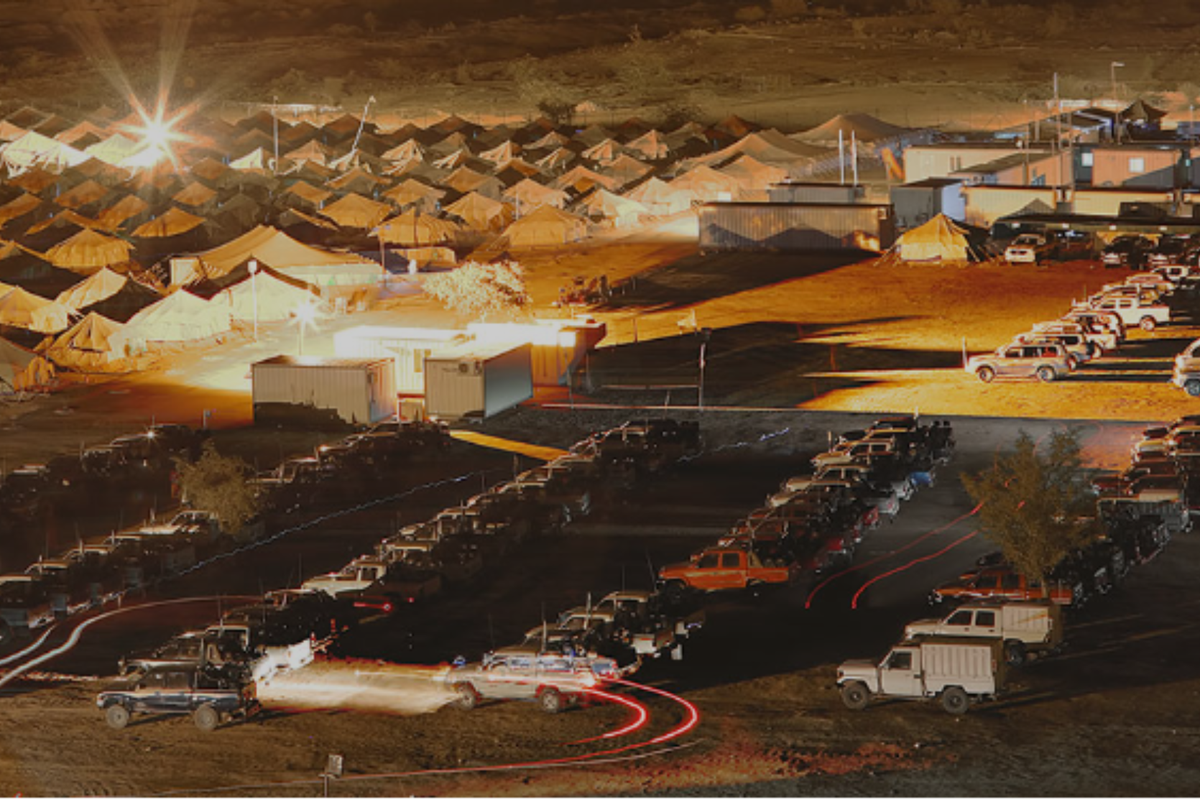
Mari Energies Limited has announced what it describes as a significant copper-gold discovery at its East Siah Diq (ESD-1) exploration target in Balochistan’s Chagai district, about 50 kilometers east of the Reko Diq copper-gold mine development project.
The discovery was made through Mari Minerals (Pvt.) Limited, a wholly owned subsidiary of Mari Energies that holds multiple exploration licenses in the district. The area is about 25 kilometers northwest of Nokkundi, in the Koh-i-Sultan area adjacent to the Siah Diq project, the company said.
Drilling at ESD-1 intersected porphyry copper-style mineralization beneath about 100 meters of unconsolidated overburden, across an area of about 1.4 square kilometers. Based on the results so far, the company called ESD-1 a new porphyry copper discovery.
Mari Minerals has completed about 25,000 meters of exploration drilling in two phases, Phase 1A and Phase 1B. All drill holes are vertical and 500 meters long.
Phase 1A results
Assay results for 20 Phase 1A holes show copper grades from 0.04% to 0.50% and gold from 0.02 to 0.19 grams per tonne, over intercepts of roughly 393 to 415 meters starting at depths of 90 to 108 meters. The best hole, ESD-1-DD-017, returned 400.25 meters at 0.50% copper, 0.11 grams per tonne of gold and 93 parts per million of molybdenum. Ten of the 20 holes returned at least 0.32% copper.
The company said the intercepts cover the entire length of bedrock intersected, with no cut-off grade applied, so the figures average the whole interval rather than selected high-grade sections. SGS Pakistan prepared and assayed the samples under a quality-control program that used certified reference materials, duplicates and blanks, it said.
Assaying of the Phase 1B holes is underway and expected to be completed in the first quarter of 2027.
Geology
Copper mineralization is primarily associated with disseminated and vein-hosted chalcopyrite, commonly accompanied by pyrite, the company said. Bornite was also observed, while selected holes showed molybdenum mineralization associated with molybdenite. Green and blue copper oxide minerals were found locally just beneath the overburden.
The mineralization is hosted by porphyritic diorite intrusive rocks, with early-, inter- and late-mineral intrusive phases identified. Hydrothermal alteration of the host rocks is pervasive and mainly sericite-chlorite in character.
What comes next
The next exploration phase is expected to include some step-out drill holes and deeper drilling to test potential from 500 to 1,000 meters, as mineralization remains open below 500 meters. The company plans to develop an initial geological model and resource estimate from the Phase 1A and Phase 1B holes.
Mari Energies cautioned that further drilling, geological interpretation, metallurgical test work, resource estimation and technical studies are needed before the scale, grade continuity, economic significance and development potential of the mineralization can be determined. The results relate to the ESD-1 target only and are not indicative of a mineral resource or reserve.
The technical information was reviewed and approved by John Mortimer, PhD, of JM Geoscience Pty Ltd, who has more than 40 years of relevant experience, including porphyry copper exploration. The results were prepared with reference to the disclosure principles of Canada’s National Instrument 43-101 and the CIM Definition Standards.





Comments
See what people are discussing