

Pakistan’s terror crisis is bigger than a Punjab-KP blame game
As leaders trade accusations, the roots of militancy and burden of violence tell a more complex story

Razi Wani
Producer - News Desk
Razi Ud Din Ahmed Wani is a multimedia journalist and digital storyteller with a strong background in fact-checking, South Asian politics, documentary filmmaking, scriptwriting, and digital content production. With an MA in Mass Communication from the University of Karachi, he has experience directing and scripting web series and socio-political satires. And has worked across various media and digital platforms, focusing on emerging trends and storytelling formats.
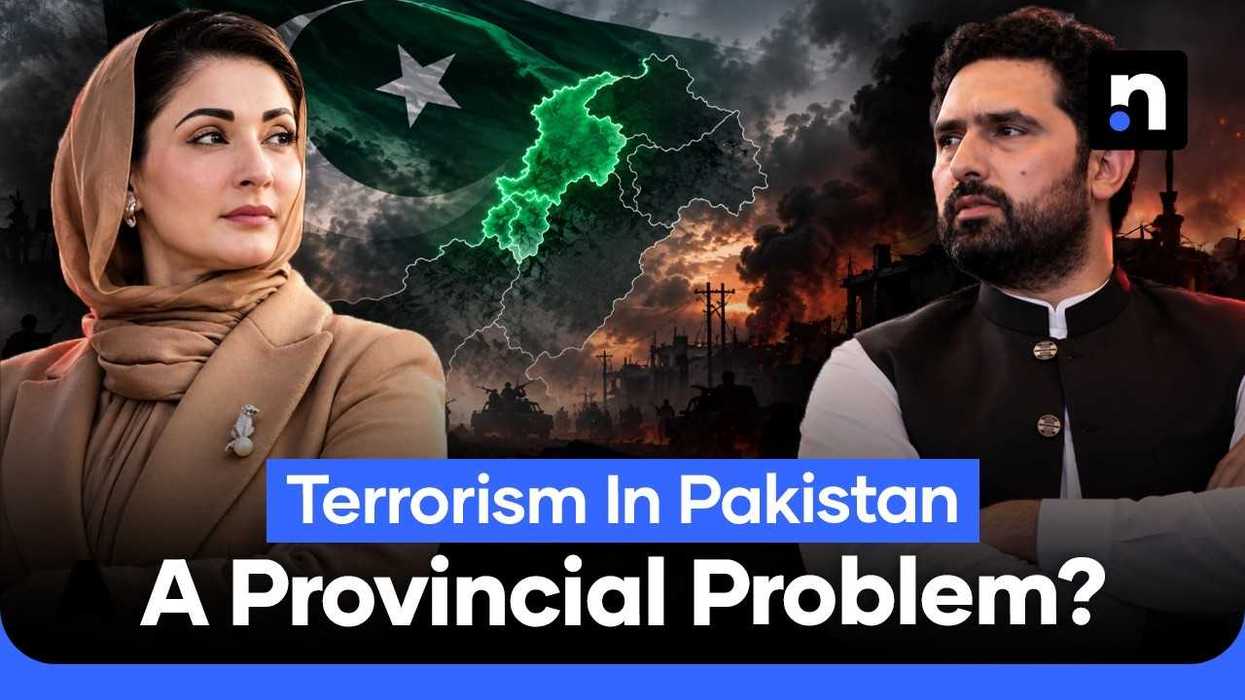
When Punjab Chief Minister Maryam Nawaz took the stage at an artificial intelligence showcase in Lahore on Sept. 5, 2026, the occasion was meant to highlight technical innovation. Instead, a single line from her address ignited a fierce inter-provincial rift over national security.
“I face less of a security threat from my neighboring country and more from my neighboring province, as terrorism enters Punjab from there,” Nawaz remarked, pointing directly toward the western borders.
The comment tore through Pakistan’s fragile political landscape. Within hours, a political exchange erupted between federal ministers and provincial leaders, reducing a complex, multi-decade security crisis into partisan point-scoring. Yet beyond the political grandstanding lies a far deeper and more troubling reality: a nation ranked at the top of global terror indices, where state choices, ideological nurseries in the central heartland, and asymmetric bloodshed on the frontier have brought the federation to a critical juncture.
The blame game
The federal response was immediate, with key cabinet members rushing to reinforce Nawaz’s assertion. In a joint press conference, Minister of State Talal Chaudhry claimed that if Pakistan is burning in the fires of terrorism, it is due to the "incompetent leadership" of Khyber Pakhtunkhwa (KP) and its soft posture toward cross-border threats. Information Minister Attaullah Tarar went further, labeling the opposition Pakistan Tehreek-e-Insaf (PTI) as the "B-team of the Tehreek-e-Taliban Pakistan (TTP)" and questioning their silence over cross-border drone incursions in Kohat and shelling in Kurram.
The backlash from KP was swift and uncompromising. PTI Central Information Secretary Sheikh Waqas Akram branded Nawaz’s statement "reckless," pointing out that her uncle, Prime Minister Shehbaz Sharif, had once publicly appealed to militants to spare Punjab from violence. In Swabi, former National Assembly Speaker Asad Qaiser addressed thousands of party workers, calling the speech a direct insult to the Pashtun people, who have paid the highest price in the country’s war on terror.
The political standoff took on a starker edge following a terror attack in KP’s Darazinda area on Sept. 26, 2026, which left at least 12 dead. Visiting wounded survivors in Dera Ismail Khan, KP Chief Minister Suheil Afridi demanded that his province be given a decisive voice in national counter-terrorism policymaking.
Afridi leveled a serious grievance against federal authorities, alleging that while KP’s frontline police force fights with inadequate gear, Islamabad has withheld vital equipment. Payments made last year to federal entities like Heavy Industries Taxila (HIT) and the National Radio and Telecommunication Complex (NRTC) for armored personnel carriers (APCs) and weapons have yielded no deliveries for KP, even as federal agencies and other regions remain fully equipped.
Senior journalist Mehmood Jan Babar noted that converting national security into political friction cripples the state's collective defense. "The way we play politics with politics, we are now playing politics with terrorism," Babar observed. "This blame game has severely damaged our stance".
Reversing the narrative: How militancy moved west
Addressing the controversy in his column for Daily Jang, senior journalist Saleem Safi argued that portraying militancy as an import from KP into Punjab turns historical fact upside down. Historically, the flow of radicalization and organizational infrastructure moved from Punjab toward the Pashtun frontier, not the reverse.
The organizational roots of Pakistan’s most formidable militant networks were established inside Punjab:
- Jaish-e-Mohammed (JeM): Established its central headquarters in Bahawalpur, Southern Punjab.
- Lashkar-e-Taiba (LeT): Anchored its main operational hub in Muridke, near Lahore.
- Sipah-e-Sahaba Pakistan (SSP) & Lashkar-e-Jhangvi (LeJ): Founded in Jhang and Bhakkar, laying the groundwork for violent sectarianism.
- Harkat-ul-Ansar & Harkat-ul-Mujahideen: Formed and expanded across Punjab’s urban centers.
Safi highlighted that prominent security officials who cultivated the region’s militancy during the 1980s and 1990s—including Gen. Akhtar Abdur Rehman, Gen. Hamid Gul, Col. Imam, and Khalid Khwaja—hailed from Punjab.
Following the 2007 Lal Masjid operation in Islamabad and the formation of the TTP, an estimated 2,000 Punjabi militants migrated to the former Federal Capital Territory and the Federally Administered Tribal Areas (FATA), particularly North and South Waziristan. These fighters merged with local Pashtun commanders, supplying the TTP with critical operational planning, urban safe houses, and intelligence networks across major Pakistani cities.
Southern Punjab: The recruitment heartland
Policy research and intelligence assessments confirm Southern Punjab's role as a major organizational engine for militancy:
- The Punjabi Taliban Network: A 2009 study by Harvard researcher Dr. Hassan Abbas detailed how Punjab-origin factions provided the TTP with logistical support, safe houses, and target selection inside Punjab’s urban centers.
- International Crisis Group Report (2016): Titled Pakistan’s Jihadist Heartland: Southern Punjab, the report documented how socio-economic disparities, political alienation, and dense madrasa networks across Multan, Bahawalpur, and Dera Ghazi Khan generated a recruitment pipeline for groups like JeM and LeJ. The report noted that these groups operated under a "climate of impunity" tolerated by successive provincial governments.
- Al-Qaeda Connections: Research by defense analyst Aisha Siddiqa and Pak Institute for Peace Studies (PIPS) Director Amir Rana revealed that Lashkar-e-Jhangvi was the first domestic group to channel cadres into Al-Qaeda. A vast majority of Pakistani nationals linked to Al-Qaeda historically originated from Punjab or Karachi, rather than the Pashtun belt.
Analysts also highlight that around 2014, a tacit non-aggression understanding existed between Punjab provincial authorities and local militant factions: as long as operations were avoided inside Punjab, local networks operated with relative space while violence raged in the tribal districts.
A stark asymmetric reality
While Punjab harbors the historical organizational base of these networks, modern security data shows where the physical destruction is borne.
According to the Global Terrorism Index (GTI) 2025 published by the Institute for Economics and Peace (IEP), Pakistan was ranked as the most terror-impacted nation in the world for the first time. The country recorded 1,139 deaths across 1,045 attacks in 2025—the highest level of violence since 2013, with the TTP responsible for a major share of the fatalities.
Data from the Pakistan Security Report 2025 by PIPS highlights the geographical concentration of violence:
- Khyber Pakhtunkhwa: 413 attacks, resulting in 581 deaths.
- Balochistan: 254 attacks, resulting in 419 deaths.
- Sindh: 21 attacks.
- Punjab: 11 attacks.
- Gilgit-Baltistan: 3 attacks.
Of the 699 total terrorist incidents cataloged nationwide by PIPS, over 95% occurred in KP and Balochistan combined. Security forces—including local police, Army, and Frontier Corps—accounted for more than 42% of total fatalities.
Mehmood Jan Babar pointed out that while Punjab experienced only 11 attacks in 2025, KP absorbed 68% of total incidents. Furthermore, 96% of total casualties across the main conflict zone were residents or personnel stationed in KP and Balochistan.
The imperative for statesmanship
Reducing a decades-long security crisis into provincial finger-pointing or ethnic slurs is extremely poor leadership at a time when national cohesion is paramount.
Senior analyst Zaigham Khan emphasized that framing the conflict along provincial lines is both factually flawed and strategically dangerous. "Neither the public in Punjab nor the public in Khyber Pakhtunkhwa supports these terrorists," Khan stated. "Accusing whole provinces serves the militants' cause. Terrorists do not view themselves as Pashtun or Punjabi; their war is against the State of Pakistan".
Babar recalled a notable observation by the late Inspector General of KP Police, Nasir Ali Khan Durrani, who hailed from Punjab: "If the KP police step aside for a single moment, every militant wants to move straight to Punjab. The KP police stand on the front lines to protect the entire nation".
Pakistan's fight against violent extremism long predates the current political dispute, and casting it as a localized problem created by a single province or political party is deeply disingenuous. Defeating militancy requires an accurate understanding of history, equitable funding for frontline provincial forces, and a unified national policy rather than partisan rhetoric.




Comments
See what people are discussing