

Modi arrives in New Zealand as landmark trade deal faces political friction
Indian Prime Minister Narendra Modi arrived in New Zealand for a historic state visit centered on a major free trade agreement amid intensifying domestic political debates

News Desk
The News Desk provides timely and factual coverage of national and international events, with an emphasis on accuracy and clarity.
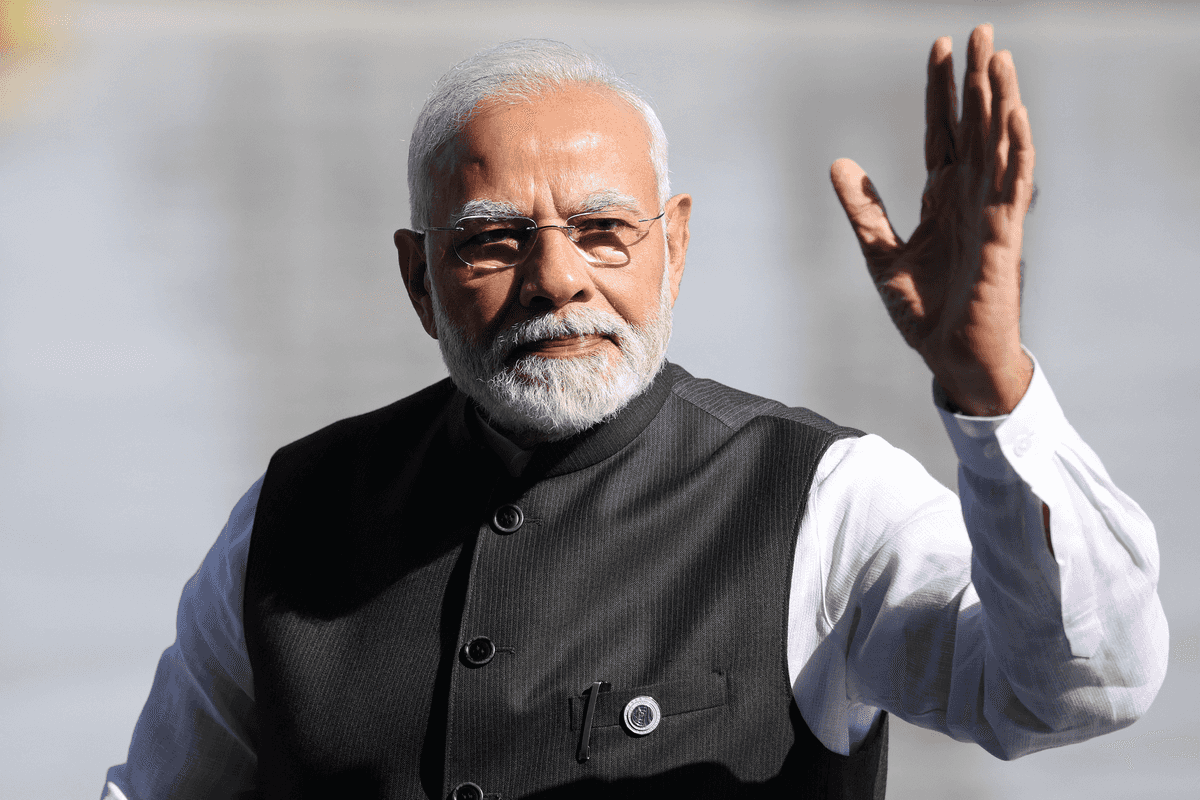
Indian Prime Minister Narendra Modi arrived in New Zealand on Friday to finalize a milestone free trade agreement aimed at dramatically strengthening bilateral economic ties.
The high-profile arrival marks the first official trip by an Indian prime minister to the island nation in four decades, though the visit lands in the middle of a heated domestic immigration debate.
What does the new free trade agreement mean for India-New Zealand ties?
The free trade agreement (FTA), which was initially signed in April, is engineered to aggressively boost export volumes, generate new employment sectors, and attract cross-border corporate investments. New Zealand Prime Minister Christopher Luxon heavily praised the economic framework, noting that an impressive 57% of his country's exports to India will become entirely tariff-free from day one of implementation.
The strategic visit represents the final leg of Modi's broader July 6–11 international tour, which has also featured high-level diplomatic stops in Indonesia and Australia.
The prime minister's packed itinerary includes an official welcoming ceremony at Government House followed by dedicated corporate and sports cooperation meetings in Auckland. He is also scheduled to headline a massive diaspora rally at Spark Arena, where nearly 10,000 members of the local Indian community are expected to gather.
New Zealand is currently home to an Indian diaspora of approximately 300,000 people, making the South Asian nation an increasingly critical strategic and maritime partner in the Indo-Pacific region. Prime Minister Luxon has repeatedly emphasized that deepening economic cooperation promotes long-term regional security and mutual prosperity. Despite the political noise surrounding the trade deal's ratification process, mainstream parliamentary opposition is widely expected to back the final legislative approval.
Why has the trade deal sparked political pushback and anti-migrant rhetoric?
Despite solid institutional support for the economic benefits, select members of the ruling governing coalition have openly criticized the treaty's expanded migration and visa provisions.
Zealand First Minister Shane Jones sparked severe national controversy by publicly stating he would never agree to what he described as a "butter chicken tsunami" entering the country. The polarizing remark drew widespread condemnation from minority advocacy groups, who labeled the statement as deeply offensive and racist.
The political friction has been further compounded by highly inflammatory public comments from self-described evangelical preacher Brian Tamaki, who used social media to attack local minority groups. Following the formal announcement of Modi's state visit, Tamaki accused the New Delhi administration of persecuting Christians and explicitly urged his followers to purge the nation of Hindus, Sikhs, and Muslims. The country's Race Relations Commissioner swiftly interceded, labeling the preacher's aggressive online rhetoric as utterly appalling.
"South Asians remain among the most frequent targets of racially motivated incidents, reflecting a troubling trend that should not be ignored."
— Sita Venkateswar, Massey University Anthropologist
Tensions have also been fueled by other recent cultural flashpoints within the country. Earlier this year, Māori activist Che Wilson faced intense public scrutiny after allegedly directing racially charged references toward an Indian-born lawmaker during a traditional haka performance.
Anthropologists note that the timing of the premier's visit unfortunately coincides with a measurable rise in discrimination, street-level graffiti, and derogatory behavior targeting South Asian residents.


Comments
See what people are discussing