

Pakistan's interior minister arrives in Tehran amid ongoing Hormuz talks
Pakistan's Interior Minister Mohsin Naqvi arrived in Tehran on Tuesday as diplomatic efforts to reopen the Strait of Hormuz gain momentum

Aamir Abbasi
Editor, Islamabad
Aamir; a journalist with 15 years of experience, working in Newspaper, TV and Digital Media. Worked in Field, covered Big Legal Constitutional and Political Events in Pakistan since 2009 with Pakistan’s Top Media Organizations. Graduate of Quaid I Azam University Islamabad.
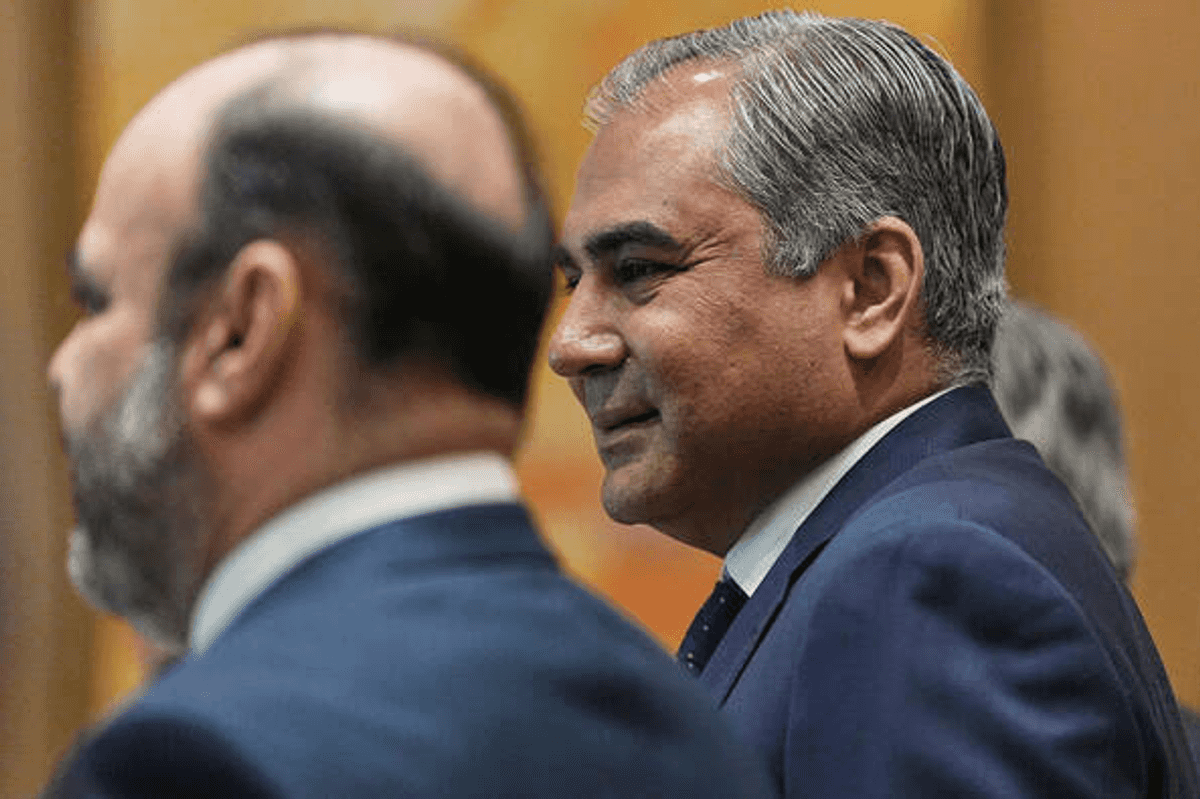
Pakistan Interior Minister Mohsin Naqvi pictured in Islamabad on April 11, 2026.
Reuters/File
Pakistan's Interior Minister Mohsin Naqvi arrived in Tehran on Tuesday for talks with Iranian officials as diplomatic efforts to reopen the Strait of Hormuz gain momentum.
Pakistan is seeking to help bridge differences between Iran and the United States. Naqvi has been involved in Pakistan's mediation efforts since hostilities began.
Why is Pakistan's interior minister visiting Tehran?
Naqvi is expected to meet senior Iranian officials during his visit, according to Iranian media reports. This marks his sixth trip to Tehran since the conflict began, reflecting Islamabad's sustained effort to keep diplomatic channels open.
Pakistan has positioned itself as a facilitator of dialogue between Iran and the United States throughout the crisis.
What progress has been made on reopening the Strait of Hormuz?
Naqvi's visit comes as Iran and Oman work on arrangements for shipping through the strait, with broader talks aimed at easing tensions intensifying. Iranian Foreign Ministry spokesman Esmaeil Baghaei said on Monday that talks with Oman were progressing smoothly and constructively. The two sides have agreed on a map for a shipping route, though some technical issues remain unresolved.
Discussions have also covered safe navigation, environmental protection, maritime assistance and combating crime, Baghaei said. Iran maintains that the United States must meet conditions including compensation and an end to sanctions and military threats before the waterway can fully reopen.
Are the US and Iran close to a deal?
Signs have emerged that Washington and Tehran may be moving closer to an understanding. Pakistan's Defence Minister Khawaja Asif told Bloomberg News the two sides were close to some sort of an arrangement, saying signals over the previous two or three days suggested renewed movement toward a peace deal.
But U.S. President Donald Trump introduced a new demand on Monday, saying Iran should pay compensation for people killed and damage caused during wars, attacks and protests. The demand could complicate efforts to reach an agreement and restore shipping through the strait. Trump said the United States would seek compensation for damage caused by Iran over the past 50 years, including deaths among civilians and U.S. forces in the region.
What did Trump say about Iran's 2025-2026 protest crackdown?
Trump referred to Iran's crackdown on protests in late 2025 and 2026, claiming that about 52,000 protesters had been killed. Some Iranian opposition and exile groups have cited much higher death tolls, but the U.S.-based Human Rights Activists News Agency reported in February that about 7,000 people had died, including around 6,500 protesters.
These figures remain contested, with significant gaps between official U.S. claims, opposition estimates and independent monitoring group findings. The disputed toll has become a point of friction in the broader negotiations.
Why does the Strait of Hormuz matter for global energy markets?
About one-fifth of global oil and liquefied natural gas supplies flowed through the Strait of Hormuz before the conflict, and the waterway has been effectively blocked since the war began. This has disrupted energy markets and contributed to higher oil prices and inflation. Iran has sought greater control over shipping arrangements, while U.S. officials have repeatedly rejected any agreement allowing Tehran to impose fees on vessels using the strait.
Despite months of U.S. military pressure, including a two-week campaign of strikes in July, Washington has not restored unrestricted shipping through the waterway. Trump has nevertheless repeatedly said the strait is open and that the U.S. Navy controls it.
How did the US-Iran ceasefire break down?
The United States and Iran agreed to a ceasefire in June, but Washington reimposed a blockade on Iranian shipping in July, which Tehran said violated the truce. Iran responded with missile and drone attacks against U.S. allies in the region and has also targeted commercial vessels attempting to transit the strait without its permission.
The developments have put pressure on Trump to end a conflict that has become politically costly at home ahead of November's midterm elections, with higher fuel prices a particular concern in rural areas that have traditionally supported him.





Comments
See what people are discussing