

Noor Zaman has the talent, now comes the tough part
Pakistan's top squash player's progression so far suggests he has the raw materials: skill, resilience, curiosity, and a growing mental edge

Muhammad Muneeb
Producer, Karachi
Muneeb Farrukh is a Pakistani sports journalist with bylines in top media outlets like Geo News, Geo Super, The News International, SAMAA, ARY and The Express Tribune. After years of reporting on cricket, he is now on a mission to shine the spotlight on Pakistan's unsung sports heroes.
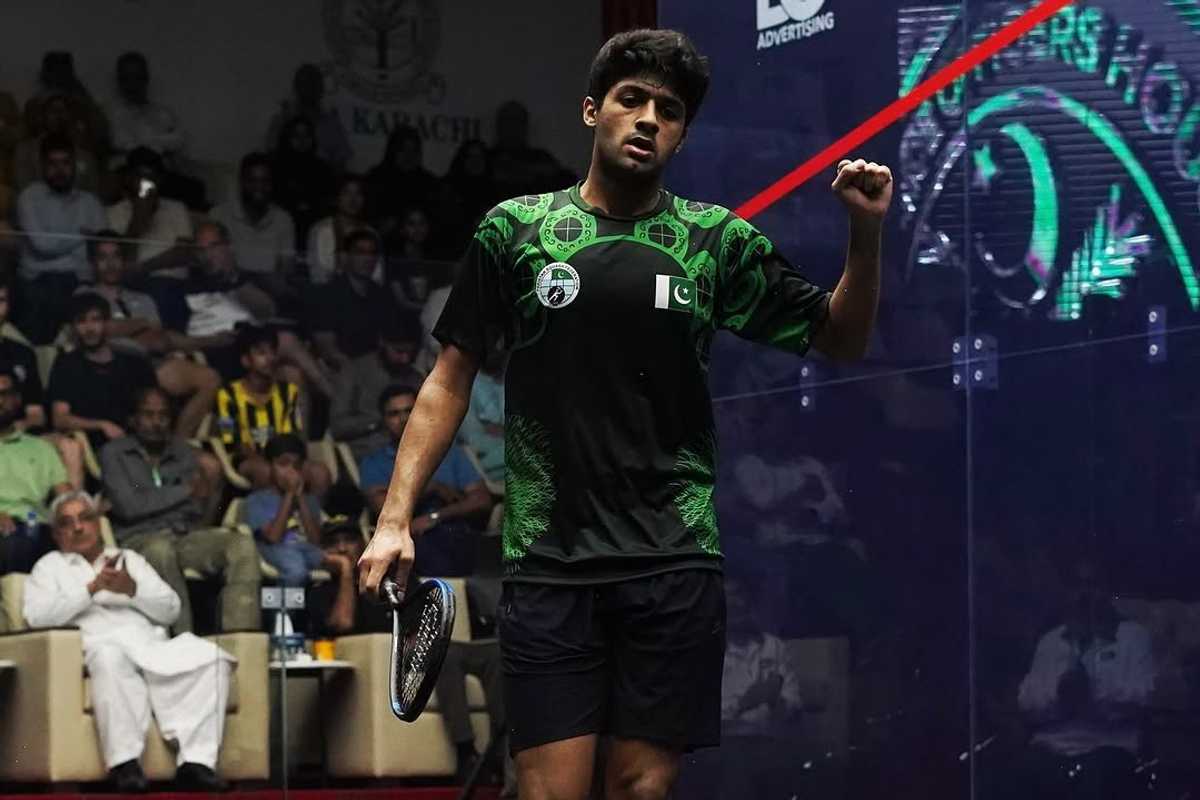
Noor Zaman is the grandson of Pakistan squash legend Qamar Zaman.
At the Karachi Open 2026, Pakistan’s brightest squash prospect offered a glimpse of both his immense potential and the fine margins that separate contenders from champions. Noor Zaman, competing in a PSA Gold event and the first World Events tournament of the year, bowed out in the quarter-finals but not before once again reminding the squash world why his rise is being closely watched.
Noor’s campaign ended in five hard-fought games against England’s Mohamed El Shorbagy, a former world champion and world number one. The veteran had taken a commanding two-game lead before Noor clawed his way back to level the match, only to lose the decider. El Shorbagy later acknowledged Noor’s intensity and focus, noting how quickly the young Pakistani adapted and learned during the contest — high praise from one of the sport’s most experienced figures.
That match summed up Noor Zaman’s current narrative: resilience, fight, and an ability to problem-solve under pressure. His round-of-16 clash against Egypt’s Fares Dessouky followed a similar script. Noor again lost the opening two games, staged an impressive comeback to draw level, and progressed after an angry Dessouky quit the match in the final game following a dispute with the referee. These were not isolated incidents. Noor showed the same comeback ability last year when he overturned a deficit to defeat Egypt’s Kareem El Torkey in the final of the inaugural U23 World Squash Championship.
There is, however, a pattern emerging and a question that naturally follows. While Noor’s capacity to recover from difficult positions speaks volumes about his mental toughness, elite squash rarely affords repeated second chances. Against the very top players, slow starts can prove fatal. Sustained success at the highest level demands control from the outset, not constant rescue missions from the brink.
Pakistan knows what squash dominance looks like. Jahangir Khan and Jansher Khan once ruled the world rankings for years, setting standards that still define excellence in the sport. Today, Noor Zaman is Pakistan’s highest-ranked men’s player, having recently achieved a career-best ranking of world number 30. It is a significant milestone but also a reminder of how far the climb remains.
What, then, makes a truly great squash player? At the top level, it is never just about shot-making. Physical attributes such as speed, balance, endurance, and explosive movement are non-negotiable. Equally important are anticipation, tactical intelligence, and emotional control knowing when to attack, when to defend, and how to manage momentum swings. Perhaps most crucial is the mental side: focus, composure, and the ability to execute under pressure point after point.
Many of the current elite benefit from world-class guidance in these areas. World number one Mostafa Asal is coached by former world number one James Willstrop. Karachi Open 2026 champion Mohamed Zakaria works with another former world number one, Jonathan Power. Noor, meanwhile, is coached by Fahim Gul, himself a former top-20 player who has played a vital role in Noor’s development so far. Under Gul’s guidance, Noor has matured technically and emotionally, shedding much of his earlier reputation for being short-tempered on court.
Yet, as Noor edges closer to the sport’s upper tier, the demands change. Incremental improvements are no longer enough. To bridge the gap between top 30 and top 10, exposure to elite-level coaching, sports psychology, and high-performance environments can be decisive. Better starts, sharper tactical discipline, and sustained intensity across entire matches, not just during comebacks, will define his next phase.
Noor Zaman’s progression so far suggests he has the raw materials: skill, resilience, curiosity, and a growing mental edge. The challenge now is sustainability. If Pakistan is to produce another world champion in a sport it once dominated, Noor’s journey may well be the blueprint but only if the next steps are taken at the right time. The talent is there. The question is whether the support system can elevate it to where it truly belongs.





Comments
See what people are discussing