

OICCI highlights $565.7B needed for Pakistan’s climate goals
Officials said SECP’s updated ESG guidelines, aligned with the PGT, strengthen transparency and sustainable reporting in Pakistan

Business Desk
The Business Desk tracks economic trends, market movements, and business developments, offering analysis of both local and global financial news.
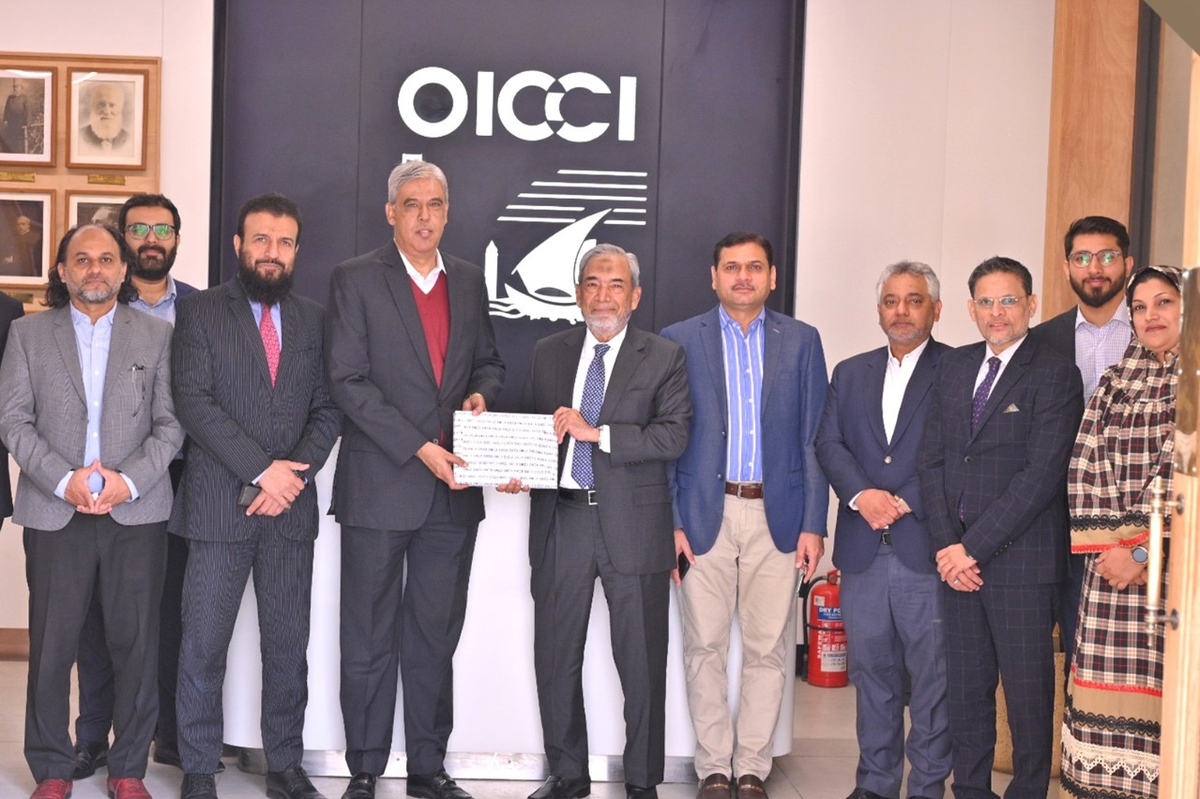
The session outlined PGT criteria, covering contribution tests, harm prevention, and social safeguards.
OICCI
Pakistan will require an estimated US$565.7 billion in investments to meet its Nationally Determined Contributions (NDC) 3.0 climate targets by 2035, industry experts said during a session on the Pakistan Green Taxonomy (PGT) and ESG Disclosure Guidelines hosted by the Overseas Investors Chamber of Commerce and Industry (OICCI).
The session, attended by senior business leaders and international stakeholders, underscored the pivotal role of sustainable finance and transparent ESG reporting in mobilizing the capital needed to strengthen Pakistan’s climate resilience.
The discussion took place in the context of the Securities and Exchange Commission of Pakistan’s (SECP) revised ESG Disclosure Guidelines for listed companies, which formally align with the PGT. These measures aim to enhance transparency, standardize sustainability reporting, and support Pakistan’s broader climate and environmental commitments.
Under NDC 3.0, Pakistan has committed to a 17% unconditional and 33% conditional reduction in greenhouse gas emissions, a 30% increase in electric vehicle adoption, and a transition to 60% renewable energy by 2035.
Achieving these ambitious goals will rely heavily on mobilizing green-aligned investments, highlighting the importance of frameworks like the PGT and robust ESG reporting practices in directing capital toward sustainable projects.
Launched by the State Bank of Pakistan in 2024, the Pakistan Green Taxonomy provides a structured classification system for activities that contribute to environmental objectives, including climate mitigation, sustainable water use, ecosystem protection, pollution prevention, circular economy initiatives, and land management.
Complementing this, the ESG Disclosure Guidelines - which will become mandatory between 2029 and 2031 - set standardized metrics for both financial and non-financial sustainability reporting.
The session was led by Farrukh Rehman, climate regulatory compliance expert and former president of the Institute of Chartered Accountants of Pakistan (ICAP). He highlighted, “Integrating the Pakistan Green Taxonomy into ESG reporting gives businesses a roadmap to align operations with national climate objectives. Transparent and structured reporting will attract sustainable investment and enable companies to contribute to Pakistan’s environmental and social goals.”
OICCI Secretary General M. Abdul Aleem added, “The corporate sector recognizes that accountability and sustainability are central to modern business strategy. By adopting ESG disclosures and PGT-aligned practices, companies can secure investment, drive innovation, and enhance resilience against climate-related risks.”
The session also detailed technical PGT alignment criteria, including the substantial contribution test, do-no-significant-harm principles, and minimum social safeguards to ensure ethical and responsible practices.





Comments
See what people are discussing