

Pakistan moves to privatize major airports, plans new domestic airline
Senior official says private operators will improve airport services and hire international experts

Ali Hamza
Correspondent
Ali; a journalist with 3 years of experience, working in Newspaper. Worked in Field, covered Big Legal Constitutional and Political Events in Pakistan since 2022. Graduate of DePaul University, Chicago.
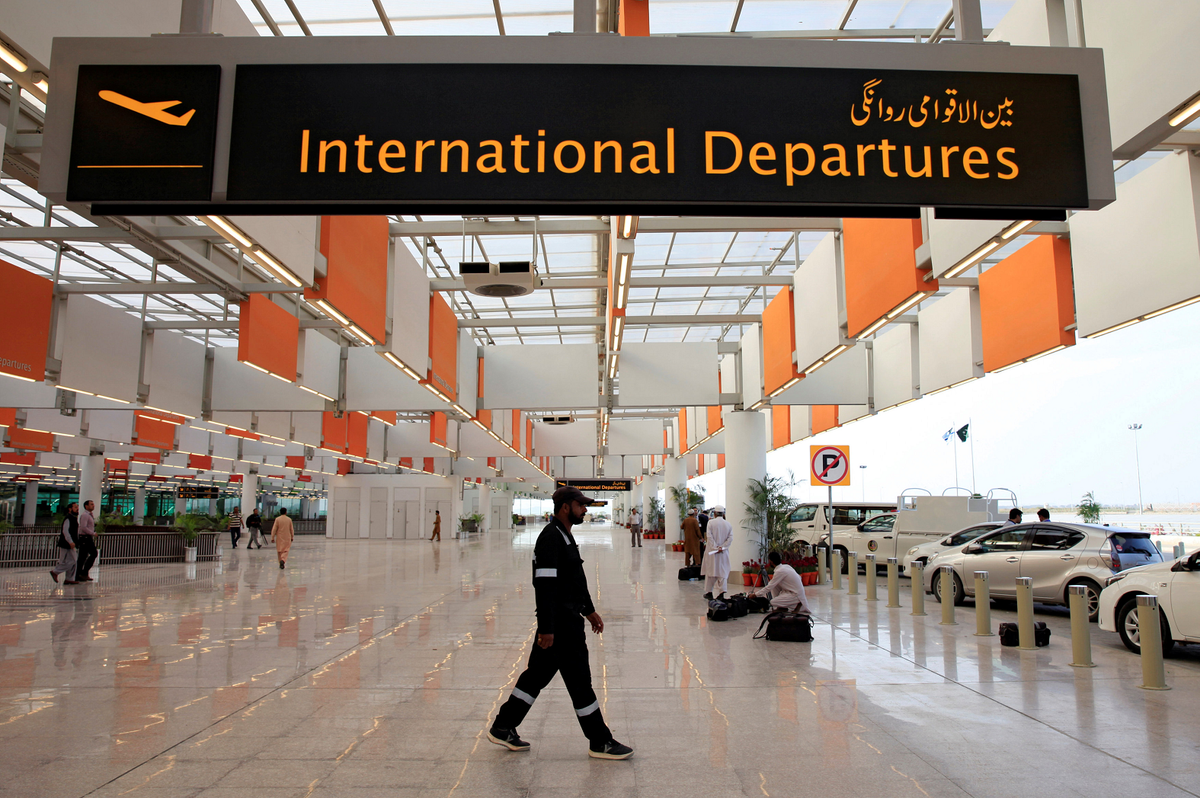
A worker walks at the departure area of the newly built Islamabad International Airport, during a media tour ahead of its official opening in July 2018.
Reuters/File
Pakistan is set to outsource operations at its three largest airports - Karachi, Lahore, and Islamabad - in a bid to improve management, maintenance and passenger services, officials said on Tuesday.
The move comes as the government seeks to bring professional private operators into the aviation sector.
Secretary Defence Lt. Gen. (retd) Muhammad Ali told parliament’s defense committee that the plan had received approval from the prime minister and had been forwarded to the country’s privatization commission.
He said the government hoped private operators would address longstanding issues with cleanliness, upkeep and service quality, while also hiring international experts to strengthen airport operations.
Additional Secretary of Defense Maj. Gen. Qaiser Suleman noted that Lahore Airport, built more than 25 years ago and Karachi Airport, which is over three decades old, would now see their day-to-day operations managed by private parties.
Officials also announced the launch of a new domestic airline, South Air, which is expected to begin operations later this year. The airline will focus on underserved destinations in Balochistan, including Turbat and Gwadar, with a fleet of five to six ATR aircraft.
Existing Pakistani carriers currently operate seven to eight aircraft nationwide and are expected to expand by two to four planes by mid-2026.
Ali said the government had actively encouraged airlines to serve secondary cities, citing instances where carriers were urged to fly to destinations like Turbat and Sukkur.
Discussing the suspension of Pakistan International Airlines (PIA) flights to Chitral, Ali said the route was no longer commercially viable, and one ATR aircraft remains grounded due to limited funds. He suggested that tourism growth, particularly in Pakistan’s mountainous regions - home to 62 of the world’s 100 highest peaks - could eventually revive such routes. By comparison, Nepal receives 1.2 million foreign visitors annually, while Pakistan sees roughly 15,000.
Ali added that the government was also exploring charter helicopter services in Gilgit-Baltistan, taking inspiration from Nepal’s mountain tourism model.
Senator Talha Mehmood, chair of the defense committee, described the privatization of PIA as a major achievement, highlighting the airline’s mounting losses. Ali said PIA was regaining access to international routes in Europe and Canada, and expressed hope that flights to the United States could resume in the near future.
The committee also discussed Pakistan’s security situation with Afghanistan and a proposed defense agreement with Saudi Arabia in a closed session, with journalists asked to leave the room during that briefing.





Comments
See what people are discussing