

PIA posts narrower loss after restructuring, but operational reforms now critical: report
With PKR 660 billion in liabilities offloaded, national carrier eyes turnaround, but fuel costs, legacy issues, and bloated workforce still drag performance

Business Desk
The Business Desk tracks economic trends, market movements, and business developments, offering analysis of both local and global financial news.
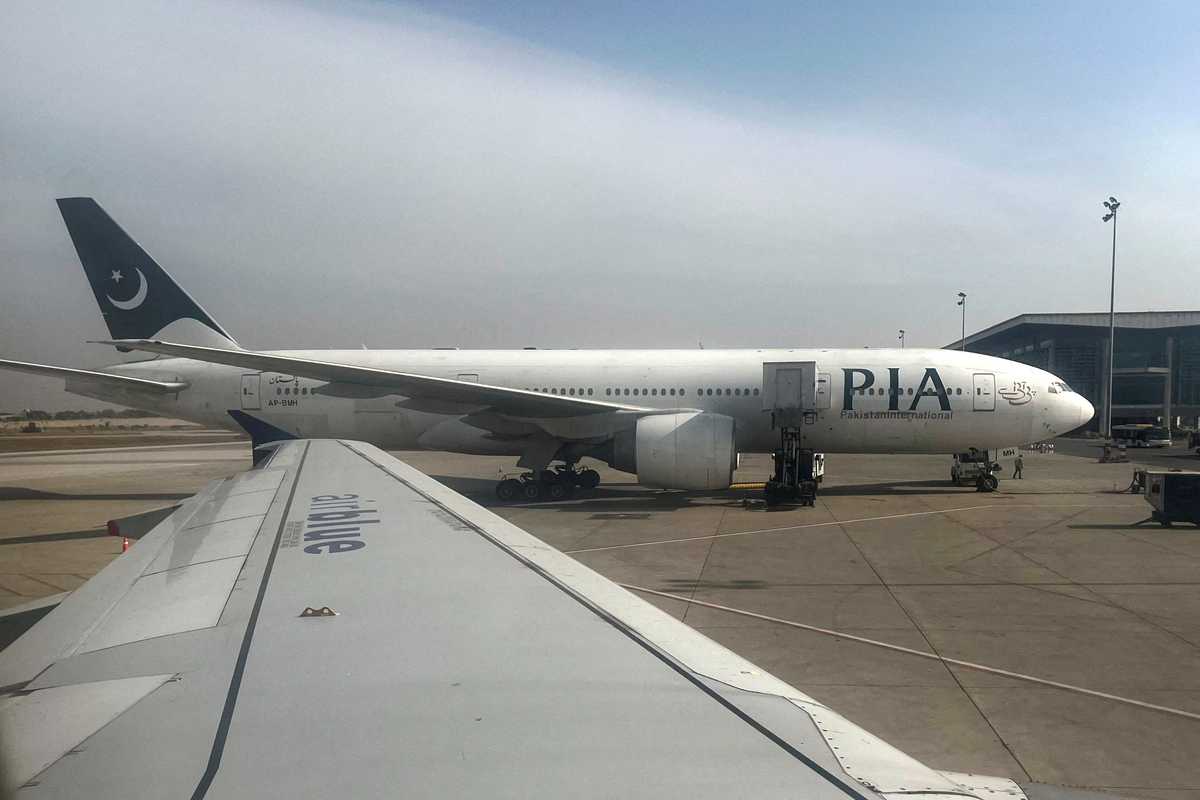
The restructuring of Pakistan International Airlines Corporation Limited (PIACL) marks a significant milestone in the national carrier’s troubled financial history, but the airline must now deliver on operational transformation to secure long-term viability, according to a detailed report released by the Central Monitoring Unit (CMU) of the Finance Ministry.
The PIAC reported a net loss of PKR 2.294 billion compared with PKR 51 billion (before the airline losses were transferred to the holding company). In the entirety of 2024, PIAC losses stood around PKR 71 billion.
The report, which evaluates the post-restructuring financial and operational status of PIACL, highlights both the achievements of the recent Scheme of Arrangement (SOA) and the critical reforms still needed to transform the airline into a commercially viable enterprise.
PKR 660B in liabilities offloaded to holding company
The SOA has enabled PIACL to shed approximately PKR 660 billion in legacy liabilities and non-core real estate assets, which have now been transferred to a newly created holding company, Pakistan International Airlines Holdings Limited (PIAHCL). This structural separation has significantly improved PIACL’s balance sheet, enabling a focused aviation business to emerge from under a mountain of debt.
“The balance sheet clean-up through the creation of PIAHCL is a decisive structural shift,” the CMU report noted. “It enables clearer financial reporting, opens the door for future privatization, and allows PIACL to focus exclusively on core aviation operations.”
As a result, PIACL’s total assets now stand at PKR 187 billion, while current liabilities dropped from PKR 482 billion to PKR 142 billion, and non-current liabilities decreased from PKR 366 billion to PKR 41 billion. Finance costs also plummeted from PKR 79 billion to PKR 10 billion, freeing up cash flow for potential investments in fleet upgrades, digital systems, and route optimization.
Financial snapshot
For FY2024-25, PIACL reported revenues of PKR 204 billion, with a core operating profit of PKR 5.2 billion and a net pre-tax loss of PKR 4.58 billion. This marks a significant improvement from previous years, with the losses now stemming primarily from operational inefficiencies rather than overwhelming finance costs.
The report also flagged a one-time accounting adjustment: a Deferred Tax Asset (DTA) of approximately PKR 30 billion, which boosted reported profits but does not reflect actual cash earnings.
“This DTA recognition is a non-cash item and should not be mistaken for operational profitability,” CMU cautioned. “It is a projection of future taxable profits and must be treated accordingly in future valuations.”
Cost pressures and fuel exposure remain high
While the debt burden has been eased, cost of services remains elevated at PKR 106 billion, with aircraft fuel alone consuming PKR 75 billion. Administrative and distribution costs remain substantial at PKR 8.29 billion and PKR 8.33 billion, respectively.
“PIACL’s exposure to global fuel market volatility is a structural risk,” the report warned. “Formal fuel hedging mechanisms, supply contract renegotiations, and fleet modernization must be pursued urgently.”
Exchange losses of PKR 2.34 billion due to unhedged foreign currency exposure further compound the volatility, underlining the need for a disciplined foreign exchange risk management strategy.
The CMU emphasized that future profitability hinges on aggressive pruning of unviable routes, expansion into higher-yield markets, and rightsizing the workforce, long considered bloated and inefficient.
“Now that PIACL is freed from non-core activities and listed-market pressures, it must embrace a lean, performance-driven model,” the report stated. “Management evaluations should be based on load factors, yield per seat, and turnaround times, not seniority or political influence.”
The report urges a performance-based HR model, workforce rationalization, and adoption of international productivity benchmarks. Digital transformation, including CRM systems, dynamic pricing tools, and ancillary revenue strategies, is also critical.
Reserves still deep in negative territory
Despite the restructuring, PIACL’s overall reserves remain negative at PKR 73 billion, reflecting decades of accumulated losses. However, CMU clarifies that this figure is now more of a historical artifact than an indicator of ongoing financial distress.
“While legacy losses will take time to erase, the current structure provides a viable foundation for commercial recovery if strategic reforms are implemented swiftly and effectively,” CMU noted.
Now under full government ownership and delisted from the Pakistan Stock Exchange, PIACL is positioned for long-term restructuring and potential privatization or strategic partnerships. The removal of short-term market pressures, CMU notes, allows for deeper, more sustainable reforms.
“The next chapter must be about operational excellence, customer experience, and commercial agility. The balance sheet is fixed; now the business must perform,” the report concluded.





Comments
See what people are discussing