

Pakistan-US relations show diplomatic warmth but limited tangible gains
Kamran Khan says US praise does not translate into meaningful trade, investment, or defense support for Pakistan

News Desk
The News Desk provides timely and factual coverage of national and international events, with an emphasis on accuracy and clarity.
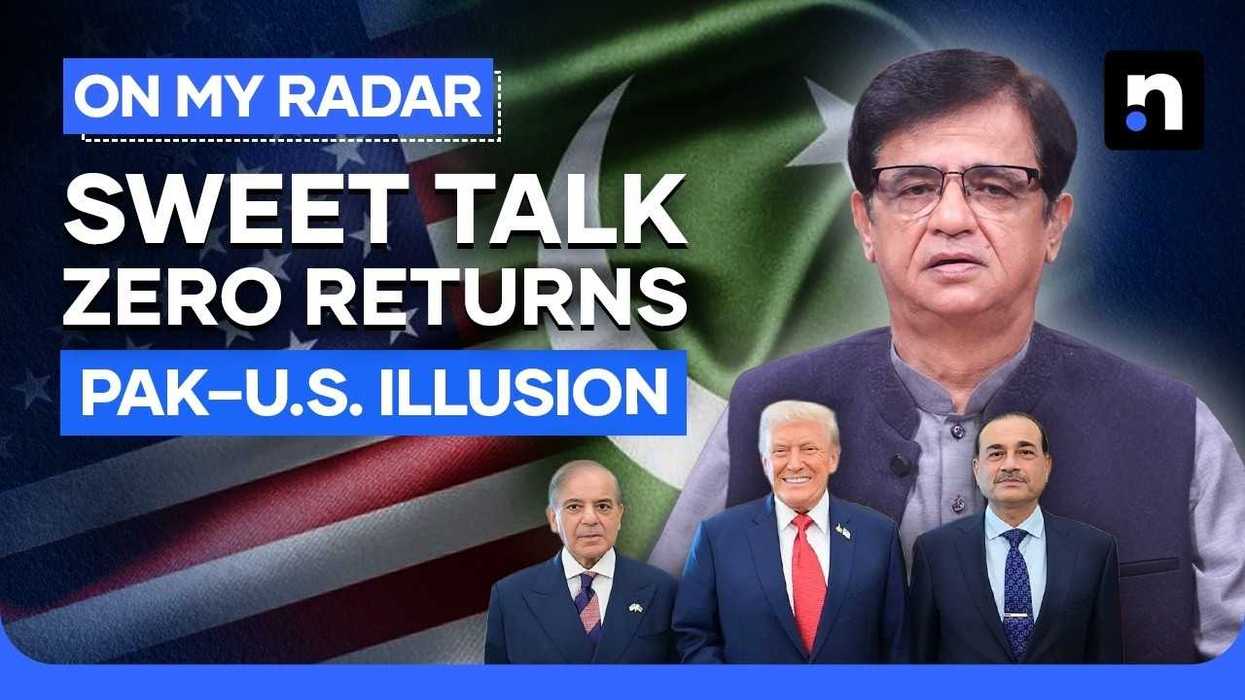
Pakistan’s recent engagement with the United States has been marked by warm diplomatic exchanges, high-level contacts, and repeated assurances of partnership. Yet beyond the positive rhetoric, questions persist in Islamabad over whether this renewed closeness is translating into tangible economic, trade, or security gains for the country.
Kamran Khan said in the latest episode of On My Radar that Pakistan has demonstrated extraordinary restraint in its dealings with the United States, avoiding anti-American narratives or overt alignment with alternative blocs.
He noted that despite repeated public praise from U.S. leaders and officials, Pakistan has not received meaningful trade concessions, investment, or defense support - creating a familiar pattern in the bilateral relationship.
Over the past year, Pakistani leadership, including Army Chief General Asim Munir and Prime Minister Shehbaz Sharif, maintained continuous contact with U.S. officials. Former President Donald Trump repeatedly praised Pakistan’s “responsible and constructive role” and highlighted it as a key partner for regional stability.
Islamabad reciprocated by showing practical alignment: public messaging on Gaza remained cautious, official statements exercised restraint, Pakistan avoided unnecessary confrontation at global forums, and it openly supported Trump’s peace initiatives. At one point, Pakistan even offered backing for a Nobel Peace Prize for Trump, despite domestic public opinion favoring Palestinians. The country also expressed willingness to cooperate with the U.S. in the mineral sector, particularly in rare earth elements.
However, the diplomatic warmth has yet to translate into tangible results. Pakistan has not received preferential trade concessions, GSP benefits, U.S. Export-Import Bank financing, or guaranteed investment commitments.
In the IMF context, Washington has played no effective role, and defense cooperation has remained largely formal. A recent trade decision, in which the U.S. reduced India’s tariffs to below Pakistan’s levels, further highlighted the disparity in benefits.
Investment prospects have similarly lagged. Projects like Reko Diq, Pakistan’s key mineral venture led by Barrick Gold, have seen little U.S. engagement at critical stages, with no financial risk mitigation, security guarantees, or political backing. This gap between diplomatic praise and tangible support underscores Pakistan’s ongoing strategic challenge.
Pakistan’s current approach reflects a deliberate policy of restraint, maintaining a balanced stance despite limited returns. Analysts and officials note that while Pakistan has repeatedly demonstrated alignment and cooperation, the country continues to await clear, actionable support in both economic and defense spheres—a pattern seen throughout the history of bilateral relations.



Comments
See what people are discussing