

Pakistan allows re-export of stranded Afghan transit cargo amid border closure
Commerce Ministry directs FBR to ease congestion at Karachi, Gwadar ports and border crossings

Haris Zamir
Business Editor
Experience of almost 33 years where started the journey of financial journalism from Business Recorder in 1992. From 2006 onwards attached with Television Media worked at Sun Tv, Dawn Tv, Geo Tv and Dunya Tv. During the period also worked as a stringer for Bloomberg for seven years and Dow Jones for five years. Also wrote articles for several highly acclaimed periodicals like the Newsline, Pakistan Gulf Economist and Money Matters (The News publications)
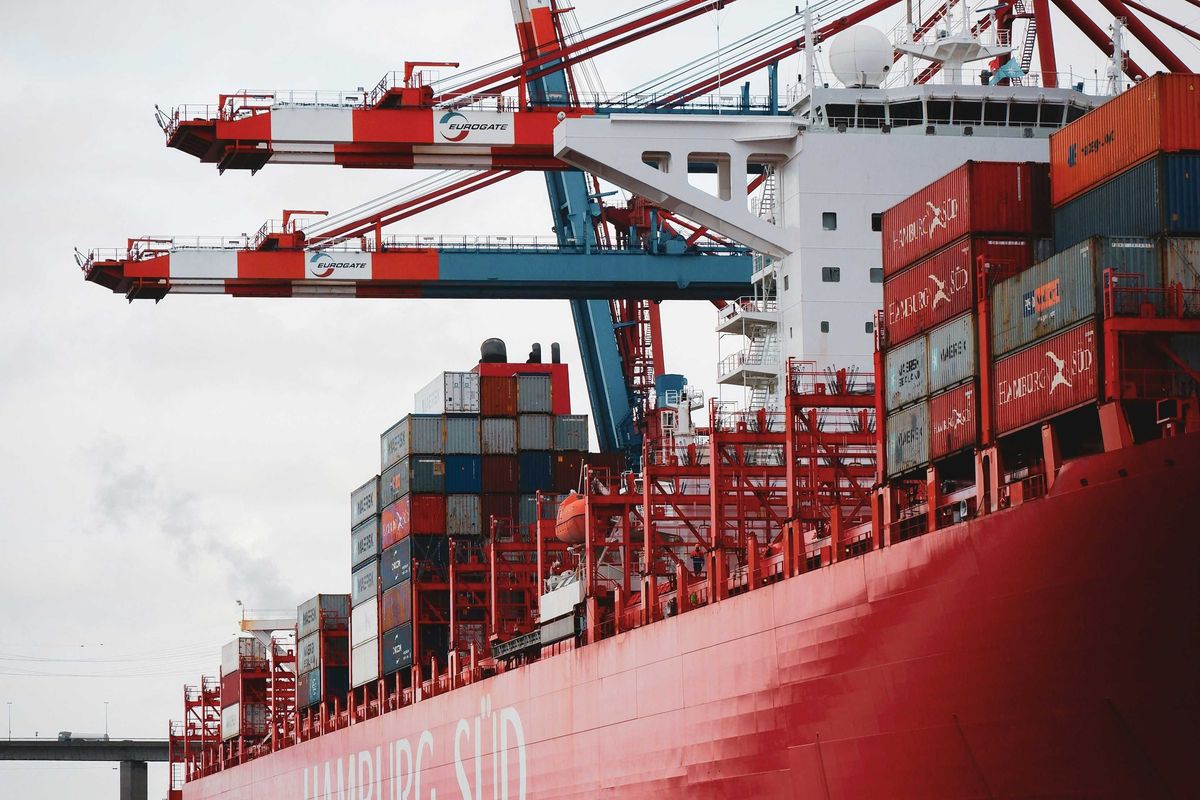
Pakistan’s Ministry of Commerce has directed the tax collection authority — Federal Board of Revenue (FBR) — to allow all stranded Afghan transit trade cargo to be re-exported to any seaport at the request of exporters or their clearing and forwarding agents, officials have said.
The directive, issued through a formal letter to the FBR, applies to Afghan transit cargo currently stuck at the ports of Karachi and Gwadar as well as at various border crossing points (BCPs). The ministry said the decision would help ease severe congestion that has built up since the closure of the Pak-Afghan border on October 11.
According to the letter, Afghan transit containers originating from Vietnam and Malaysia that are stranded at Karachi ports may be re-exported to any seaport based on requests from exporters or their agents. The ministry has also granted an exemption from Paragraph 6(4) of the Import Policy Order 2022, which governs imports under the Afghanistan-Pakistan Transit Trade Agreement (APPTA) 2010, allowing flexibility under rules notified by the federal government.
The decision follows an inter-ministerial meeting chaired by the joint secretary of the Ministry of Commerce, attended by representatives of customs, transit trade authorities and other stakeholders. Officials discussed ways to clear cargo stuck at seaports and BCPs amid repeated refusals by Afghan authorities to allow entry.
During the meeting, the Joint Secretary (FT-II) said the ministry had already issued letters permitting the clearance of transit containers destined for Tajikistan and Uzbekistan, humanitarian cargo belonging to U.N. agencies, and Afghan transit trade containers from Vietnam and Malaysia stranded at Karachi.
However, the director general Transit Trade (DGTT) warned that a large volume of cargo remained stuck at Karachi ports, various BCPs and Gwadar port, including bulk shipments. She said the ministry was receiving frequent requests from foreign missions and exporters, underscoring the need for a consistent policy to prevent prolonged congestion.
Another senior transit trade official said nearly 50% of the stranded cargo still lacked clear directions for disposal. This includes containers originating from China, the United Arab Emirates, Singapore and Turkey, as well as bulk diammonium phosphate (DAP) cargo from Australia at Gwadar port.
To address the issue, the meeting recommended that Afghan transit cargo stranded at seaports and BCPs be allowed re-export to any seaport upon request. For Central Asian cargo stuck at BCPs, officials proposed multiple options, including route changes via Iran or northern Pakistan, airlifting, or re-export.
Special arrangements were also discussed for U.N. humanitarian cargo, including possible changes to manifests with approval from the Ministry of Foreign Affairs to avoid mounting demurrage charges.
'Welcome move'
Business leaders welcomed the move, saying it would help reduce losses. “The decision to allow re-export is a much-needed relief for traders who have been bleeding due to delays and uncertainty,” said a Karachi-based importer and exporter, adding that prolonged congestion had disrupted supply chains and increased costs.
“What businesses need now is consistency and speed in implementation.”
Officials said further coordination with relevant ministries and foreign stakeholders would continue to ensure smooth clearance of remaining cargo.
It was recommended to maintain consistency in decision-making and keeping in view the concerns of security side, the following recommendations were made during the meeting
- For Central Asian Transit cargo stuck at BCPs, the following four options may be provided: Allowing crossing of containers through Taftan by changing manifest at Karach, allowing crossing of containers through Khunjerab / Sost by changing manifest at Karachi, allowing air lift of the containers, and re-export to any other seaport (as per specific requests)
- For the ATT cargo stranded at seaports and BCPs, the option of re-export to any other seaport may begiven as per request of exporters or their clearing agents
- Ministry of Commerce will approach Ministry of Foreign Affairs/UN Agencies for allowing change in manifest of the U.N. Humanitarian cargo which will then be cleared from Karachi ports and will be stored in warehouses.




Comments
See what people are discussing