

Pakistan Army accuses India of backing cross-border militancy
Pakistan's military accuses India of backing militancy, reaffirms stance on Indus Waters Treaty and Kashmir.

Aamir Abbasi
Editor, Islamabad
Aamir; a journalist with 15 years of experience, working in Newspaper, TV and Digital Media. Worked in Field, covered Big Legal Constitutional and Political Events in Pakistan since 2009 with Pakistan’s Top Media Organizations. Graduate of Quaid I Azam University Islamabad.
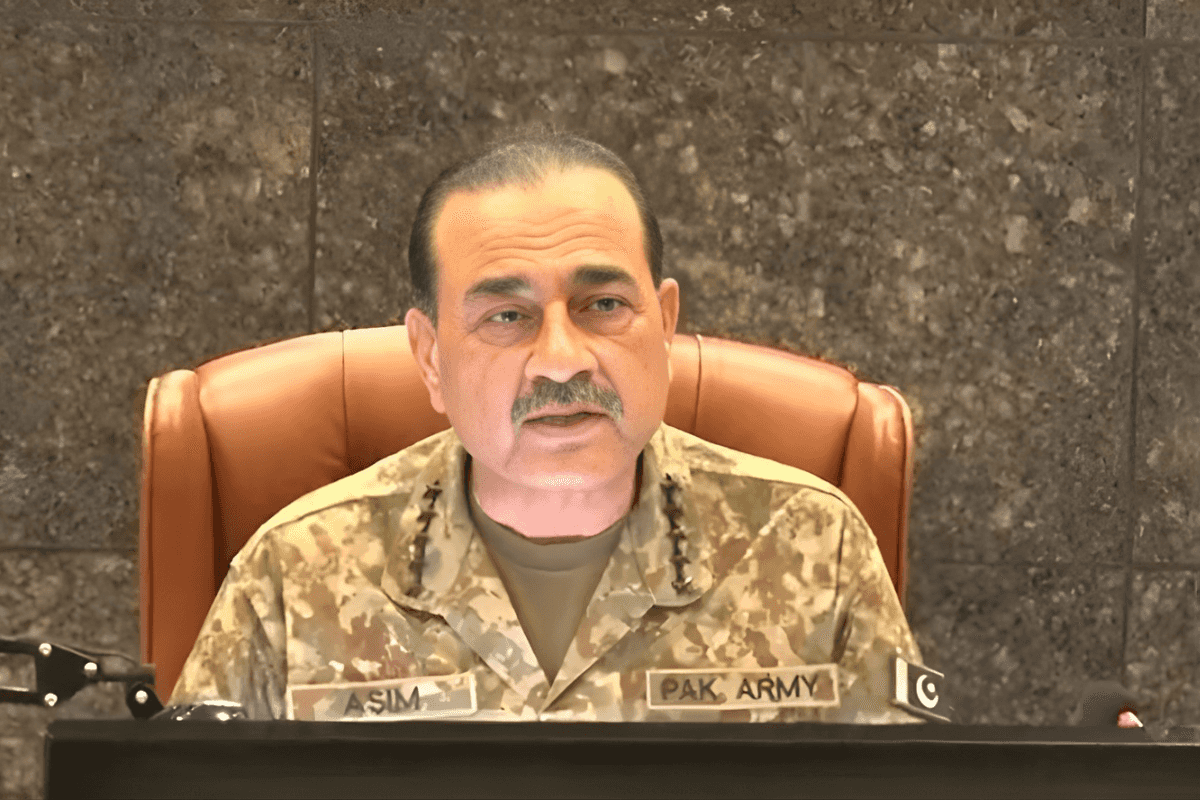
Field Marshal Asim Munir.
Pakistan's top military leadership on Monday accused India of supporting militant groups operating from Afghan territory. The commanders reaffirmed their commitment to counterterrorism operations, regional stability and the peaceful resolution of disputes at a security review in Rawalpindi.
What happened at the Corps Commanders' Conference?
Pakistan's military leadership held the 276th Corps Commanders' Conference at the General Headquarters in Rawalpindi. Field Marshal Syed Asim Munir, Chief of Army Staff and Chief of Defence Forces, chaired the meeting. Commanders reviewed the security environment and accused India of backing militant groups active from Afghan soil.
The meeting began with prayers for armed forces personnel, law enforcement agencies and civilians killed in violence, according to the military's media wing, Inter-Services Public Relations. Senior commanders also assessed the operational preparedness of the Pakistan Armed Forces.
Why does Pakistan accuse India of backing militants?
The commanders expressed concern that militant groups, including Fitna al Khawarij (TTP) and Fitna al Hindustan (BLA), were using Taliban-controlled Afghan territory to launch attacks inside Pakistan with Indian support. India has consistently rejected Pakistani allegations that it sponsors militant groups targeting Pakistan.
The military said Pakistan would continue intelligence-based counterterrorism operations under Operation Ghazab-lil-Haq. It added that preventing cross-border militant activity was essential for lasting regional peace and stability.
The forum also stressed that military operations should be paired with stronger governance and public service delivery in conflict-affected areas. Commanders said this was necessary to address the conditions that allow militancy and organized crime to persist. They also flagged a growing challenge from externally supported hybrid warfare and disinformation campaigns following recent military developments.
What did the conference say about the Indus Waters Treaty?
The conference discussed India's statements on the Indus Waters Treaty. It reaffirmed Pakistan's position that it would take all necessary measures to safeguard its water rights in line with government policy.
What was said about Kashmir?
On Kashmir, the military condemned alleged human rights violations and demographic changes in Indian-administered Kashmir. It reiterated Pakistan's longstanding diplomatic, political and moral support for the Kashmiri people, calling for a resolution in accordance with United Nations Security Council resolutions. India maintains that Jammu and Kashmir is an integral part of the country.
Concluding the meeting, Field Marshal Munir directed commanders to accelerate the military's multi-domain transformation plan. The goal is to address evolving security challenges and maintain operational readiness against conventional, sub-conventional and hybrid threats, the ISPR statement said.





Comments
See what people are discussing