

Pakistan's auto sector profits rise 19.7% to PKR 24.5Bn
Revenue grows 26.2% year-on-year as higher finance costs and lower other income weigh on net profit margins

Business Desk
The Business Desk tracks economic trends, market movements, and business developments, offering analysis of both local and global financial news.
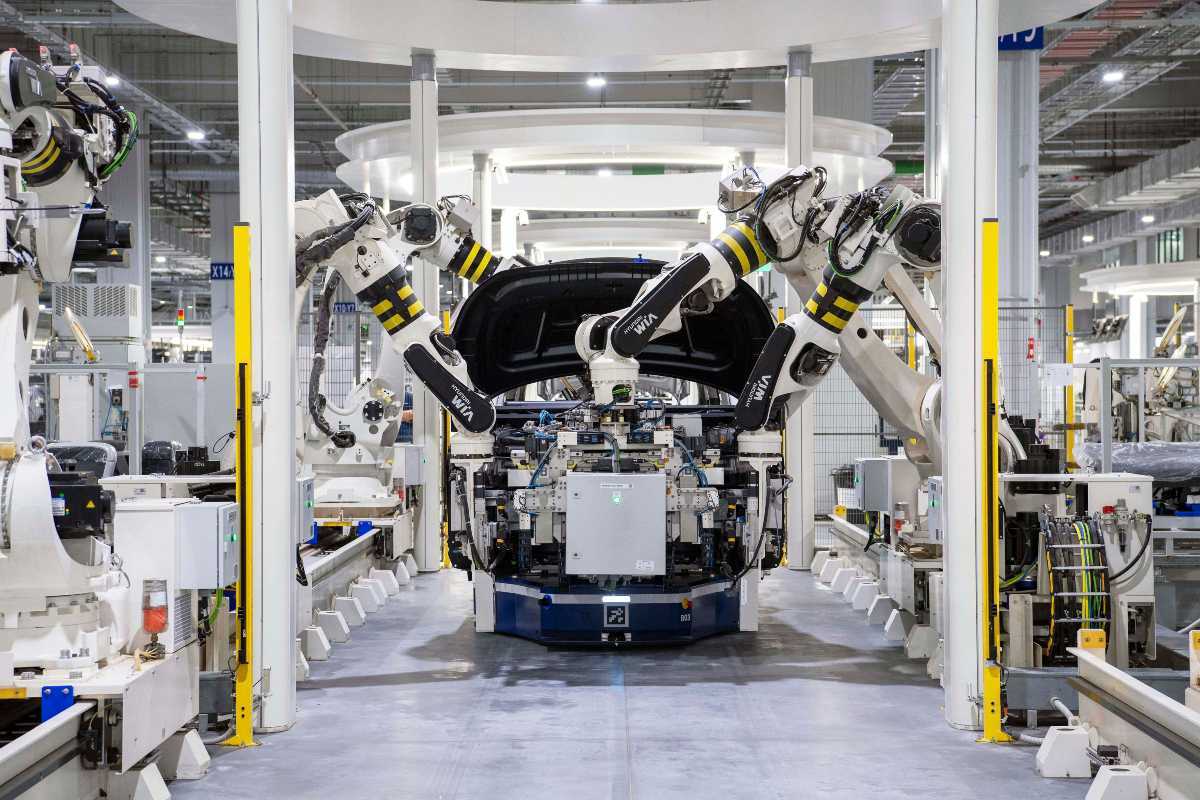
Robotic arms on an automobile assembly line. Pakistan's auto sector recorded a 19.7% year-on-year increase in profits in the September 2026 quarter.
Pexels
Pakistan's auto sector recorded a 19.7% year-on-year increase in profits to PKR 24.5 billion in the quarter ended September 2026, supported by higher vehicle sales, improved availability of auto financing and wider gross profit margins, according to a report by Arif Habib Ltd. (AHL).
What drove profit growth in Pakistan's auto sector?
Revenue of automobile companies covered by AHL increased 26.2% year-on-year to PKR 273.9 billion during the first quarter of fiscal year 2027 (Q1FY27). Gross profit margins widened by around 0.3 percentage points to 17%, with higher sales volumes across major vehicle segments and improved availability of auto financing supporting growth.
Outstanding auto financing increased 33.6% year-on-year to approximately PKR 407 billion by the end of September 2026, compared with around PKR 305 billion a year earlier, the brokerage said.
Profit growth lagged behind revenue growth as lower other income and higher finance costs weighed on net profit margins.
How did vehicle sales perform in Q1FY27?
Combined sales of cars, light commercial vehicles, vans, jeeps and electric vehicles increased 19.4% year-on-year to 50,480 units in the September quarter, compared with 42,267 units in the same period last year.
Honda Atlas Cars Pakistan Ltd. recorded a 52% increase in sales volumes, followed by Indus Motor Company Ltd., whose volumes rose 34%, according to AHL.
Tractor sales increased 37.8% year-on-year to 4,109 units. Millat Tractors Ltd. recorded a 32.7% increase in sales volumes, helping its revenue grow 44.8% during the quarter.
Truck sales rose 53.1% year-on-year to 2,516 units, supporting profit growth among commercial vehicle manufacturers. Ghandhara Automobiles Ltd. reported a 51.1% increase in profit, while HinoPak Motors Ltd. recorded a 64.6% rise, the brokerage said.
Two-wheeler sales increased 29.1% year-on-year to 546,259 units.
Atlas Honda Ltd.'s sales volumes rose 28.3% to 470,399 units, broadly in line with industry growth, allowing the company to largely maintain its market share at around 86%.
Why did auto sector net profit margins decline?
Despite stronger operating performance, lower other income and higher finance costs limited the sector's profit growth.
Other income declined 11.9% year-on-year to PKR 5.5 billion, mainly because Honda Atlas Cars recorded a negative adjustment of PKR 1.1 billion following the reversal of a gain related to the Sindh Infrastructure Development Cess (SIDC).
Excluding Honda Atlas Cars, the sector's other income increased by around 15%.
Finance costs rose 36.4% year-on-year, with significant increases at Indus Motor and Sazgar Engineering Works Ltd.
Indus Motor's finance costs increased 310%, reflecting SIDC-related payments and higher interest rates, while Sazgar's finance costs rose 321% due to higher borrowings.
The combined impact of lower other income and higher finance costs reduced the sector's net profit margin by around 0.5 percentage points to 8.9%, AHL said.
Honda Atlas Cars' gross profit rose to 3.2 times its year-earlier level, largely because of a one-off reversal of a PKR 3.4 billion SIDC provision. Excluding this adjustment, the company's gross profit margin stood at 8.3%, according to the brokerage.
Several automobile companies also announced cash dividends during the quarter.
Atlas Honda and Indus Motor each declared a dividend of PKR 56 per share, while Sazgar Engineering Works announced a dividend of PKR 5 per share.




Comments
See what people are discussing