

Central bank slows dollar purchases as imports rise in Pakistan
State Bank of Pakistan buys $3.1 billion in five months, projects reserves above $18 billion by June

Business Desk
The Business Desk tracks economic trends, market movements, and business developments, offering analysis of both local and global financial news.
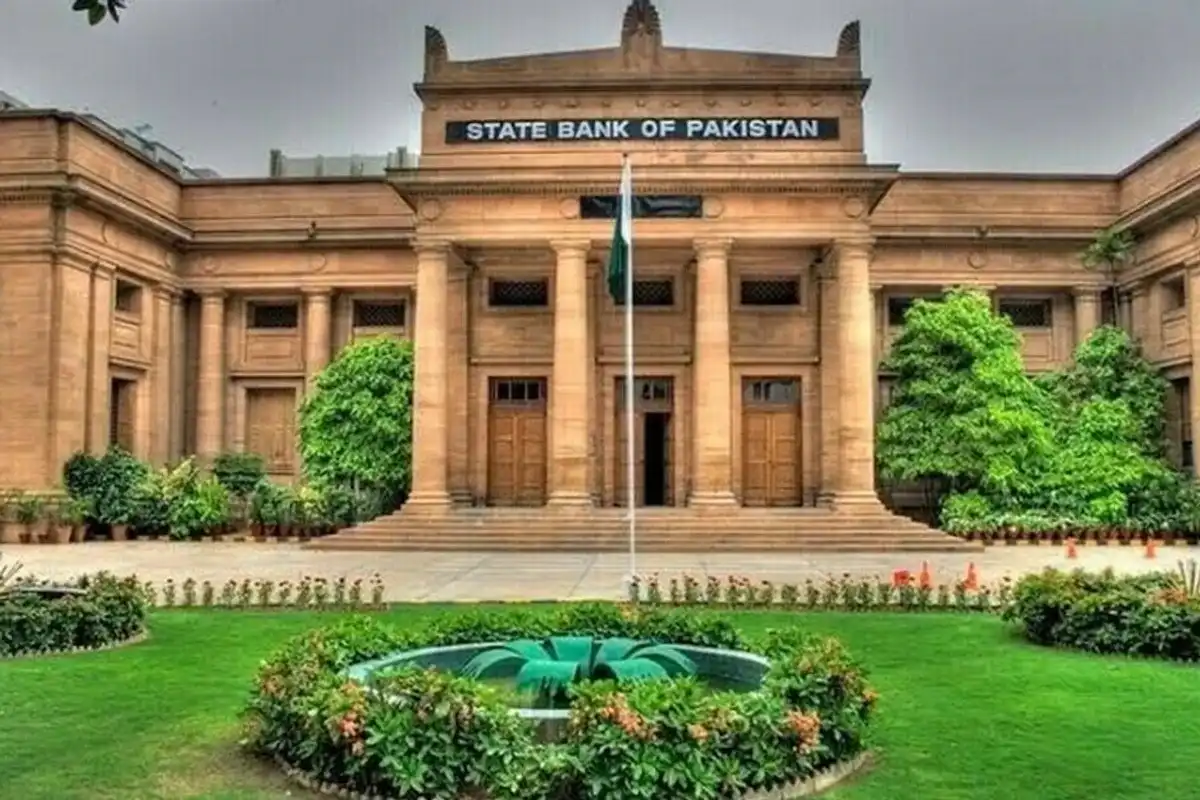
The State Bank of Pakistan’s purchases of U.S. dollars slowed during the first five months of the current fiscal year, even as import demand continued to edge higher, official data showed.
Dollar buying during the July-November period of fiscal year 2025-26 stood at about $3.122 billion, compared with $4.414 billion in the same period a year earlier.
Data on external trade indicated that imports in the five months ended Nov. 30, rose to $28.133 billion, up from $24.998 billion in the corresponding period in 2024.
Since June 2024, cumulative dollar purchases have climbed to $11.379 billion, according to central bank data.
The data also showed that the SBP has become a net buyer in the interbank market after previously selling foreign exchange to commercial banks to support liquidity and stabilize the exchange rate. Net foreign exchange intervention includes outright and swap purchases minus outright and swap sales conducted with banks in the interbank market.
Month-by-month figures over the past 18 months show the central bank purchased more than $1 billion in four separate months. The highest monthly purchase was $1.15 billion in November 2024, followed by $1.026 billion in October 2024, $1.023 billion in September 2025 and $1.033 billion in October 2025.
A 'successful' strategy
Earlier, SBP Governor Jameel Ahmad said at a conference that timely purchases of U.S. dollars from the interbank market helped the country avoid excessive foreign borrowing at higher interest rates. He said the strategy enabled Pakistan to meet its external debt obligations on time and increased foreign exchange reserves fivefold over the past two and a half years.
“Had we not built up our reserves from inter-bank purchases, the government would have needed to borrow significantly higher amounts — at higher interest rates — to make timely debt repayments,” Ahmad said.
In its latest monetary policy statement, the central bank said continued growth in workers’ remittances and supportive global commodity prices are expected to help contain the current account deficit in the range of 0% to 1% of gross domestic product in fiscal year 2025-26.
Rising foreign reserves
Based on that outlook and the realization of planned official inflows, the SBP said its foreign exchange reserves are projected to surpass $18 billion by June and rise further in fiscal year 2026-27, approaching the benchmark of three months of import cover.
The outlook, however, remains vulnerable to risks stemming from global trade fragmentation and geopolitical uncertainty, the statement said.
The central bank is also expected to reach a milestone of more than $20.2 billion in foreign exchange reserves by December this year — sufficient to cover three months of imports. The forecast does not include any potential issuance of Panda or Eurobonds, which would provide additional upside to reserve targets if undertaken.



Comments
See what people are discussing