

Pakistan, China elevate strategic partnership with CPEC 2.0 push and new security pact
Pakistan and China signed over $8.5 billion in deals during PM Shehbaz's Beijing visit, launching CPEC 2.0 and a new security partnership marking 75 years of ties

Aamir Abbasi
Editor, Islamabad
Aamir; a journalist with 15 years of experience, working in Newspaper, TV and Digital Media. Worked in Field, covered Big Legal Constitutional and Political Events in Pakistan since 2009 with Pakistan’s Top Media Organizations. Graduate of Quaid I Azam University Islamabad.
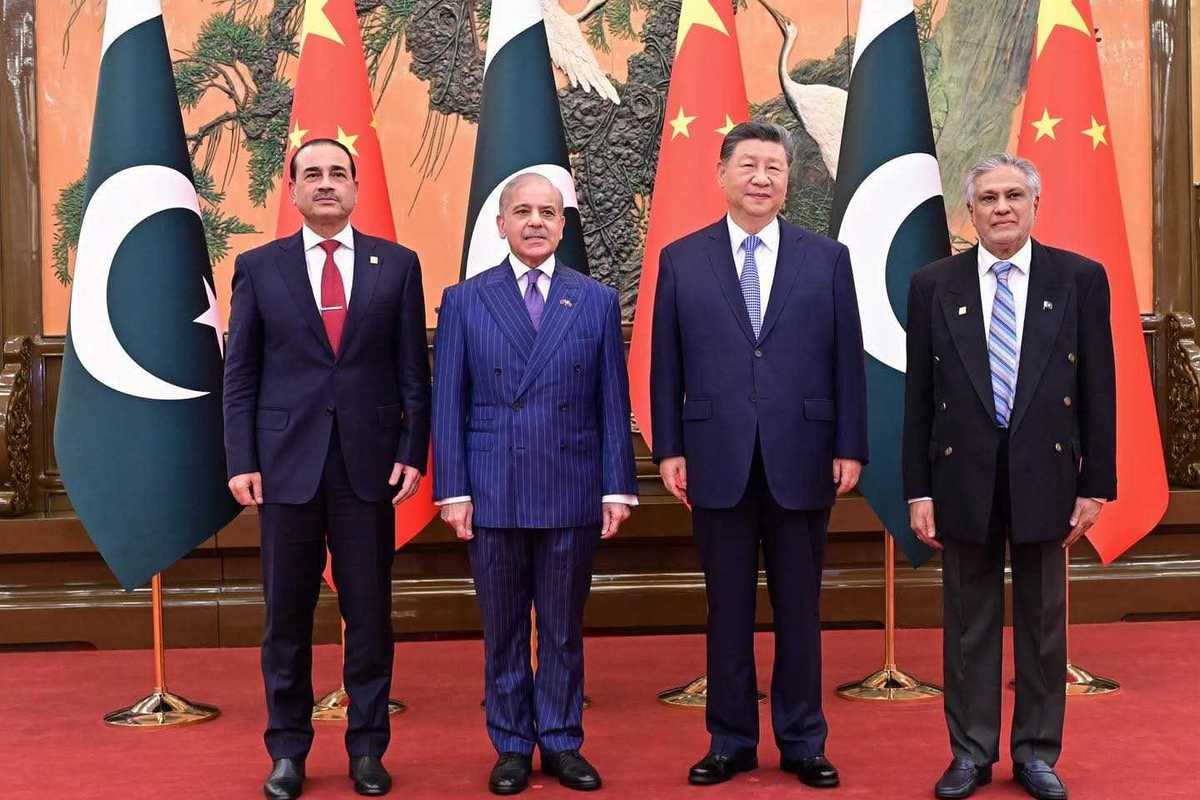
Pakistan, China elevate strategic partnership with CPEC 2.0 push and new security pact.
Source: Ministry of Foreign Affairs of Pakistan
Pakistan and China have agreed to accelerate CPEC 2.0, establish a new bilateral security partnership, and deepen cooperation across technology, space, and trade, following Prime Minister Shehbaz Sharif's four-day state visit to Beijing.
More than 20 agreements and memoranda of understanding worth over $8.5 billion were signed during the visit, which marked 75 years of diplomatic relations.
What did Pakistan and China agree on during the Beijing summit?
The commitments were outlined in a joint statement issued at the conclusion of Sharif's visit from May 23-26, during which he held talks with President Xi Jinping and Premier Li Qiang. Both sides described their relationship as a strategic asset and pledged to build a closer China-Pakistan Community with a Shared Future in the New Era.
Pakistan reiterated its commitment to the One-China policy and support for China's positions on Taiwan, Xinjiang, Tibet, Hong Kong, and the South China Sea. In return, China reaffirmed support for Pakistan's sovereignty, territorial integrity, and national security.
What does CPEC 2.0 focus on, and which projects are highlighted?
The upgraded China-Pakistan Economic Corridor transitions from infrastructure-led growth to high-quality development, structured around five new corridors covering industry, innovation, clean energy, livelihoods, and regional connectivity.
Key infrastructure projects include the phased realignment of the Karakoram Highway's Thakot-Raikot section, enhanced use of Gwadar Port as a regional connectivity hub, and greater use of the Khunjerab Pass to boost cross-border trade.
The two countries also agreed to expand cooperation in industrial parks, textiles, mining, oil and gas, agriculture, artificial intelligence, digital economy, and scientific innovation.
What security arrangements did Pakistan and China announce?
The joint statement announced plans to establish a China-Pakistan Security Partnership under the framework of China's Global Security Initiative.
Both countries pledged to expand counter-terrorism cooperation, strengthen military-to-military ties, and enhance protection of Chinese nationals and projects in Pakistan.
The two sides also agreed that no individual or group, including the Tehreek-e-Taliban Pakistan and the Eastern Turkistan Islamic Movement, should be allowed to use any territory to threaten regional security.
What was agreed on space, technology and education?
China confirmed that two Pakistani astronauts will undergo training in China, expressing hope that a Pakistani astronaut will become the first foreign national to participate in an early mission to China's space station.
Both countries agreed to deepen cooperation in education, culture, science, technology, and artificial intelligence. Pakistan endorsed China's proposal for a World Artificial Intelligence Cooperation Organization and pledged support for global AI governance initiatives.
China also welcomed the completion of a training program for 1,000 young Pakistani agricultural technicians.
What regional and international issues did the two sides address?
China appreciated Pakistan's diplomatic efforts in facilitating a temporary ceasefire between the U.S. and Iran and hosting the Islamabad Talks, with both sides pledging continued cooperation on Gulf and Middle East stability.
Pakistan briefed China on developments in Jammu and Kashmir, with Beijing reiterating that the dispute should be resolved peacefully in accordance with the U.N. Charter and relevant Security Council resolutions.
Both countries reaffirmed support for the U.N.-centered international system and pledged to promote multilateralism and a more balanced multipolar world.
China also voiced support for Pakistan's upcoming role as rotating president of the Shanghai Cooperation Organisation.




Comments
See what people are discussing