

Pakistan, China agree to fast-track LPG plant and gasoline import projects
The two countries will form a joint commercial team to assess investment opportunities in oil and gas exploration, offshore development, mining and energy infrastructure.

Business Desk
The Business Desk tracks economic trends, market movements, and business developments, offering analysis of both local and global financial news.
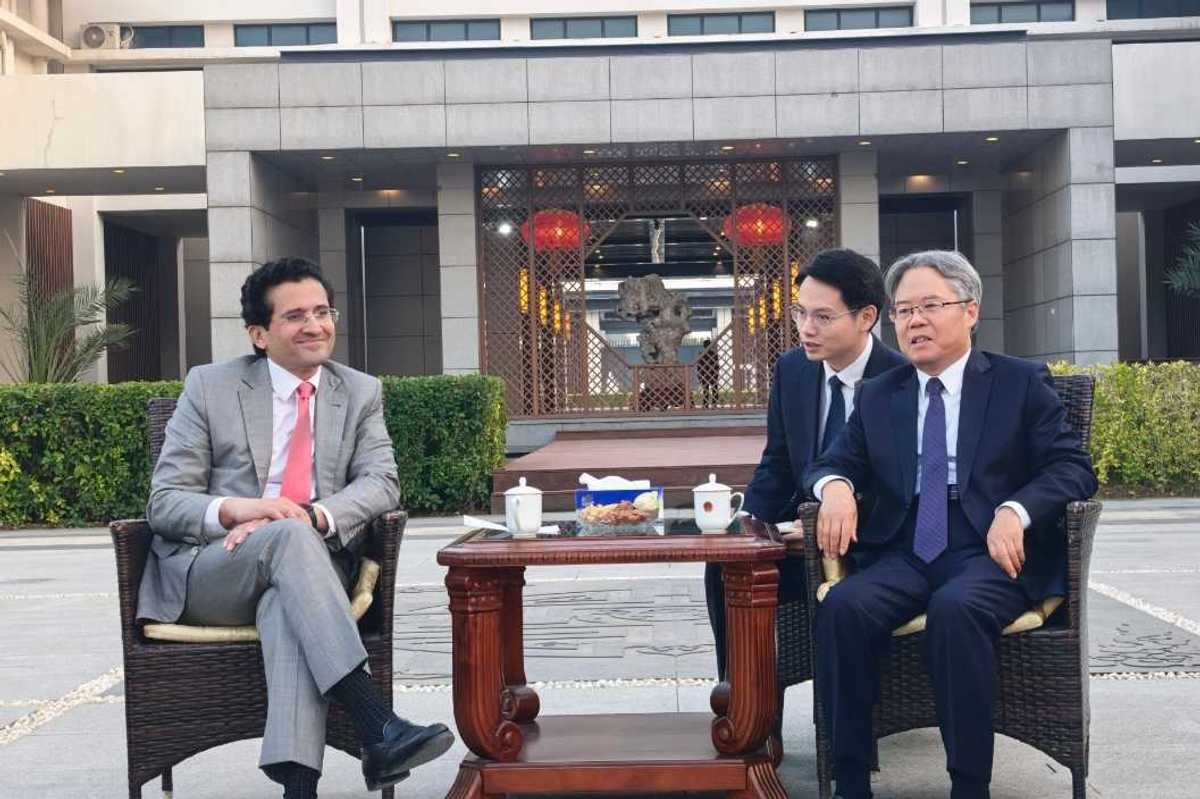
A picture from the meeting between Federal Petroleum Minister Ali Pervaiz Malik and Chinese Ambassador Jiang Zaidong
Pakistan and China have agreed to accelerate government-to-government projects involving liquefied petroleum gas (LPG) production and motor gasoline imports, while exploring Chinese investment in oil and gas exploration, offshore development, mining and energy infrastructure.
The agreement was reached during a meeting between Federal Petroleum Minister Ali Pervaiz Malik and Chinese Ambassador Jiang Zaidong, according to an official statement issued Wednesday. The discussions focused on expanding Chinese participation across Pakistan’s energy value chain, including upstream exploration, mineral development, petroleum storage and downstream infrastructure.
Both sides identified an LPG plant, along with associated storage and terminal facilities, and motor gasoline (MoGas) imports as priorities for early implementation. The proposed projects are aimed at increasing domestic fuel availability, addressing seasonal shortages and ensuring reliable supplies at competitive prices.
The discussions come as Pakistan seeks foreign investment to develop its hydrocarbon and mineral resources, particularly in Balochistan, and attract technology and capital to modernize its energy infrastructure.
The two sides also explored opportunities for Chinese companies to establish and expand downstream operations in Pakistan through strategic partnerships with state-owned Pakistan State Oil (PSO). Potential investments include petroleum storage facilities, terminals and other infrastructure.
PSO Chief Executive Jawwad Ahmed Cheema and Additional Petroleum Secretary Zafar Abbas accompanied Malik at the meeting. Discussions also covered potential partnerships between Pakistani energy companies, including Oil and Gas Development Company Limited (OGDCL), and Chinese enterprises.
Malik said Pakistan was committed to creating a transparent, investor-friendly and secure business environment through deregulation of the petroleum sector, streamlined import and export procedures, and improved security arrangements.
“China’s technological strength, industrial expertise and investment capacity, combined with Pakistan’s resource potential, present an exceptional opportunity to build partnerships that deliver lasting value for both nations,” Malik said.
He added that the government wanted to move from discussions to implementation.
Both sides agreed to establish a joint commercial team comprising Pakistani and Chinese representatives. The team will evaluate investment opportunities, engage prospective companies and develop a roadmap for partnerships in upstream, offshore and downstream operations, as well as minerals and mining.
It will also assess investment and commercial arrangements for the proposed LPG plant and gasoline import projects.
Offshore development, including the establishment of integrated offshore hubs, was another area of interest. The discussions also covered mineral exploration and mining opportunities in Balochistan.
Chinese Ambassador Jiang Zaidong reaffirmed Beijing’s support for Pakistan and said the Chinese Embassy and its commercial team would coordinate efforts to facilitate investment and business-to-business partnerships.
The meeting followed the 33rd Asia-Pacific Economic Cooperation (APEC) Economic Leaders’ Meeting, held in Shenzhen on November 18-19, where China emphasized openness, innovation and regional cooperation.
Malik also congratulated Pakistan Air Force Wing Commander Muhammad Zeeshan Ali on his reported participation in China’s Shenzhou-24 space mission, describing it as a milestone in scientific and technological cooperation between the two countries.
The discussions reflect efforts by Islamabad and Beijing to broaden their economic partnership into energy security, natural resources, industrial investment and commercial cooperation.




Comments
See what people are discussing